




News regarding the dangers of GMOs and biotech, and the advantages of organic sustainable agriculture.
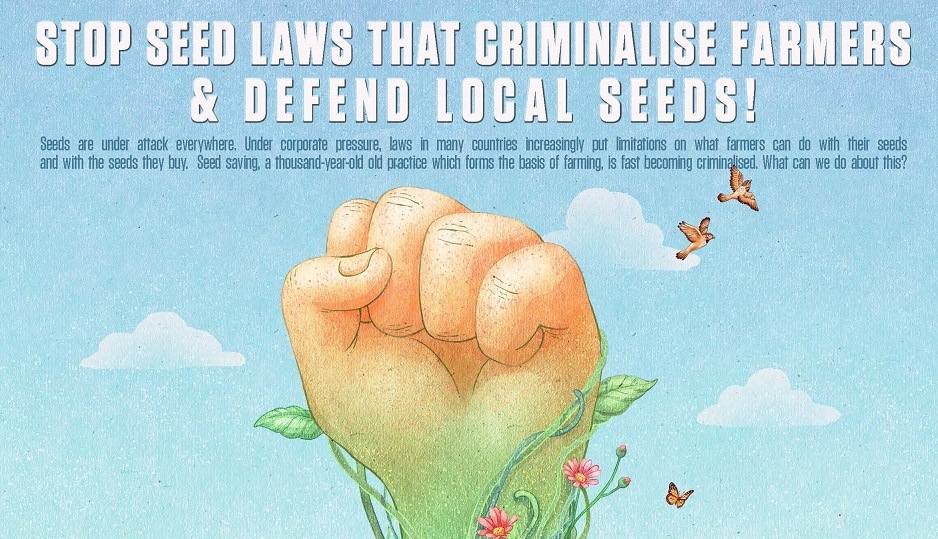
Stop Seed Laws that Criminalize Farmers Who Use Local Seeds
Seeds are under attack everywhere. Under corporate pressure, laws in many countries increasingly put limitations on what farmers can do with their seeds and with the seeds they buy. Seed saving, a thousand-year-old practice which forms the basis of farming, is fast becoming criminalised. What can we do about this?

Food And Chemical Companies Spent $63.6 Million In 2014 To Defeat GMO Labeling
Food and biotechnology companies spent $63.6 million in 2014 alone to oppose mandatory labeling of genetically modified food ingredients, or GMOs, according to a new analysis by EWG. The Grocery Manufacturers Association, for example, disclosed $5.8 million in lobbying expenditures around GMO labeling in 2014, “up sharply from $60,000 in 2013,” according to the analysis. PepsiCo nearly doubled the amount it spent, dedicating more than $4 million to the anti-labeling effort in 2014, up from 2.6 million in 2013. Other iconic companies that spent big in 2014 to deny consumers the right to know if their foods contain GMOs include Kellogg ($2.1 million), General Mills ($2.6 million) and Coca-Cola, which put up more than $9 million – the most of any food company, according to the report.
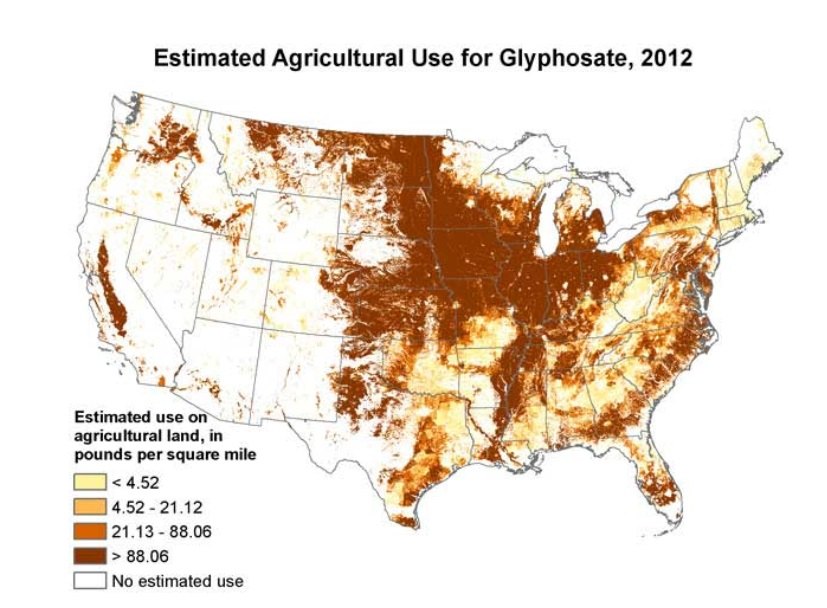
Glyphosate Is Spreading Like A Cancer Across The U.S.
American growers sprayed 280 million pounds of glyphosate on their crops in 2012, according to U.S. Geological Survey data. That amounts to nearly a pound of glyphosate for every person in the country. The use of glyphosate on farmland has skyrocketed since the mid-1990s, when biotech companies introduced genetically engineered crop varieties (often called GMOs) that can withstand being blasted with glyphosate. Since then, agricultural use of the herbicide has increased 16-fold. Glyphosate is the active ingredient in Roundup, Monsanto’s widely used weed killer, which according to the World Health Organization is “probably carcinogenic to humans.”
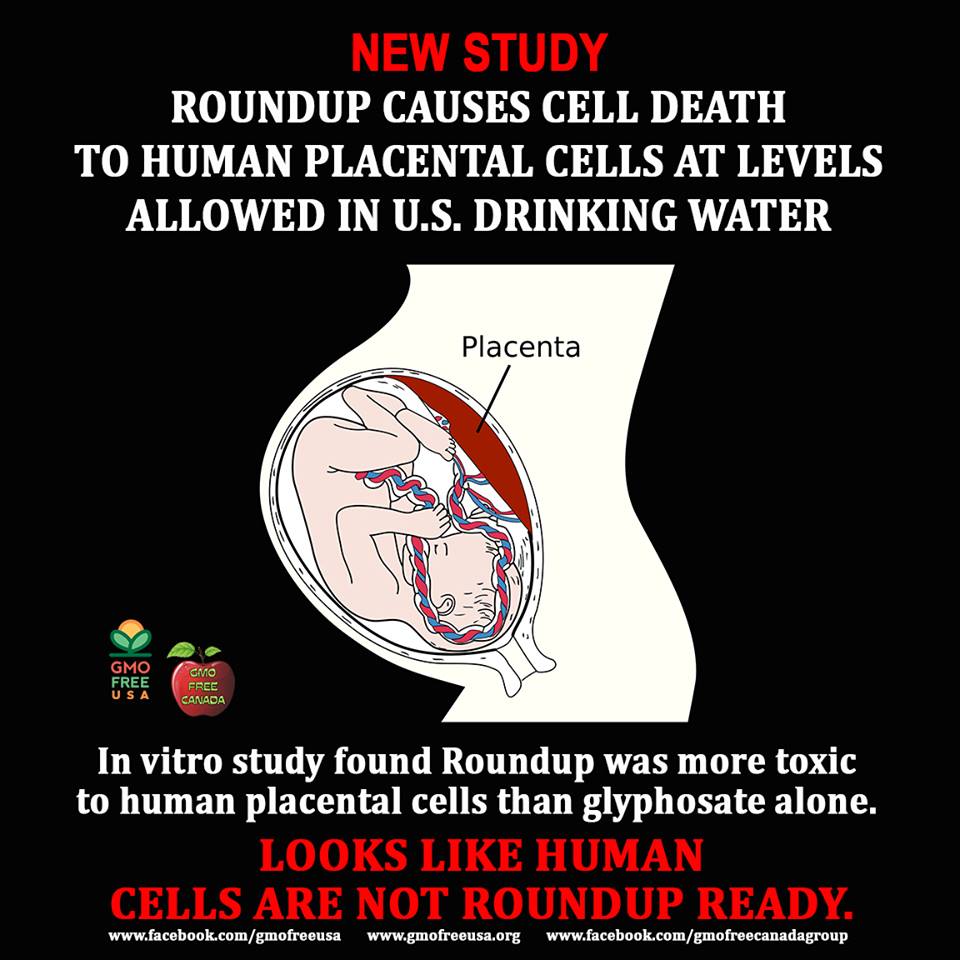
Study: RoundUp Causes Cell Death to Human Placenta Cells at Levels Allowed in Drinking Water
Roundup is an endocrine disruptor and is toxic to human cells in vitro (tested in culture dishes in the laboratory) at levels permitted in drinking water in Australia, a recent study has found. This is the first study to examine the effects of glyphosate and Roundup on progesterone production by human female cells in an in vitro system that models key aspects of reproduction in women. Glyphosate alone was less toxic to human cells than glyphosate in a Roundup formulation; both glyphosate and Roundup caused chorioplacental JAr cell death which resulted in decreased progesterone levels – a form of hormone/endocrine disruption. Endocrine disruption did not precede the toxicity to cells but occurred after it. The decreases in progesterone concentrations were caused by reduced numbers of viable cells.
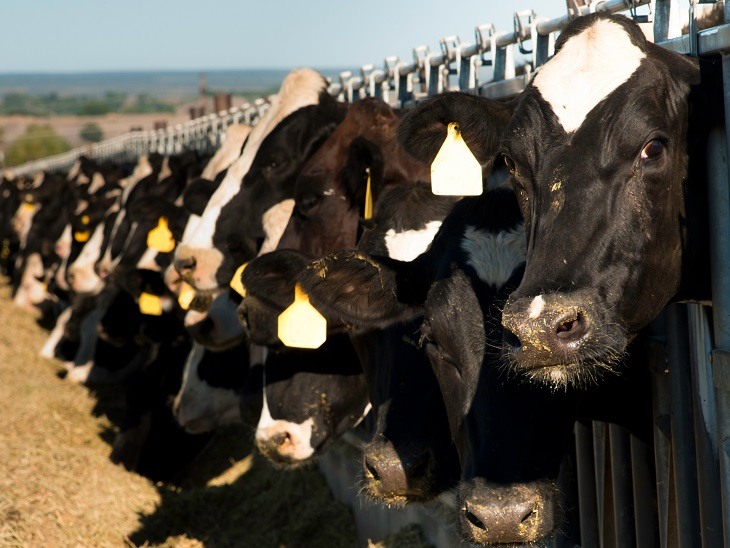
Texas Scientists Find Antibiotic Resistant “Super Bugs” Traveling Through the Air from Cattle Feed Lots
Phil Smith and Texas Tech University colleague Greg Mayer may have made their biggest discovery yet: DNA from antibiotic-resistant bacteria in cattle feedlots is airborne. For years, scientists have known that humans can contract antibiotic-resistant bacteria by consuming contaminated meat or water. The findings by Smith and Mayer indicate that humans could also be exposed to so-called "super bugs" or "super bacteria" traveling through the air. "This is the first test to open our eyes to the fact that we could be breathing these things," said Smith, an environmental toxicologist at Texas Tech.
Glyphosate Testing Skyrockets After WHO Report on Cancer
U.S. consumer groups, scientists and food companies are testing substances ranging from breakfast cereal to breast milk for residues of the world's most widely used herbicide on rising concerns over its possible links to disease. The focus is on glyphosate, the active ingredient in Roundup. Testing has increased in the last two years, but scientists say requests spiked after a World Health Organization research unit said last month it was classifying glyphosate as "probably carcinogenic to humans." "The requests keep coming in," said Ben Winkler, laboratory manager at Microbe Inotech Laboratories in St. Louis. The commercial lab has received three to four requests a week to test foods and other substances for glyphosate residues. In prior years, it received only three to four requests annually, according to its records. Tests by Abraxis found glyphosate residues in 41 of 69 honey samples and in 10 of 28 soy sauces; Microbe tests detected glyphosate in three of 18 breast milk samples and in six of 40 infant formula samples.

Organic Producers Sue USDA for Changing Organic Rules without Public Input
Organic stakeholders have filed a lawsuit in federal court, maintaining that the U.S. Department of Agriculture (USDA) violated the federal rulemaking process when it changed established procedures for reviewing the potential hazards and need for allowed synthetic and prohibited natural substances used in producing organic food. The unilateral agency action taken to adopt major policy change without a public process, the plaintiffs maintain, violates one of the foundational principles and practices of OFPA -public participation in organic policy-making.

Study: Herbicides Used with GM Crops Alter Antibiotic Resistance of Disease-causing Bacteria
A 2015 study was published looking at the effects of three widely used herbicides on disease-causing bacteria and their susceptibility to antibiotics. The three herbicides are dicamba, 2,4-D (recently approved by the U.S. EPA), and glyphosate. In what is believed to be the first study of its kind, they researches found that these popular herbicides affected the bacteria responded to antibiotics, often developing a resistance to them.
Are USDA Scientists Warning Public on Dangers of Glyphosate and GMOs Being Censored?
U.S. Right to Know sent letters today to the chairs and ranking members of the U.S. Senate and House Agriculture Committees, and to the Inspector General of the U.S. Department of Agriculture, requesting an investigation of a possible cover up for Monsanto, and whether USDA scientists are being harassed when their work runs counter to the interests of the agrichemical industry.
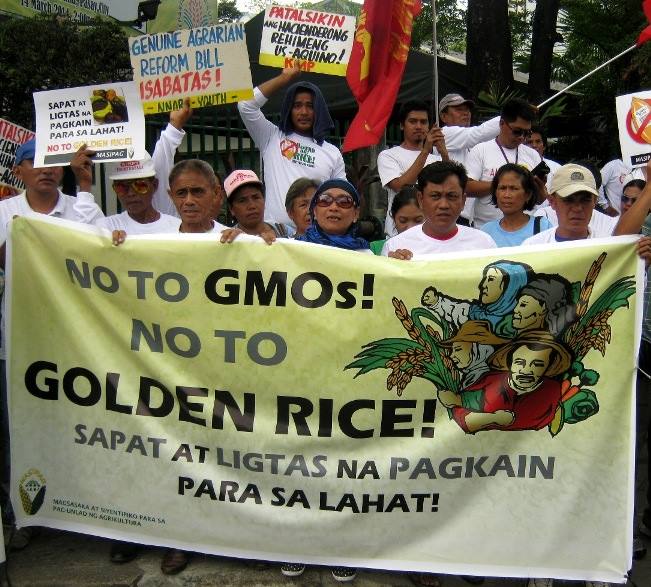
Filipino Farmers Oppose GMO Rice: Challenge Foreign Lobbyists to Debate
Our opposition to Golden Rice and other GM crops are founded on solid arguments and actual experiences of Filipino farmers on GM crops. Filipino farmers who have been planting GM crops suffered negative income, health problems and poisoned environment.
Bad GMO Labeling Federal Law Expected Soon
A new bill to let food producers decide whether to label GMOs could prevent states from passing mandatory labeling laws. It’s expected to be introduced in the next few weeks—so we need to dissuade potential co-sponsors now! At the behest of the Monsantos and Cargills of the world, Rep. Mike Pompeo (R-KS) is expected to reintroduce his Safe and Accurate Food Labeling Act in the next week or two. If passed, it would nullify the efforts of ten states that are currently considering bills to require the labeling of genetically engineered foods.
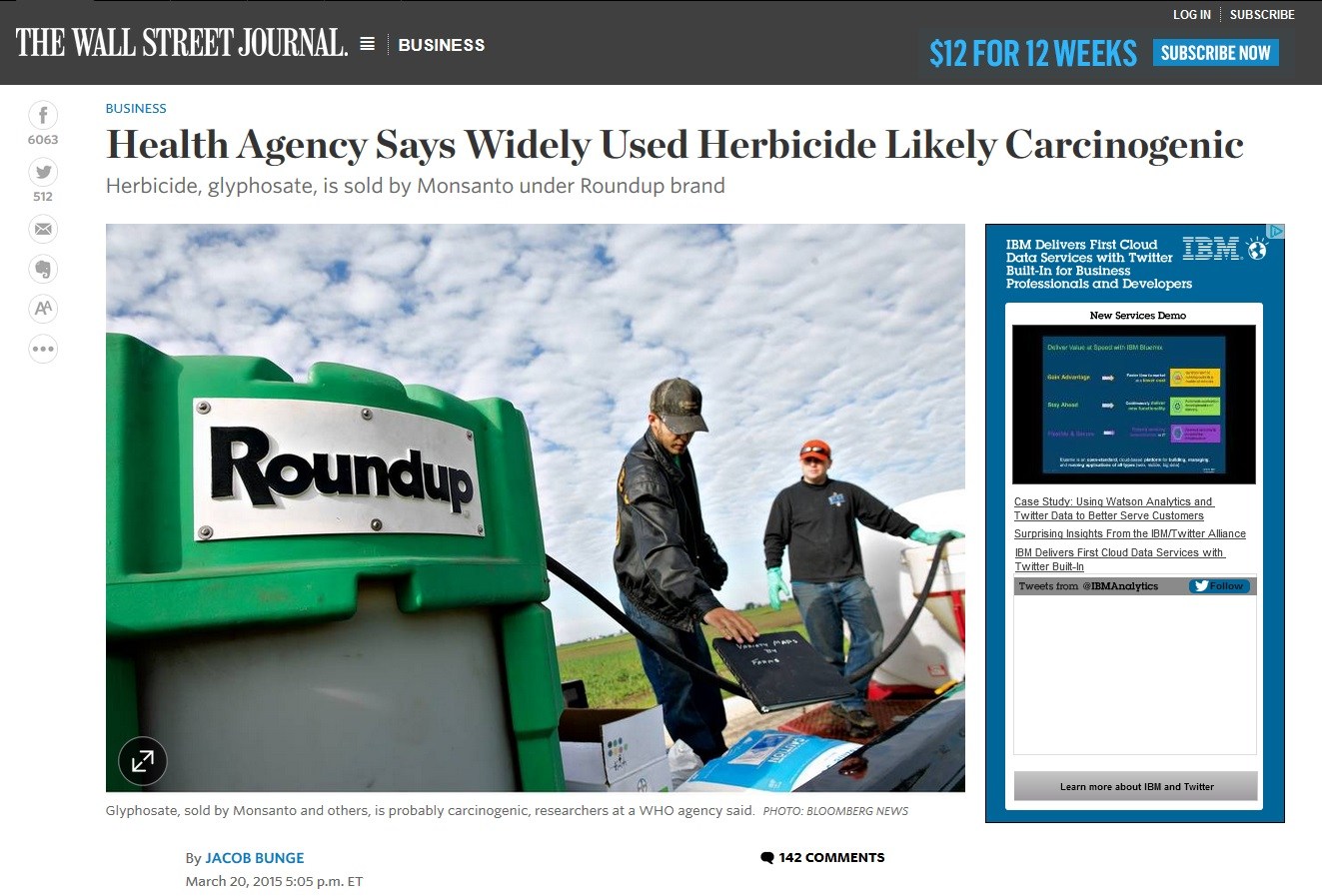
More Evidence that Herbicide Glyphosate Causes Cancer
Recently the U.S. mainstream media widely reported on a new study published by the International Agency for Research on Cancer (IARC), which evaluated 5 different insecticides and herbicides. The herbicide glyphosate, the active ingredient in Monsanto's Roundup, was included in the report and was linked to cancer. Glyphosate is the most common and most heavily used herbicide or pesticide in the world. According to the IARC, cancer rates world-wide are expected to increase from 14 million in 2012 to 22 million within the next 2 decades.

Government Attacks Small Family Farm in Schenectady County New York
Why are police seizing perfectly healthy farm animals from a small family farm in Schenectady County New York?
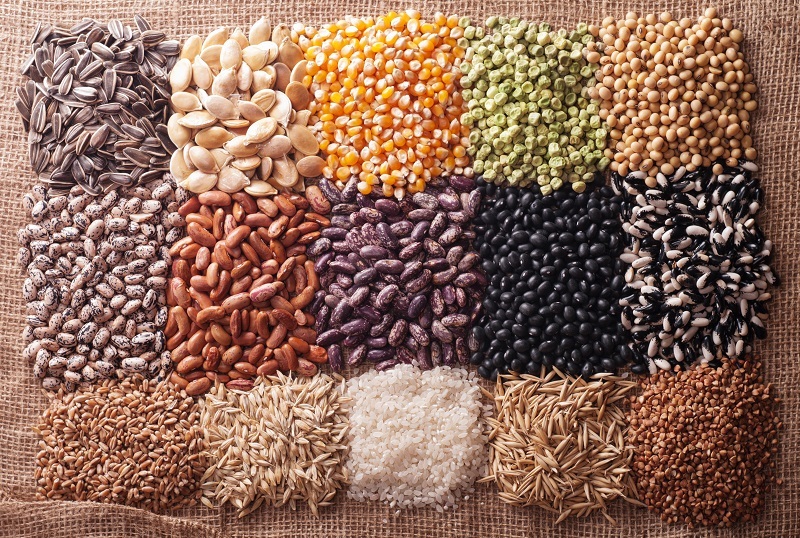
93 Percent of the World’s Seeds Have Been Lost in the Last 80 Years
Seeds represent the foundation of life. We depend on them for food, for medicine and for our very survival. In many ways, you can trace the underpinnings of any given culture through the heritage of their crops and seeds. It wasn’t long ago when seeds were mostly the concern of farmers who, as the Worldwatch Institute put it, “were the seed producers and the guardians of societies’ crop heritage." But this is no longer the case. Once considered to be the property of all, like water or even air, seeds have become largely privatized, such that only a handful of companies now control the global food supply. Ninety-three percent of seeds were lost from 1903 to 1993. Just four agrichemical companies own 43 percent of the world’s commercial seed supply. The Millennium Seed Bank Partnership estimates that 60,000 to 100,000 plant species are in danger of extinction.
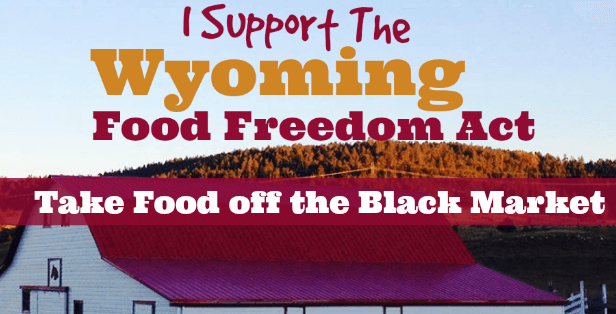
Wyoming Makes it Legal to Buy Food Directly from your Neighbors and Local Farm
In a win for farmers, deliciousness, and just plain common sense, Wyoming’s governor signed a bill this past week which will “stop overregulation of locally produced foods” by making it illegal for the state government to require “licensure, permitting, certification, inspection, packaging, or labeling” when farmers sell food directly to consumers. In practice, this means that farmers markets and small food stands will be able to proceed without the interference of government busybodies. As the bill explains, its purpose “is to allow for the sale and consumption of homemade foods, and to encourage the expansion of agricultural sales by farmers markets, ranches, farms and home based producers.” The bill’s sponsor, state Rep. Tyler Lindholm, says it will “take local foods off the black market. It will no longer be illegal to buy a lemon meringue pie from your neighbor or a jar of milk from your local farm.”

Altered Genes, Twisted Truth—How GMOs Took Over the Food Supply
Although the US has the strictest food safety laws in the world governing new additives, the FDA has allowed GMOs to evade those laws. The sole purported legal basis for the marketing of GE foods in the United States is the FDA’s claim that they are Generally Recognized as Safe (GRAS) – a claim that is clearly fraudulent. Documents released as a result of a lawsuit against the FDA reveal that the agency’s scientists warned superiors that GE foods pose greater risks than conventional ones – but that their warnings were spurned and covered up. Monsanto could never have implemented their global food takeover strategy had the groundwork not been laid by the deceptions of a number of prominent molecular biologists that began during the 1970’s.
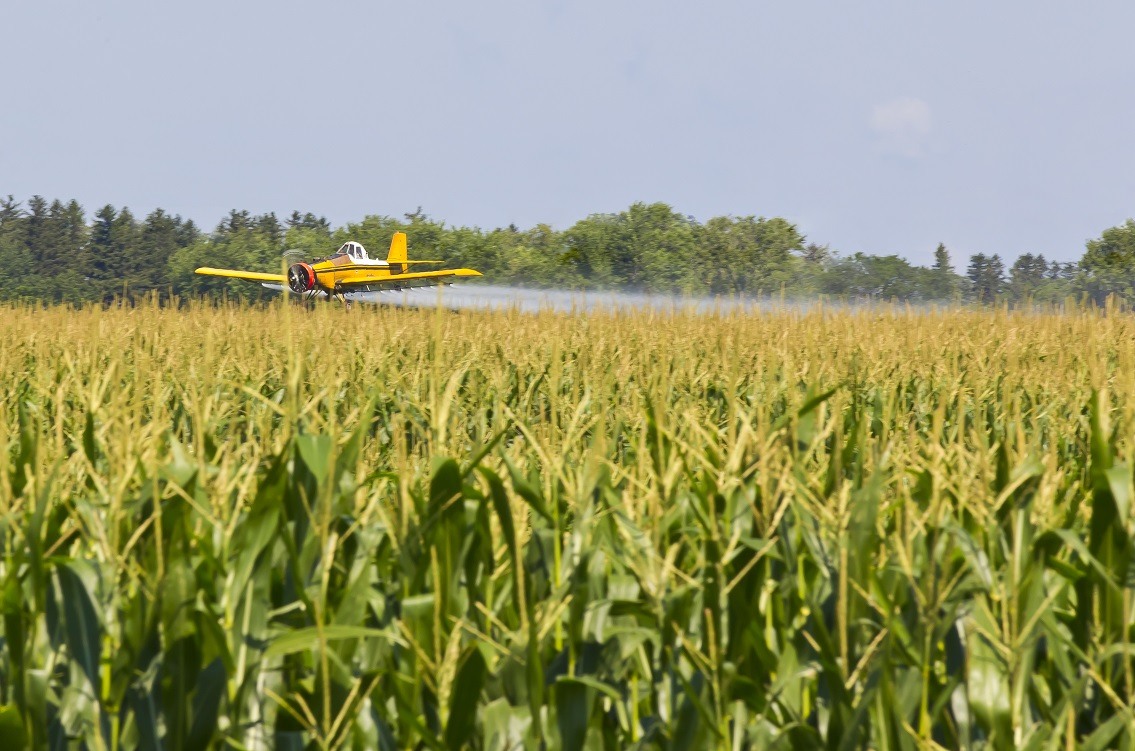
EPA Seeks Limits on GMO Corn as Pest Resistance Grows
U.S. regulators for the first time are proposing limits on the planting of some genetically engineered corn to combat a voracious pest that has evolved to resist the bug-killing crops, a potential blow to makers of biotech seeds. The measures proposed by the Environmental Protection Agency represent a bold step to thwart the corn rootworm, a bug that ranks among the most expensive crop threats to U.S. corn farmers.

Minnesota Aims to Fine Family $500 Per Day for Feeding Their Community
If the Minnesota Department of Agriculture (MDA) gets its way, Lake View Natural Dairy Farm, owned and operated by David and Heidi Berglund and their daughter Lyndsay, will be fined $500 per day until they submit to an unconstitutional inspection of their farm. When the farm briefly explored the possibility of selling milk for processing, this triggered a call to the MDA by the processor, and the MDA realized they had no record or control over this farm. On October 14, 2014 the MDA demanded to do an inspection of the farm, which the family refused on the grounds that the Minnesota Constitution acknowledges their right to peddle the products of their farm. Now, the MDA hopes to fine the small operation a crippling $500 per day after the March 9, 2015 hearing if they are found to be in contempt.
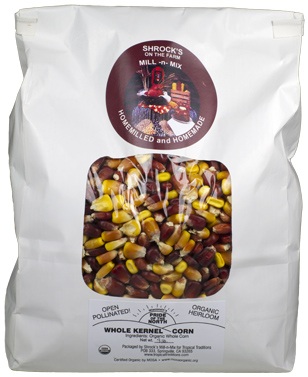
Tropical Traditions Announces First GMO-Tested and Glyphosate-Tested Corn Now Available
For the first time in over a year, Tropical Traditions is selling corn again. For the past few years, Tropical Traditions offered an open-pollinated organic heirloom corn and corn meal to its customers, grown by small-scale family farmers in Wisconsin. However, in the Fall of 2013, they found out that this corn had become contaminated with GMO DNA, and they were no longer able to offer it to their customers. Tropical Traditions has a ZERO tolerance level for the presence of GMOs and the herbicide glyphosate in their products. After much searching, the farmers in Wisconsin were able to purchase some seed corn for the 2014 crop that was open pollinated, and had tested to be free from GMO contamination. Knowing how far the wind can blow pollen from corn field to corn field, the farmers determined that simply shielding their corn from neighboring farms was not sufficient protection. Therefore, they calculated the time frame where they knew their neighbors' corn would be pollinating, based on when it was planted, and then planted their open pollinated GMO-tested corn at a later date, so that it would pollinate after the surrounding farms' cornfields were finished pollinating. In the Fall of 2014, this corn tested to be free of both GMOs and the herbicide glyphosate. It is now offered to the public, shipped direct from the farm as either whole kernel, or stone ground fresh into a corn meal.
Tropical Traditions Announces New Glyphosate-tested Program
Brian Shilhavy, CEO of Tropical Traditions, sent a letter recently to Tropical Traditions customers explaining why the company has had so many of its products out of stock or back ordered at the beginning of 2015. Tropical Traditions found out in late 2014 that much of the USDA certified organic wheat supply in North America was contaminated with residues of the herbicide glyphosate. Tropical Traditions has been in the process of testing all of its products for the presence of glyphosate since that discovery. Besides organic wheat and other organic grains that were tested positive for glyphosate and removed from the Tropical Traditions product line, they also tested and found glyphosate present in organic flax seeds, organic hemp, and organic freeze-dried strawberries. Products containing those ingredients are no longer available on the Tropical Traditions websites. Tropical Traditions also announced that they will be phasing out the USDA organic certification on its products, and replacing it with their new Healthy Traditions logos.