




News regarding the dangers of GMOs and biotech, and the advantages of organic sustainable agriculture.

The Chicken Underground: Raising fresh food against the law?
Infowars
Luke Rudkowski, founder of We Are Change and contributor to RT’s Adam Vs. The Man, travels to Georgia where he finds farmers-in-hiding who break the law and risk a $6000 fine for raising backyard chickens.
Reality has been turned on its head under the audacity of state power as the system rubber stamps little-studied genetically […]
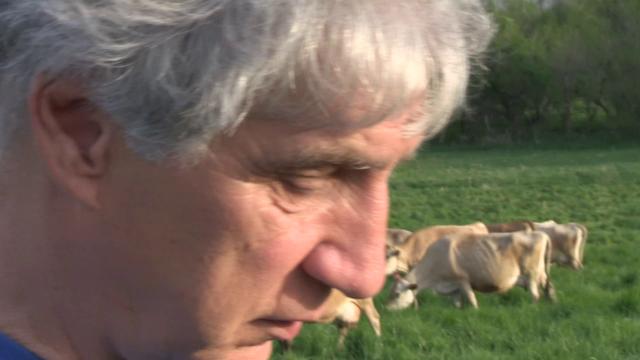
Pasture-Raised Dairy – And Why It Makes Sense
Health Impact News Editor Comments: Watch this interview with Francis Thicke explaining why pasture-raised dairy is more productive than confinement dairy farms. 25% of dairy farms in Wisconsin are now pastured dairy farms. It makes sense economically, it produces better milk, and it is better for the soil and the environment.
by Daniel Klein
Huffington Post
Earlier this […]
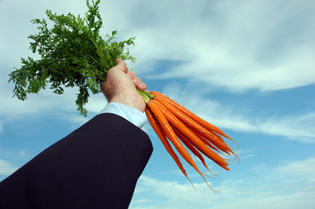
Big Ag doesn’t want you to care about pesticides
by Tom Laskawy
Grist
Power to the people pesticide industry! Photo from Grist
The produce lobby is livid that consumers might be concerned about pesticides. They are taking their fury out on the USDA for its annual report on pesticide use (via The Washington Post):
In a recent letter to Agriculture Secretary Tom Vilsack, 18 produce […]
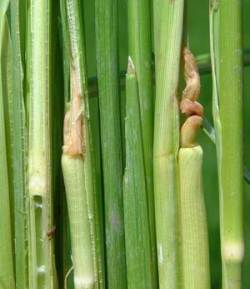
US Rice Production Threatened by GM Pesticide Drift
by Rady Ananda
globalresearch.ca
Adding to the natural rice industry’s woes after Bayer CropScience contaminated a third of the US rice supply with transgenic rice in 2006, the widespread application of Bayer’s glufosinate and Monsanto’s glyphosate is reducing crop yields, and burning and deforming rice plants that survive. […]
Toxin from GM crops found in human blood: Study
Bt toxin is widely used in genetically modified crops.
by Dinesh C. Sharma
IndiaToday
Fresh doubts have arisen about the safety of genetically modified crops, with a new study reporting presence of Bt toxin, used widely in GM crops, in human blood for the first time.
Genetically modified crops include genes extracted from bacteria to make them resistant […]
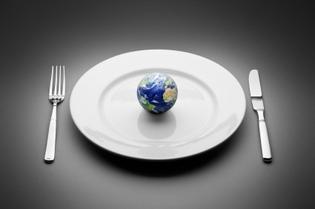
No Scientific Consensus that Factory Farms can Feed the World
by Tom Philpott
GRIST
Excerpts:
The latest evidence against any consensus around Big Ag as world savior: In a paper [PDF] just published in Science, a team of researchers led by the eminent Washington State University soil scientist John P. Reganold urges a fundamental rethinking of the U.S. ag-research system, which is […]

Disappearing bees a result of excessive cell phone useage?
by Daniel Favre
Abstract – The worldwide maintenance of the honeybee has major ecological, economic, and political implications. In the present study, electromagnetic waves originating from mobile phones were tested for potential effects on honeybee behavior. Mobile phone handsets were placed in the close vicinity of honeybees. The sound made by the bees was recorded […]
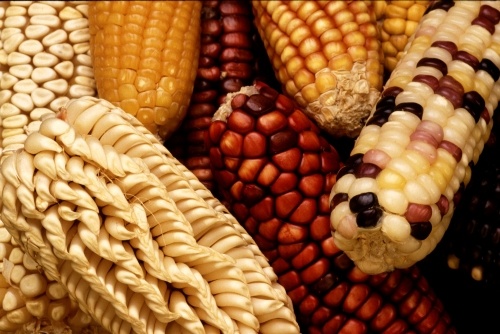
Drought tolerant GM corn will not feed the world
by GeneWatch
GeneWatch UK today responded to reports that Monsanto’s new drought tolerant genetically modified (GM) corn (maize) does not perform better than conventional varieties (1). The GM industry has made repeated claims that its crops will be needed to feed a growing population as the climate changes, in order to […]
Monsanto Renews Efforts for Genetically Engineered Wheat
by Beyond Pesticides
(Beyond Pesticides, May 11, 2011) In what seems like a quest to control much of the world’s food supply, industry giant Monsanto is renewing its efforts to develop genetically modified wheat. Over the past two years, the agricultural biotechnology giant has renewed its interest […]
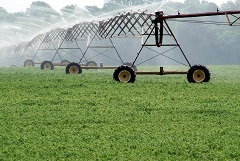
Farm Subsidies Become Target Amid Spending Cuts
By JENNIFER STEINHAUER
New York Times
WASHINGTON — When it comes to spending cuts, members of Congress like to say that “everything is on the table.” Except, generally, food. But now federal farm subsidies, long decried by policy makers as wasteful and antiquated but protected by powerful political interests, appear to be in serious danger.
This week, […]
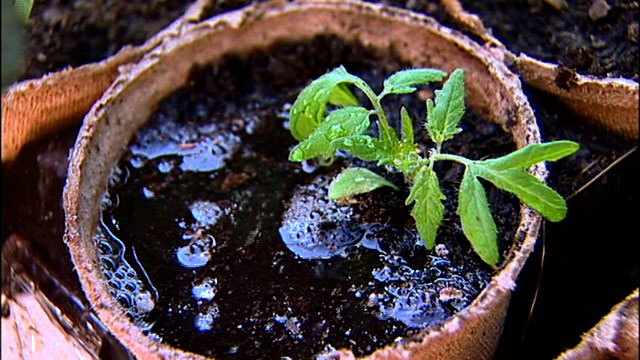
Potting Up Tomato Seedlings
by Cooking Up a Story
I ran over to Jean Ann Van Krevelen the other day – she had put out a shout for any veggie starts. Since she had been traveling she hadn’t had the chance to do much early planting this season. Since we don’t live too far from each other and I had […]
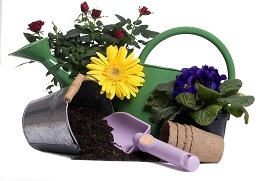
Is Your Organic Compost Really Sewage Sludge?
by Josh Harkinson
MotherJones
Last May, a group of movie stars gathered at a schoolyard garden in Venice, California to raise money for the Environmental Media Association, a prominent Hollywood green group that supports organic gardens at public schools. Among the publicity photos snapped that day was a product-placement shot of Rosario Dawson planting vegetables alongside a sack […]

EU farm commissioner slams GM crops
Photo by Farmers Weekly Interactive
by Caroline Stocks
Farmers Weekly Interactive
Genetically-modified crop production does not meet requirements for quality food, diverse diets and natural biodiversity, EU farm minister Dacian Ciolos has said.
In an interview with Romanian newspaper Adeverul, Mr Ciolos said GM crops were not the panacea for meeting increasing food demands across Europe.
He said EU […]
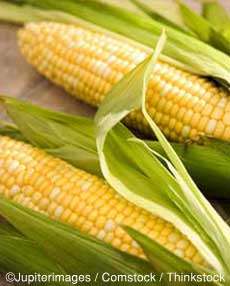
Eight GMO Foods You Should Almost Never, Ever Eat
By Dr. Mercola
Most soybean, corn, cotton and canola crops in the U.S. are genetically altered. Some experts argue that these crops could pose serious health and environmental risks, but the scientific picture is currently incomplete — deliberately so.
Agricultural corporations such as Monsanto and Syngenta have restricted independent research on the crops. They have refused […]
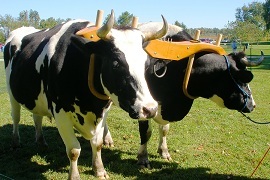
High fuel costs have some farmers returning to animal labor to help with farming, trading tractors for oxen
by TESS TAYLOR
The New York Times
Excerpts:
Mr. Ciotola, 32, is one of a number of small farmers who are turning — or rather returning — to animal labor to help with farming. Before the humble ox was relegated to the role of historical re-enactor, driven by men in period garb for child-friendly festivals like pioneer […]

Food Democracy Now Interviews Dr. Don Huber on GMOs and New Organism that Threatens U.S. Agriculture
On January 17, internationally recognized plant pathologist Dr. Don Huber, wrote a letter to USDA Secretary Tom Vilsack warning of the discovery of a new pathogen and a possible link between Roundup Ready® (GMO) corn and soybeans and severe reproductive problems in livestock as well as widespread crop failure.
Less than 3 weeks later, the […]

Composting Kitchen Scraps with a Worm Bin
by Patti Moreno
The Garden Girl
A worm bin is a perfect solution for anybody with a small patio or garden. It also works well for condo dwellers where there are rules and regulations against composting. The worm castings (or worm poo) make the best natural fertilizer, and its power can be extended by brewing […]

Factory farm protection act degrades Missouri’s Constitution
by the Editorial Board – stltoday.com
Missouri lawmakers passed House Bill 209 by wide margins earlier this month. It limits the rights of people who own land near large factory farms to recover damages from foul odors and other problems created by huge animal-feeding operations.
This is one of the most noxious pieces of legislation to land on Gov. […]
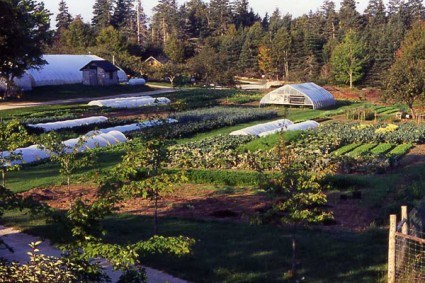
Organic agriculture: deeply rooted in science and ecology
Coleman’s Four Season Farm: Start with biodiversity and well-nourished soil, add some appropriate technology, then harvest lots of healthy food.
Photo: Barbara Damrosch
by ELIOT COLEMAN
Grist
Organic farming is often falsely represented as being unscientific. However, despite the popular assumption that it sprang full born from the delusions of 60s hippies, it has a more extensive, […]
Organic Farming in Iran: Government has goal of 25% of Agriculture to be Organic in Near Future
Health Impact News Editor Comments: It seems each day we read news stories about American Biotech companies advancing their products in poorer countries in the name of “feeding the poor” and solving “world hunger.” What these genetically modified seeds end up doing often, however, is replacing traditional agricultural principles and eliminating small-scale sustainable producers. […]