





by Brian Shilhavy
Health Impact News
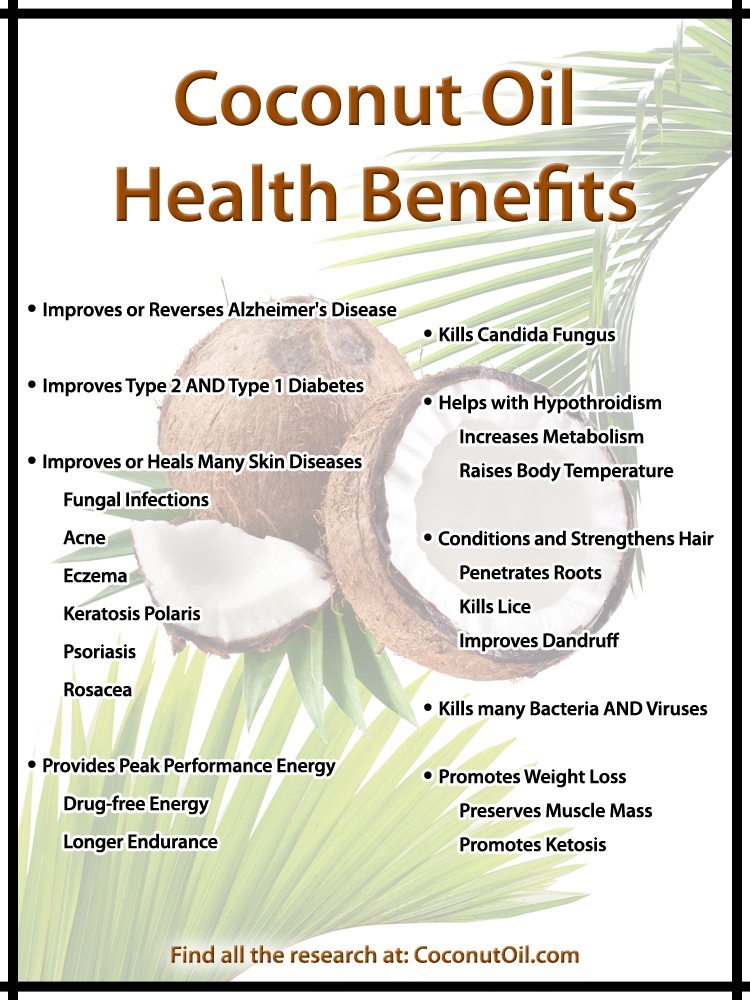
Coconut oil’s health benefits are so numerous, that it should be the #1 dietary oil in everyone’s kitchen. The U.S. Government continues to demonize it through their USDA dietary recommendations simply because it is a saturated fat, and the FDA doesn’t like it either because it potentially takes away market share from many patented drugs.
One of the best places to find information on the benefits of coconut oil to contradict the negative propaganda from the U.S. Government, is in their very own database on their National Library of Medicine’s website, listing peer-reviewed journal articles published on the health benefits of coconut oil.
We maintain a list of these peer-reviewed journal articles on CoconutOil.com.
Here are a few new journal articles just published in 2026, showing how coconut oil helps with Crohn’s disease, neuropsychiatric disorders, and as a skin moisturizer for preterm neonates.
Early coconut oil exposure suppresses chronic experimental Crohn’s disease via myristic acid and enhanced regulatory T cells
Nature Communications. 14 September, 2026
Abstract
Public health advisory guidelines caution against the consumption of saturated fats, especially coconut oil (CO), yet CO is widely consumed in regions with low inflammatory bowel disease prevalence (IBD) and is often perceived as beneficial by IBD patients.
CO is rich in medium-chain saturated fatty acids, notably lauric acid (C12:0) and myristic acid (C14:0) which are negligible in mammalian tissues without dietary intake.
Because IBD is linked to saturated fats consumption, here we tested and unexpectedly found that CO and its saturated fatty acids are beneficial suppressing intestinal inflammation in SAMP1/YitFc mice, a chronic IBD model of Crohn’s disease-like ileitis.
In young mice, the early exposure to a high-dose CO-based diet prevented ileitis in 63.64% of animals (95%CI = 30.79-to-89.07%). Importantly, comparable protection was observed at lower doses amenable for human translation.
Although CO did not reverse established disease in adult mice, when combined with steroids, it prolonged the period of steroid-induced remission illustrating its therapeutic benefits in IBD.
Disease prevention was associated with myristic acid and correlated with anti-inflammatory microbiota shifts and enhanced regulatory T-cell responses, without adverse effects.
Findings challenge current dietary advisories against CO and support reevaluation of CO and myristic acid as anti-inflammatory dietary adjuvants for the prevention and management of established IBD.
Read the full article here.
Timing-dependent neuroprotective effects of Virgin coconut oil against chronic restraint stress-induced neurobehavioral and hippocampal dysfunction: GC-MS profiling and in vivo evaluation
Frontiers in Nutrition. October 2, 2026
Abstract
Background: Chronic stress, often exacerbated by improper lifestyle, long-term physical confinement, and emotional distress, these are the major contributor to neuropsychiatric disorders, mostly through hippocampal dysfunction. Though synthetic drugs offer symptomatic relief, their side effects prompt a growing interest in natural plant-derived nutraceuticals.
Virgin coconut oil (VCO), rich in medium-chain fatty acids, polyphenols, and antioxidants, has demonstrated preliminary neuroprotective activity; however, its pharmacological basis in hippocampal dysfunction induced by chronic restraint stress (CRS) remains inadequately characterized.
Herein, we investigated the neuroprotective activity of VCO by administering it in a time-staggered manner (Pre-Treatment, Co-treatment, and Post-Treatment) and assessed its effects through physiological, behavioral, antioxidant, and histopathological analyses. Our secondary objective was to profile the phytoconstituents of VCO using Gas Chromatography-Mass Spectrometry (GC-MS).
Methods: Adult male Wistar rats were randomized into six groups (n = 6): Control, CRS, VCO-alone, Pre-VCO, Co-VCO, and Post-VCO. VCO was administered in a time-staggered manner to delineate its prophylactic, adjuvant, and therapeutic potential. Animals underwent physiological, behavioral (Sucrose Preference Test, Elevated Plus Maze, radial arm maze), biochemical (corticosterone, lipid peroxidation, glutathione, superoxide dismutase, catalase), and histopathological assessments (Nissl staining). Lastly, we performed phytochemical characterization using Gas Chromatography-Mass Spectrometry (GC-MS).
Results: VCO significantly enhanced spatial learning and memory while attenuating anhedonia and anxiety-like behavior. Biochemically, VCO reduced corticosterone and lipid peroxidation levels, restored antioxidant markers, and reinstated hippocampal neuronal morphology, collectively indicating modulation of neurobehavioral activity and restoration of redox homeostasis.
Pre-VCO demonstrated superior neuroprotection, suggesting stronger prophylactic and adjunctive pharmacological activity. GC-MS identified caprylic acid possessing the most abundant chromatographic peak alongside polyphenolic compounds, supporting a plausible mechanistic basis for the neuroprotective effects of VCO.
Conclusion: VCO demonstrates significantly higher neuroprotective efficacy when administered as Pre-treatment in CRS rats. Overall, these findings establish VCO as a dietary functional food with measurable prophylactic and adjunctive neuroprotective efficacy. These may plausibly be due to the major content of the MCFA-like caprylic acid in VCO mitigating oxidative stress and hippocampal neuronal dysfunction.
This study provides GC-MS-based compositional evidence and in vivo functional validation supporting VCO’s translational potential as a dietary strategy to mitigate the chronic stress-associated neuropsychiatric burden in human populations.
The effects of coconut oil and moisturising lotion on skin condition and vital signs in preterm neonates: A randomised controlled trial
Journal of Pediatric Nursing. October 6, 2026
Abstract
Background: Preterm neonates have an immature skin barrier, increasing their susceptibility to moisture loss and impaired skin integrity. However, evidence regarding the most appropriate topical moisturising agent for this population remains limited.
Purpose: This trial aims to investigate the effects of applying coconut oil and a moisturising lotion to the skin of preterm neonates on their skin moisture, skin pH, skin integrity, and vital signs.
Methods: This randomised controlled trial was conducted with 90 preterm neonates with a gestational age of 320/7-376/7 weeks who were admitted to the neonatal intensive care unit between December 2024 and December 2025. The sample consisted of two intervention groups and one control group [Moisturising Lotion (ML) group (n = 30), Coconut Oil (CO) group (n = 30) and Control group (n = 30)]. The data were collected using an Infant Information and Monitoring Form, a skin moisture meter, a skin pH meter and the Neonatal Skin Condition Score (NSCS).
Results: Following the application, skin moisture rates in the abdominal, arm and leg regions significantly rose in the intervention groups compared with the control group (p < .05). A significant rise was found in intra-group skin pH values on the 3rd and 5th days in the ML group and on day 5 in the CO group (p < .05). The NSCS score significantly dropped over time in both intervention groups (p < .001). Effect size analyses indicated a more pronounced improvement in skin condition scores in the CO group (p < .001; η2 = 0.551).
Conclusion: The results of this study indicated that interventions of coconut oil and moisturising lotion may be effective in improving skin moisture and supporting skin integrity in preterm neonates. As coconut oil has a greater effect on the skin integrity of premature infants, using it as a moisturising topical agent is recommended.
Practice implications: Coconut oil and moisturising lotion may be considered low-cost and safe nursing interventions to support skin hydration and skin integrity in preterm neonates.
Read the full study here.
Related:
First Virgin Coconut Oil Imported to the U.S. is Still the BEST – Now You Could Sell it Too!
This article was written by Human Superior Intelligence (HSI)


See Also:
Understand the Times We are Currently Living Through
The Brain Myth: Your Intellect and Thoughts Originate in Your Heart, Not Your Brain

Is God’s Patience About to Run Out on the United States?

Second Edition of eBook Released: The Concept of the American Christian Family is a Myth and is NOT Found Anywhere in the Bible – by Brian Shilhavy

FREE eBook! Restoring the Foundation of New Testament Faith in Jesus Christ – by Brian Shilhavy

KABBALAH: The Anti-Christ Religion of Satan that Controls the World Today

Exposing the Christian Zionism Cult

The Bewitching of America with the Evil Eye and the Mark of the Beast

Jesus Christ’s Opposition to the Jewish State: Lessons for Today

Identifying the Luciferian Globalists Implementing the New World Order – Who are the “Jews”?

The Seal and Mark of God is Far More Important than the “Mark of the Beast” – Are You Prepared for What’s Coming?

The Satanic Roots to Modern Medicine – The Image of the Beast?

Medicine: Idolatry in the Twenty First Century – 10-Year-Old Article More Relevant Today than the Day it was Written


Having problems receiving our emails? See:
How to Beat Internet Censorship and Create Your Own Newsfeed
We Are Now on Telegram. Video channels at Bitchute, and Odysee.
If our website is seized and shut down, find us on Telegram, as well as Bitchute and Odysee for further instructions about where to find us.
If you use the TOR Onion browser, here are the links and corresponding URLs to use in the TOR browser to find us on the Dark Web: Health Impact News, Vaccine Impact, Medical Kidnap, Created4Health, CoconutOil.com.
Join the Discussion