


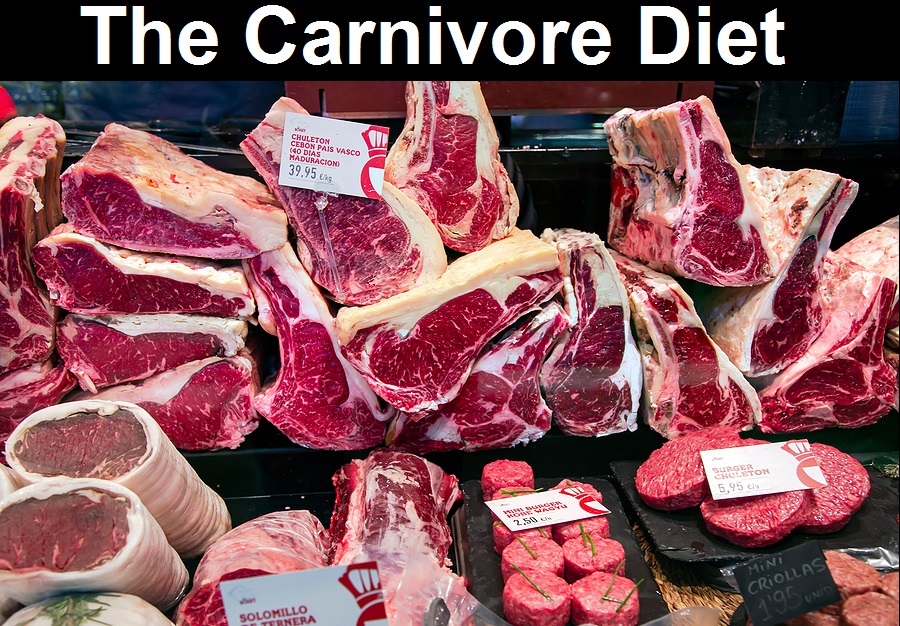
What is the Carnivore Diet and How Does it Reverse Diseases?

The Carnivore Diet is getting mainstream news coverage these days, in a positive way. Fox News just published an article on the Carnivore Diet highlighting the story of a man in Florida who claims he went on a Carnivore Diet that healed him of "decades of battling severe psoriasis, pain and depression." The concepts of the "Carnivore Diet" have been around since the 1930s, when a Dr. Vilhjalmur Stefansson, a Canadian ethnologist who spent more than a decade with the Inuit people in the Arctic, ate a traditional Eskimo diet consisting mostly of only fish and meat. He was so healthy, it prompted him to study the diet more closely. Stefansson's results show that this was not a "high meat" diet primarily, as protein only consisted of 15-25%, but it was primarily a "high fat" diet, and saturated fats at that, which made up 75-85% of the diet. So while this is called the "Carnivore Diet", it is primarily the "Ketogenic Diet," which was developed about a decade earlier in the 1920s at Johns Hopkins hospital as a natural cure for epilepsy, when drugs failed. It was a high fat, moderate protein, very low carb diet. A search for the "Ketogenic Diet" on Health Impact News will result in over 130 articles on the topic, documenting how people's lives have been changed by following a high fat, moderate protein, and low carb diet.
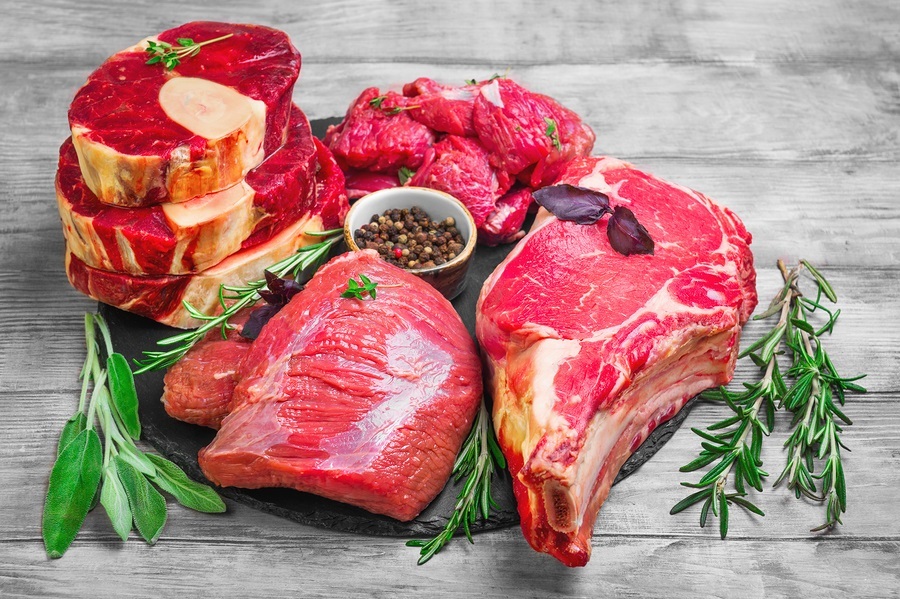
The Carnivore Diet Gains in Popularity Due to Health Benefits

Dr. Paul Saladino trained at the University of Arizona with a focus on integrative medicine. He completed his residency in psychiatry at the University of Washington in 2019, and is a certified functional medicine practitioner through the Institute for Functional Medicine. In this interview, Saladino discusses the surprising benefits of the carnivore diet, which is the topic of his new book, “The Carnivore Code,” which is currently available for preorder. I view him as one of the leading experts on the health benefits of an animal-based diet. Saladino takes it to the extreme, though, advocating a carnivore diet to the exclusion of all vegetables or plant materials, which may strike many as debatable. The evidence he presents for it, however, is quite compelling. I don't know anyone personally who has reviewed the literature more carefully and can put together a coherent argument for this strategy. (This is in part a side-effect of having gone through the basic medical sciences twice, as he went through medical school to be a physician’s assistant and later an M.D.) Saladino is likely to challenge your beliefs in this interview. This is not meant to offend anyone. If you believe you should avoid animal foods for ethical reasons, that’s certainly your choice. If you’re struggling with health issues that a vegetarian diet has not been able to resolve, however, or perhaps even made your condition worse, you may want to listen to what he has to say.