





by Brian Shilhavy
Health Impact News
The markets were down again today as the trading week closed, as Wall Street is waking up to the fact that Trump has run out of options to control the cost of oil.
While there has not yet been a total market collapse, the headlines today were the most ominous they have been since the war started.
Not only is the price of crude oil staying around $100 a barrel, the entire supply chain is now facing pressures and disruptions not seen since COVID in 2020.
Here are some of the stories I was tracking today that were posted on our Telegram channel.
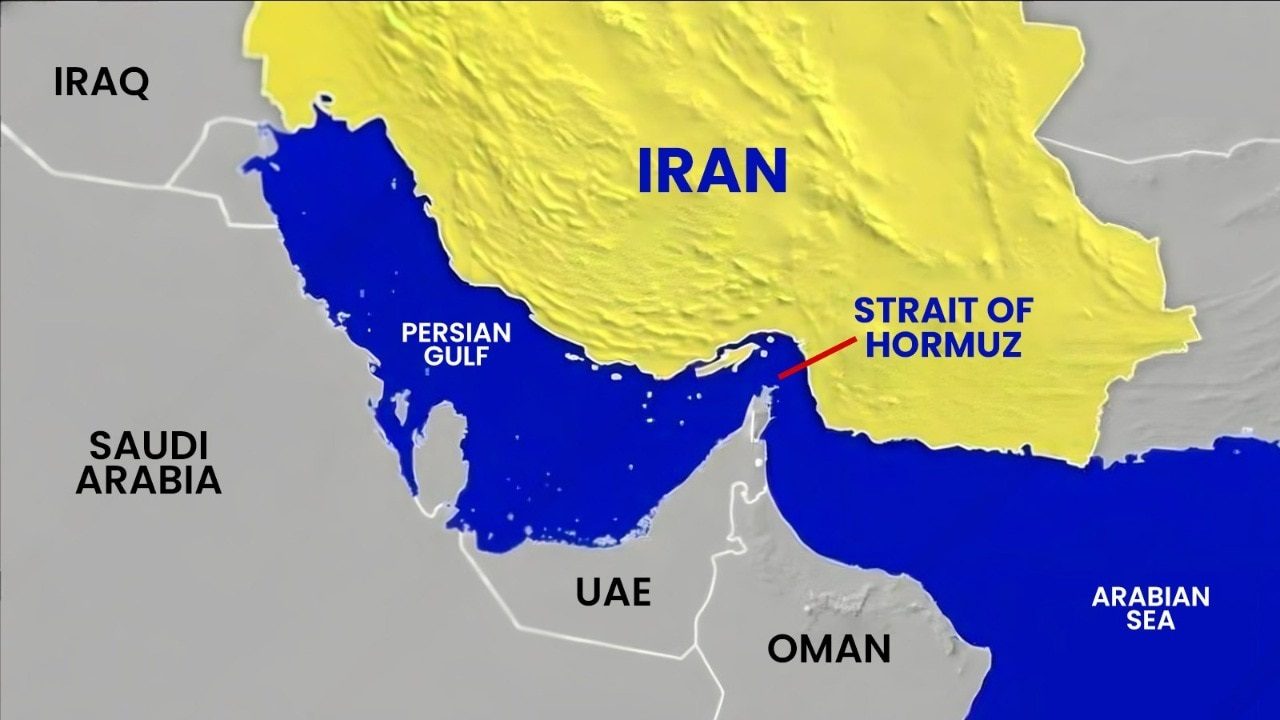
Wall Street Analyst Says Trump’s Efforts to Control Oil Prices Will Not Work Unless the Straight of Hormuz Opens Back Up
From MarketWatch:
Trump is scrambling to quell the rise of $100 oil. But the market keeps circling one cure.
Other efforts to coax oil down prices — now at $100 a barrel — are like putting a Band-Aid on a shotgun wound, says analyst
Excerpts:
Oil prices have vaulted past $100 a barrel after weeks of intensifying tensions with Iran, setting off a scramble in Washington and across global energy markets to contain the surge.
But traders and analysts say the market keeps coming back to the same conclusion: None of the usual mechanisms for pushing prices lower will matter unless one critical problem is resolved.
Such a breathtaking move for crude in such a short span reflects just how jittery energy markets remain, despite efforts by the U.S. and global energy ministers to calm fears that the Strait of Hormuz, a vital artery for global trade, could remain effectively closed for a protracted time.
Every other effort to tamp down prices “has been ineffective because the Strait of Hormuz and its importance to the global economy is overwhelming,” Robert Yawger, director of energy futures at Mizuho Securities USA, told MarketWatch.
The strait is “not replaceable by stopgap measures,” like this week’s historic release of emergency oil reserves by nations in the International Energy Agency or the Trump administration’s consideration of a waiver of the Jones Act, said Yawger.
“There’s no replacement for 20 million barrels a day being shut in at the Strait of Hormuz.”
More Trouble for Big Tech in the Iran War: Qatar Accounts for a Third of Global Helium Supply but has Halted Production
From MarketWatch:
Chip makers face a looming shortage of a key ingredient if the Iran conflict drags on
Excerpts:
As if there weren’t enough supply constraints in the semiconductor industry, chip makers are staring down a potential shortage of helium — a gas crucial for semiconductor manufacturing.
Conflict in the Middle East between the U.S., Israel and Iran threatens to hurt both the production and transportation of helium.
Helium is extracted as a byproduct of natural-gas processing and is an essential part of the semiconductor-manufacturing process. Chip makers use it as a carrier gas to entrap and transport certain chemicals, transfer energy to chemical reactants and cool silicon wafers during production.
According to the Semiconductor Industry Association, there are no available substitutes that can replace helium for some of the industry’s uses.
“Should the supply of helium be immediately disrupted, there would likely be shocks to the global semiconductor manufacturing industry,” the SIA warned in a 2023 report.
On March 2, QatarEnergy stopped production at its Ras Laffan complex, which it says is the largest export facility in the world for liquefied natural gas.
It later declared “force majeure,” which frees it from meeting its obligations to customers.
The Iran war is already the biggest threat to global shipping and supply chains since COVID
More bad news about the economic fallout from the Iran war by the Wall Street publication Market Watch today. Rising oil prices are not the only thing threatening the U.S. economy, but there could be disruptions of supply chains and higher shipping costs, like we saw during COVID.
From MarketWatch:
The price of food, AI chips and more could rise as supply-chain disruptions touch industries across the spectrum
Excerpts:
Iranian strikes on cargo ships and on Oman’s biggest port have ratcheted up concerns about the global shipping business, adding another economic dimension to the conflict beyond higher energy prices.
The cost of shipping goods around the world is on the rise due to the situation in the Middle East. A composite index tracking spot global container-shipping prices is up 8% this week, and it’s up nearly 12% since the start of the conflict in Iran.
While container cargo flows are nowhere near as dependent on the Strait of Hormuz as the shipment of crude oil and crude products, the overall crisis compounds supply-chain risks and costs.
War is a growing threat to the global supply chain, already fragile after other recent geopolitical shocks and under pressure from the Trump administration’s tariffs, said Antonella Teodoro, an economist and analyst at freight and logistics consultancy MDS Transmodal.
The Iran conflict is likely the most significant threat to global shipping and supply chains since COVID, she added.
Iran War: We Follow The Money (To Mar-A-Lago)
This is, by far, the BEST analysis of who is behind the Iran war in the U.S., and how this has been planned for years. It reveals who the Zionists and Jews are that are profiting from this war.
From The Democracy Defender’s Substack:
How the Mar-A-Lago Gang is Cashing In On The Iran War
Excerpts:
Here is a number to sit with: $2,000 per truckload.
That’s the fee a little-known Florida company called Gothams LLC — the same firm that ran the “Alligator Alcatraz” immigrant detention center — wants to charge for every single humanitarian aid truck entering a conflict zone under American control. Commercial trucks? $12,000 each.
The contract they pitched to the White House demands a seven-year monopoly on all trucking and logistics, with a guaranteed 300% return on capital expenditure. Federal contracting experts called it “highway robbery.” The White House claimed the proposal was shelved. Records show Gothams partners were still coordinating with administration officials as recently as early 2026.
This is the Iran war.
Not the one you’re being told about — the one wrapped in flags and “national security” and solemn talk of nuclear threats. That war exists too, of course.
But beneath it runs a parallel architecture, a financial machinery so brazen in its design that it makes the Iraq-era Halliburton contracts look quaint by comparison.
In this war, every cabinet member has a financial stake. Every bomb dropped is a live-fire sales demo. Every barrel of Iranian crude pulled off the global market is a windfall for a politically connected fracking company in Texas. And when the rubble settles, the people carving up the reconstruction aren’t diplomats — they’re real estate billionaires pitching luxury hotels and artificial islands to sovereign wealth funds in Riyadh.
This isn’t a byproduct of the conflict. It is the conflict.
Approximately 70% of Trump’s cabinet and more than 50 government officials have direct prior roles with the Heritage Foundation or its Project 2025 partner groups.
That is not a statistic that gets enough attention.
The Heritage Foundation — through Project 2025 and the subsequent “Project 2026” — didn’t just publish a policy wish list. It built a personnel pipeline that placed hundreds of vetted loyalists into the federal bureaucracy, each one committed to a specific task: centralize executive power, dismantle regulatory oversight, and an “America First” foreign policy that treats military force as the default instrument of statecraft.
The Iran war is what that pipeline was built to produce.
Discussions began with Colin Powel addressing Heritage in 2018 and actionable “maximum pressure” policy was drawn up in 2022-2023.
For decades, Heritage has advocated for the destruction of the Iran nuclear deal, for “maximum pressure” campaigns, and for the explicit position that the Iranian regime cannot be negotiated with — only confronted.
Their scholars have called the current moment a “golden window of opportunity.” Their policy papers called for “sustained operations involving weeks of bombing.” Their Sentinel Action Fund — a Super PAC — lobbied for the exact defense appropriations now funding the carrier strike groups in the Persian Gulf.
This was not a reaction to events. It was a strategy waiting for the right President and the opportunity to execute it.
And the personnel is now in place — not just ideologues, but billionaires with portfolios that rise and fall with every decision they make from inside the government.
The Pentagon as a Private Equity Portfolio: Stephen Feinberg
The Department of Defense now officially goes by a secondary title: the “Department of War.” The name change is telling, but the real transformation is structural in a financial sense.
At the center of it sits Stephen Feinberg, co-founder of Cerberus Capital Management — a private equity firm with approximately $70 billion dollars in assets — who serves as the Deputy Secretary of Defense.
While Pete Hegseth plays the role of ideological figurehead, talking “warrior ethos” to the cameras, Feinberg is the one actually running the Pentagon’s $900 billion-plus budget. He manages it, according to observers, with the “terrifyingly intense scrutiny” of a corporate turnaround specialist. Which is exactly what he is.
The June 2025 strikes on Iran’s Fordow nuclear facility weren’t just military operations. They were live-fire demonstrations for hypersonic weapons systems developed by private equity-backed firms. Every successful strike is a proof of concept. Every proof of concept drives up the portfolio value. And the man overseeing Pentagon procurement is financially connected to the firms doing the selling.
The Commerce Secretary’s Insider Bet: Howard Lutnick
If the Feinberg story is about slow structural corruption, the Howard Lutnick story is about something faster and more breathtaking: a sitting cabinet member’s firm betting against his own policies — and winning.
Lutnick, the CEO of Cantor Fitzgerald, was confirmed as Commerce Secretary in February 2025. From that position, he oversaw the aggressive use of the International Emergency Economic Powers Act (IEEPA) to impose tariffs and sanctions — the “America First” trade war in its most weaponized form.
Meanwhile, his firm — now “run by his son”, Brandon Lutnick — was doing something extraordinary. Documents reviewed in July 2025, and a subsequent House Judiciary Committee investigation led by Rep. Jamie Raskin, revealed that Cantor Fitzgerald had been buying the rights to collect potential tariff refunds from American importers at 20 to 30 cents on the dollar.
Read that again. Lutnick’s firm was buying up the claims of businesses damaged by Lutnick’s own tariffs — at a massive discount — betting that the courts would eventually strike down those tariffs as illegal.
On February 20, 2026, the Supreme Court did exactly that.
The result: 300% to 500% profit for Lutnick’s Cantor Fitzgerald on every claim they purchased.
The incentive structure is almost too corrupt to believe:
- The Commerce Secretary imposes aggressive, potentially illegal tariffs that disrupt trade and damage American importers.
- The Secretary’s own firm buys the rights to eventual refunds from these same injured companies — at pennies on the dollar.
- When the courts strike down the tariffs — as the Secretary’s firm clearly anticipated — it collects the full refund value.
And the Iran war makes this worse, not better. The administration’s use of IEEPA to target “specified imports” and “perceived threats” related to the conflict creates a continuous stream of new distressed trade claims for Cantor Fitzgerald to scoop up. Every new sanction, every new emergency declaration, is a new batch of distressed companies for the Secretary’s family firm to profit from.
This article was written by Human Superior Intelligence (HSI)


See Also:
Understand the Times We are Currently Living Through
The Brain Myth: Your Intellect and Thoughts Originate in Your Heart, Not Your Brain

Is God’s Patience About to Run Out on the United States?
Second Edition of eBook Released: The Concept of the American Christian Family is a Myth and is NOT Found Anywhere in the Bible – by Brian Shilhavy

FREE eBook! Restoring the Foundation of New Testament Faith in Jesus Christ – by Brian Shilhavy

KABBALAH: The Anti-Christ Religion of Satan that Controls the World Today

Exposing the Christian Zionism Cult

The Bewitching of America with the Evil Eye and the Mark of the Beast
Jesus Christ’s Opposition to the Jewish State: Lessons for Today

Identifying the Luciferian Globalists Implementing the New World Order – Who are the “Jews”?

The Seal and Mark of God is Far More Important than the “Mark of the Beast” – Are You Prepared for What’s Coming?

The Satanic Roots to Modern Medicine – The Image of the Beast?

Medicine: Idolatry in the Twenty First Century – 10-Year-Old Article More Relevant Today than the Day it was Written

Having problems receiving our emails? See:

How to Beat Internet Censorship and Create Your Own Newsfeed
We Are Now on Telegram. Video channels at Bitchute, and Odysee.
If our website is seized and shut down, find us on Telegram, as well as Bitchute and Odysee for further instructions about where to find us.
If you use the TOR Onion browser, here are the links and corresponding URLs to use in the TOR browser to find us on the Dark Web: Health Impact News, Vaccine Impact, Medical Kidnap, Created4Health, CoconutOil.com.
2 Comments