





by Brian Shilhavy
Health Impact News
As the war in Iran rages on with no signs of stopping anytime soon, the worldwide energy crisis is expanding.
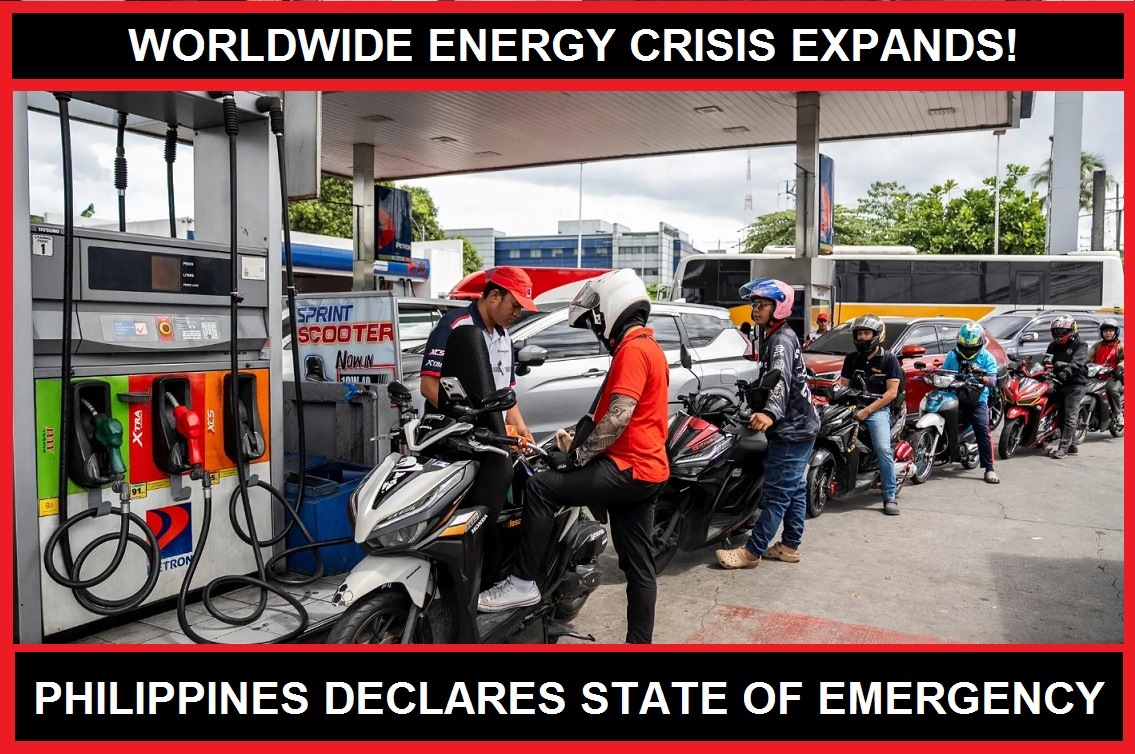
The Philippines appears to be the first country to declare a State of Emergency, as their fuel supplies have dwindled to only 45 days’ worth.
From The Daily Tribune (Philippines):
After weeks of not admitting that the country is experiencing a crisis, President Ferdinand Marcos Jr. on Tuesday released an Executive Order declaring the whole country under a National State of Emergency and authorizing the unified package for livelihoods, industry, food and transport.
Under Executive Order 110, signed by the President in Malacanang Palace, it said that the declaration was due the ongoing hostilities in the Middle East involving the United States of America, Israel, and Iran, which have heightened geopolitical tensions in the region that plays a critical role in global oil production and transportation, creating uncertainty in global energy markets, severe disruptions in supply chains, and significant volatility and upward pressure on international oil prices, thereby posing a threat to the country’s energy security.
The Order also cited the closure of the Strait of Hormuz, a critical energy corridor for global oil shipments, which disrupted the flow of petroleum products to international markets and constrained global fuel supply, with corresponding implications on the stability and adequacy of our domestic energy supply.
Energy Secretary Garin, also on Tuesday, maintained that the fuel supply of the country, including jet fuel, has buffer stocks, stressing that on average, there is around 45 days’ worth of supply for the whole country to date, based on their talks with fuel companies.
In particular, the current domestic supply of gasoline is expected to last for the next 53.14 days; diesel, 45.82 days; kerosene, 97.93 days; jet fuel, 38.62 days; fuel oil, 61.49 days; and liquified petroleum gas, 23.51 days.
The International Energy Agency (IEA) is warning that the ongoing US-Israel-Iran conflict has already removed around 11 million barrels per day from global oil supply, an impact larger than past oil crises combined.
IEA Executive Director Fatih Birol told the National Press Club in Canberra, Australia, on Monday that the current disruption exceeds the combined supply losses of the 1973 and 1979 energy shocks.
Global energy crisis deepens amid US-Iran tensions in Strait of Hormuz
From CGTN (Beijing, China)
Excerpts:
Global energy markets are facing one of the most severe disruptions in decades, with the International Energy Agency (IEA) warning that the ongoing US-Israel-Iran conflict has already removed around 11 million barrels per day from global oil supply, an impact larger than past oil crises combined.
IEA Executive Director Fatih Birol told the National Press Club in Canberra, Australia, on Monday that the current disruption exceeds the combined supply losses of the 1973 and 1979 energy shocks.
On March 11, IEA member nations agreed to release a record 400 million barrels of oil from strategic reserves – about 20% of total stocks – to curb rising global crude prices. While the drawdown may ease market pressure, Birol emphasized that it is not a long-term solution. “The single most important solution is reopening the Strait of Hormuz,” he said.
The Strait of Hormuz, through which roughly 20% of global oil shipments pass, has recently come under the spotlight after US President Donald Trump threatened strikes on Iran’s power and energy facilities if it doesn’t open the strait. Meanwhile, Iran has defied the threat and stressed that the strait is blocked only for “aggressors.”
The latest Middle East tensions sent oil and gas prices swinging sharply on Monday. Brent crude briefly rose above $113 per barrel, a 50% gain since the conflict began, amid fears of a supply disruption as Trump’s 48-hour ultimatum expired. Prices later dropped below $100 after Trump announced “very good and productive” talks with Iran and delayed strikes for five days, only to rebound again as Iran denied any negotiations.
In an interview with CMG, Qin Tian, deputy director of the Institute of Middle East Studies of China Institutes of Contemporary International Relations, said this round of the energy crisis surpasses the oil crises of the last century in terms of scale, impact and nature.
The Toilet Paper Runs have Begun
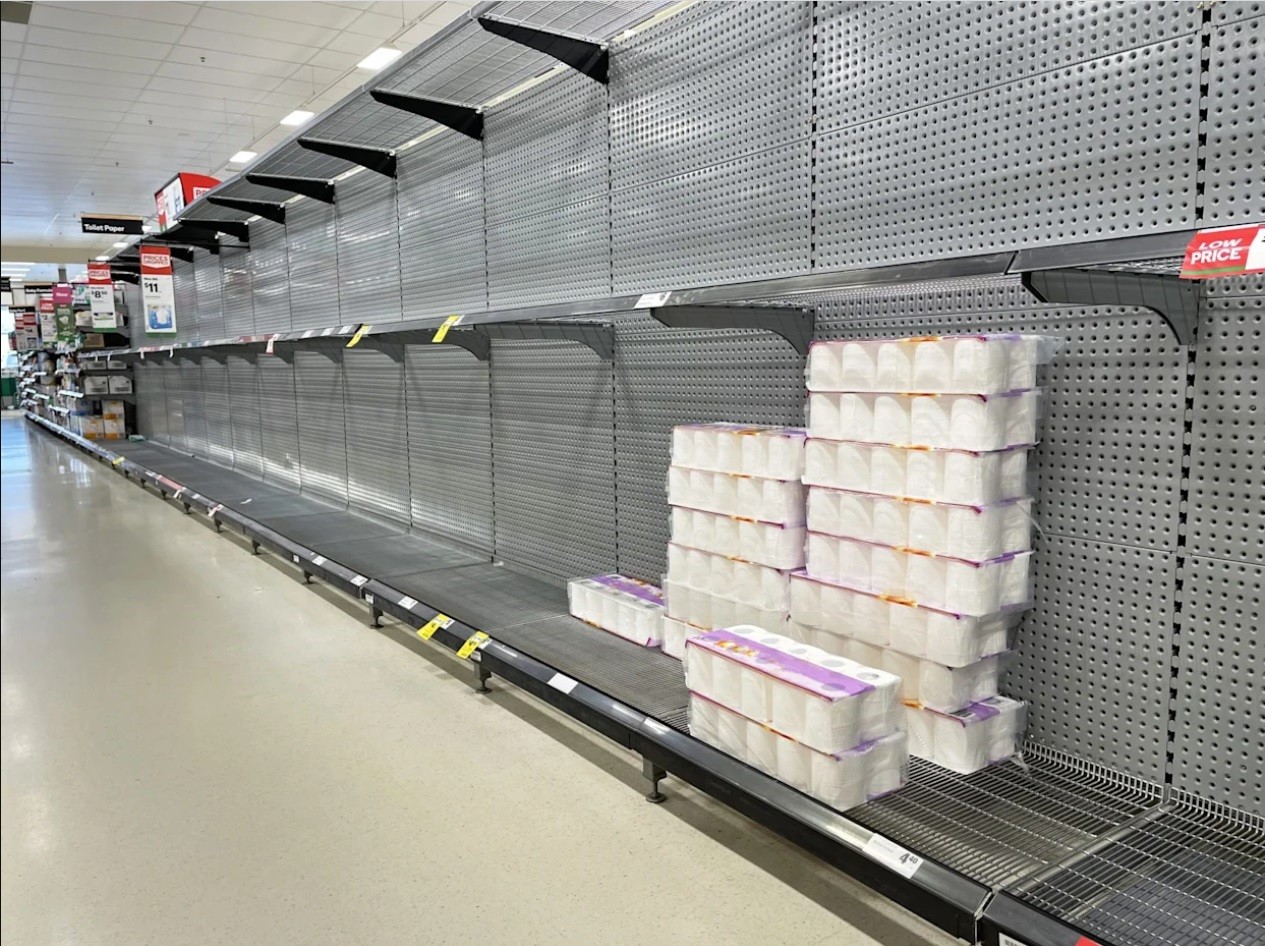
Remember how toilet paper was the first thing to run out in American grocery stores in 2020 when COVID began?
It’s starting again, in Japan.
(Tip: get a bidet that attaches to your toilet seat and you will never need TP again.)
More news from our Telegram Channel.
Texas Oil Refinery Valero Shuts Down After “Accidental” Explosion
Oil is about the only thing certain to offer a return on investments for Wall Street right now, as prices go up when supply goes down, so was this really an “accident”?
From OilPrice.com:
Valero Shuts Major Refinery After Explosion as Fuel Markets Tighten
Excerpts:
Valero has shut down its Port Arthur refinery after an explosion late on Monday set a diesel processing unit on fire, Reuters has reported, citing unnamed sources.
Other reports say that emergency services have been sent to the site, and a shelter-in-place order has been issued for the western parts of Port Arthur. Al Jazeera said police sources had told local media that the cause of the fire was an industrial heater.
Valero’s Port Arthur refinery is one of the largest in the United States, with a daily capacity of 380,000 barrels. Its diesel hydrotreater, where the explosion occurred, has a daily capacity of 47,000 barrels.
The accident comes at a time of rising fuel prices amid the international oil price rally prompted by tanker traffic disruption in the Strait of Hormuz. As of Monday, the national average for gasoline stood at $3.956 per gallon, according to AAA, with the diesel average at $5.285 per gallon. These figures compare with $3.126 per gallon of gasoline a year ago and $3.597 per gallon of diesel in late March 2025.
A high diesel price is especially concerning as planting season begins for farmers across the northern hemisphere. Higher diesel prices eventually drive up the price of everything, most notably food. This time, the effect on food prices would be aggravated by fertilizer prices, which have also been affected by the Middle East war since the region is a major producer of fertilizers and fertilizer feedstocks.
Chinese Publication Claims U.S. Has Two Months of Rare Earths Left
From OilPrice.com:
Excerpts:
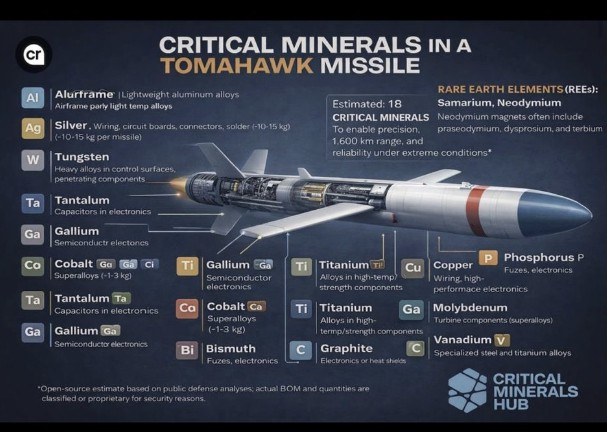
The U.S. has already launched hundreds of missiles and precision-guided weapons in the escalating conflict with Iran, an air campaign that has consumed billions of dollars in advanced military hardware in just weeks. But a new warning circulating in Chinese and Western media suggests the materials needed to keep producing those weapons may be running dangerously low.
Reports from the South China Morning Post and Reuters indicate Washington could have only weeks or months of certain rare-earth inventories available for defense manufacturing if supply disruptions deepen.
Rare earth elements are embedded throughout modern military systems—from missile guidance and drone propulsion to radar systems and fighter aircraft electronics.
“You can’t fight a twenty-first-century war with twentieth-century supply chains,” said Lipi Sternheim, CEO of REalloys.
Volume in stock and oil futures surged minutes before Trump’s market-turning post
Trump clearly appears to be colluding with inside traders who made a ton of money yesterday with Trump’s social media post. People tend to go to prison for that. Remember Martha Stewart?
From CNBC:
Excerpts:
S&P 500 futures and oil futures flashed an unusual burst of activity early Monday minutes before a market-moving social media post from President Donald Trump.
At around 6:50 a.m. in New York, S&P 500 e-Mini futures trading on the CME recorded a sharp and isolated jump in volume, breaking from an otherwise subdued premarket backdrop.
With thin liquidity typical of early trading hours, the sudden burst stood out as one of the largest volume moments of the session up to that point.
A similar pattern was observed in oil markets. West Texas Intermediate May futures also saw a noticeable pickup in trading activity at roughly the same time, with a distinct volume spike interrupting otherwise quiet conditions.
Roughly 15 minutes later, at 7:05 a.m., Trump said on Truth Social that the U.S. and Iran had held talks and that he was halting planned strikes on Iranian power plants and energy infrastructure.
That announcement prompted an instant rally in risk assets, with S&P 500 futures soaring more than 2.5% before the opening bell. West Texas Intermediate futures dropped nearly 6% following the announcement.
The timing of the earlier volume spikes across both equities and crude caught the attention of traders, particularly given the absence of an obvious catalyst at the moment they occurred.
Early-morning futures markets are typically less liquid, which can make short bursts of buying and selling more noticeable than during regular trading hours.
Still, the trades raised some eyebrows because whoever purchased a large amount of stock futures and sold or shorted crude futures at that moment made a lot of money just minutes later.
The U.S. Securities and Exchange Commission and the CME Group declined to comment.
Iran war hits businesses in Europe and the UK
If this was about the U.S., the stock market would be crashing right now (it’s not).
From CNN:
The war in Iran has driven up costs, hurt confidence and curbed output growth among businesses in Europe and the United Kingdom, new survey data shows.
The early indication of the conflict’s economic impact around the world comes from the latest Purchasing Managers’ Index (PMI) data, based on surveys of executives in the manufacturing and service sectors.
“The war in the Middle East has hit the UK economy in March, stalling (output) growth while driving inflation sharply higher,” said Chris Williamson, a senior economist at S&P Global, which compiles the PMI data. The full impact on inflation and economic growth will depend on the duration of the war, as well as the length of disruptions to energy markets and shipping, he added in a report.
The war has also had a markedly negative economic impact on the neighboring eurozone. Output growth across the 21 countries that use the euro “slowed to near-stagnation” in March, thanks to a slump in business confidence, Williamson said.
“Firms’ costs are rising at the fastest rate for over three years amid the surge in energy prices and choking of supply chains resulting from the war,” he wrote in a separate report.
The data is “ringing stagflation alarm bells (in the eurozone),” he added, referring to a situation where economic growth stagnates even as inflation rises. That nightmare scenario often means salary increases can’t keep pace with rising prices, which central banks combat by hiking interest rates that further weigh on economic output.
Michael Hudson : This time the U.S. attack on Iran will be for real – and for keeps

From Sovereignista.com:
Excerpts:
First of all,the Strait of Hormuz has remained open. Iran is letting ships from India, Japan and other countries use it.
So there is no need to “liberate” it.
That’s not what the imminent U.S. attack is about. And it’s certainly not about Iran seeking an atomic “weapon of mass destruction.”
That’s been the cover story to distract attention from the long-term U.S. plan that’s underlain its foreign policy for the past century.
The aim is to control Iran and the oil trade behind it – who can buy this oil and who can be denied access to oil and gas – and even more important, the export revenues from this oil trade.
This is the “final” conquest in the U.S. game to control and weaponize the world’s oil trade: To seize Iran’s oil and turn it over to either a client regime (Trump has said that he wants to select the new ruler personally) or to U.S. companies – and then to use the chaos in the Arab OPEC countries to impose the same control over them.
I think that this Friday there’s not going to be a replay of the threat and recover game that’s been roiling the financial markets, followed by happy-face talk of peace that led to a recover of over 1,000 points in the Dow Jones Industrial Average at one point on Monday. It looks like it will be a real invasion. – not of Hormuz, which would be suicidal, but a ground attack on Iran combined with an air attack on its energy resources.
Iran will retaliate by attacking the economies and energy infrastructure of the Arab OPEC states that backed the U.S. invasion and let the U.S. military use its bases in their sheikdoms.
THE U.S. ATTACK HAS BEEN PLANNED LONG BEFORE 2003 when Wesley Clark explained it. Trump made it obvious that this “final solution” was imminent on February 28, when the Omani mediator said that Iran had, amazingly, agreed to the U.S. demand that Iran turn over its stock of refined uranium.
This threat of peace caused a crisis for the U.S. military. The aim never has had anything to do with Iranian refinement of uranium. That always has been only a cover story. Even the demand that Iran dismantle its missiles has been a cover story.
There is nothing that Iran can do that will satisfy U.S. planners except for a regime change that is approved by the United States, installing an Iranian “Yeltsin”-type figure to let U.S. oil companies come in and regain control of Iran’s oil resources.
The U.S. aim is to make the world entirely dependent on oil under its direct control – not only the oil facilities itself, but the governments of oil-exporting nations.
The aim is to give U.S. strategists the ability to turn on the power, electricity, gas, fertilizer, lighting and heating of countries that resist U.S. policies to take over their economy by controlling a choke point on its access to energy.
And beyond the oil itself, the export revenues from oil production must be lent to the United States in the form of government and corporate bonds or stocks, but not direct ownership in any other firm. These were the terms of the 1974 OPEC settlement with U.S. officials.
U.S. planners realize that this will cause a world depression as Iran will retaliate against U.S. bases in the Arab sheikdoms, and perhaps wipe out their ruling families. Whatever destruction it wreaks on OPEC is a catalyst for the U.S. power grab, because it will come in and take these oil resources for themselves as well. The U.S. will control all the world’s major oil export resources outside of Russia.
It can then claim to have rescued the world economy from Iran’s destruction – while using its control of oil as an economic weapon to wield against countries that resist acquiescing in U.S. foreign policy, especially its demands for economic and trade and monetary sanctions against Russia and China.
This article was written by Human Superior Intelligence (HSI)


See Also:
Understand the Times We are Currently Living Through
New FREE eBook! Restoring the Foundation of New Testament Faith in Jesus Christ – by Brian Shilhavy

What Kind of Person did Jesus Say was True with no Injustice in Them?

KABBALAH: The Anti-Christ Religion of Satan that Controls the World Today

Christian Teaching on Sex and Marriage vs. The Actual Biblical Teaching

Exposing the Christian Zionism Cult

The Bewitching of America with the Evil Eye and the Mark of the Beast

Jesus Christ’s Opposition to the Jewish State: Lessons for Today

Identifying the Luciferian Globalists Implementing the New World Order – Who are the “Jews”?

The Brain Myth: Your Intellect and Thoughts Originate in Your Heart, Not Your Brain

What is the Condition of Your Heart? The Superiority of the Human Heart over the Human Brain

The Seal and Mark of God is Far More Important than the “Mark of the Beast” – Are You Prepared for What’s Coming?

The Satanic Roots to Modern Medicine – The Image of the Beast?

Medicine: Idolatry in the Twenty First Century – 10-Year-Old Article More Relevant Today than the Day it was Written

Having problems receiving our emails? See:

How to Beat Internet Censorship and Create Your Own Newsfeed
We Are Now on Telegram. Video channels at Bitchute, and Odysee.
If our website is seized and shut down, find us on Telegram, as well as Bitchute and Odysee for further instructions about where to find us.
If you use the TOR Onion browser, here are the links and corresponding URLs to use in the TOR browser to find us on the Dark Web: Health Impact News, Vaccine Impact, Medical Kidnap, Created4Health, CoconutOil.com.
Join the Discussion