





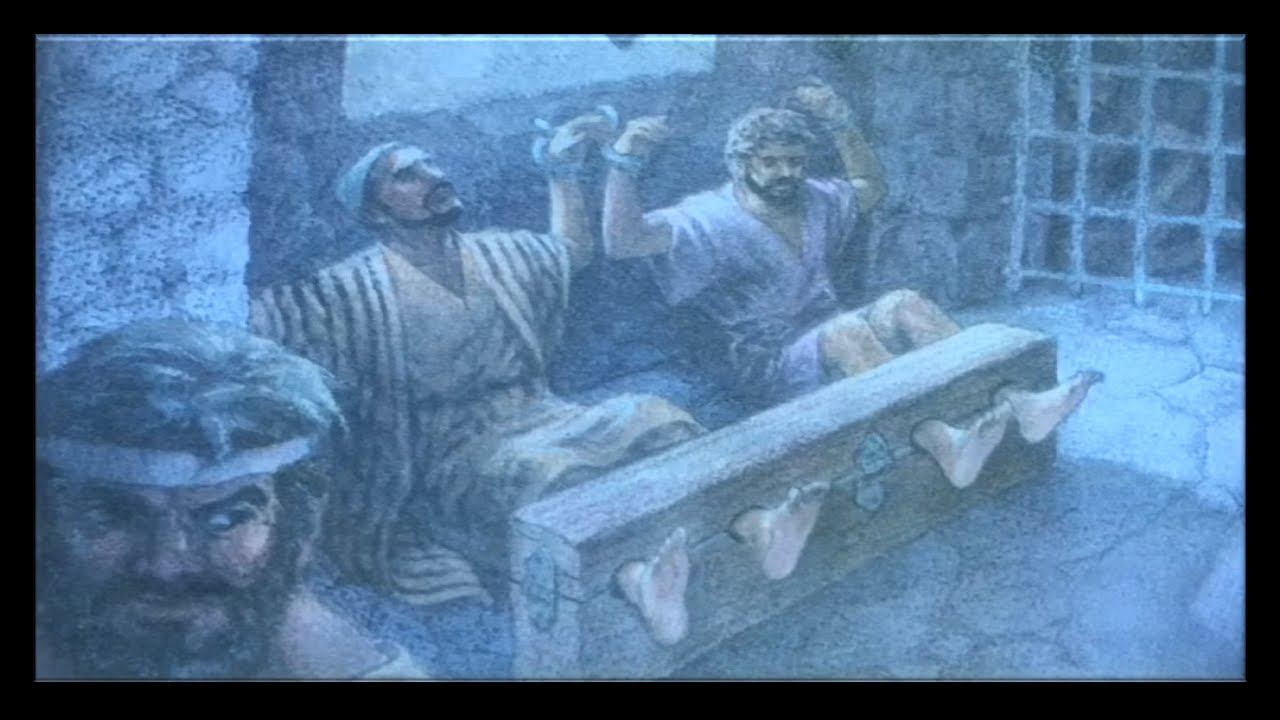
Illustration of Paul and Silas in jail in the city of Philippi.
by Brian Shilhavy
Last week I wrote about how modern-day Christians who are part of the Evangelical Church need to be evangelized, because most of them do not know the true Gospel of Jesus Christ, which states that we are all “One in Christ”, and that there is no favored nation or race of people that are “chosen” with special privileges.
Such a belief that one group of people based on nationality or religion are better than other human beings, is called “racism” and is described as “prejudice” and “discrimination.”
I also explained from the New Testament scriptures that the word “Christian” was only used 3 times in the entire New Testament, and that the disciples of Jesus Christ never referred to themselves as “Christians”, which was a term that others used to describe the non-Jewish believers (uncircumcised) in the city of Antioch. See:

It is Time to Evangelize the American Evangelical Christian Church and Preach the Gospel to Them
When the first disciples were sent from Antioch to go abroad and teach the people about Jesus, and how he was the Messiah and the fulfillment of the Old Testament Jewish prophets, Paul led this group from Antioch, which was the first place where Gentile believers (uncircumcised) were called Christians.
The leaders of these missionary groups were all Jews, including Paul, Barnabas, and Silas. They always went to the places where local Jewish believers were gathering first, which in our English Bibles are mostly referred to as “synagogues.”
As I wrote in that article last week, our English words in the English translations of the Bible for local assemblies are sometimes called “churches” and sometimes called “synagogues”, but the underlining meaning of the Greek words used are the same, and can actually be used interchangeably.
The common modern belief that the English word “synagogue” today only refers to Jews who have not accepted Jesus as their Messiah, does not at all match up with how the word is used in the Bible.
We see in Acts chapter 14, for example, when Paul and Barnabas entered the city of Iconium, that the text says they went to the “Jewish synagogue”.
To use such a phrase today with the common understanding of “synagogue” would be redundant, since all “synagogues” are considered places of worship only for Jews, and specifically Jews who have not accepted Jesus as their Messiah.
But obviously Luke, who wrote Acts, felt it necessary to distinguish what type of synagogues Paul and the other disciples were visiting, as there were evidently non-Jewish synagogues as well in the Roman empire.
And in these Jewish synagogues were mixed congregations of BOTH Jews and Gentiles.
At Iconium Paul and Barnabas went as usual into the Jewish synagogue. There they spoke so effectively that a great number of Jews and Gentiles believed.
But the Jews who refused to believe stirred up the Gentiles and poisoned their minds against the brothers. (Acts 14:1-2)
Interestingly, in Acts chapter 16 we have the story of how Paul and the believers who were with them entered the Roman city of Philippi, where apparently there was no “Jewish synagogue”, so instead they went to a gathering of people who gathered together to “pray”, and they appeared to be mostly a female group.
What were they “praying” about, and based on what religious beliefs?
Well, they met on the Sabbath, which is a strong indication that these Gentile believers were gathering together in accordance with the Law of Moses and the Old Testament.
Like the Roman centurion we meet in Acts chapter 10 who “worshiped God” and was not a Jew nor a Jewish convert (he was not circumcised), but received the Holy Spirit through faith when Peter visited him, so too these local women, apparently headed by a woman business leader (Lydia), were also worshipers of the one true God revealed in the Old Testament writings of Moses and the Prophets.
From there we traveled to Philippi, a Roman colony and the leading city of that district of Macedonia. And we stayed there several days.
On the Sabbath we went outside the city gate to the river, where we expected to find a place of prayer. We sat down and began to speak to the women who had gathered there.
One of those listening was a woman named Lydia, a dealer in purple cloth from the city of Thyatira, who was a worshiper of God.
The Lord opened her heart to respond to Paul’s message.
When she and the members of her household were baptized, she invited us to her home.
“If you consider me a believer in the Lord,” she said, “come and stay at my house.”
And she persuaded us. (Acts 16:12-15)
As this story unfolds in Acts chapter 16, we see that Paul and his group, which at this point included Luke who wrote Acts, as he begins using the first person plural “we”, stayed in Philippi for an extended period of time, which resulted in upsetting the city’s economic system when they started healing people and casting out demons from people.
Once when we were going to the place of prayer, we were met by a slave girl who had a spirit by which she predicted the future. She earned a great deal of money for her owners by fortune-telling.
This girl followed Paul and the rest of us, shouting,
“These men are servants of the Most High God, who are telling you the way to be saved.”
She kept this up for many days. Finally Paul became so troubled that he turned around and said to the spirit,
“In the name of Jesus Christ I command you to come out of her!”
At that moment the spirit left her. When the owners of the slave girl realized that their hope of making money was gone, they seized Paul and Silas and dragged them into the marketplace to face the authorities. (Acts 16:16-19)
Now remember, this is a mixed congregation of both Jewish and Gentile believers. Paul and his group had traveled there from Anticoh, the first city where the Gentile believers were called “Christians.”
Now they are in a city, Philippi, where apparently there are very few or possibly no Jews, as there was not even a local “synagogue”.
So how did these Philippians refer to Paul and his group? If ever there was a time to refer to them as “Christians,” this would be it!
Here’s what they said to the magistrates:
They brought them before the magistrates and said,
“These men are Jews, and are throwing our city into an uproar by advocating customs unlawful for us Romans to accept or practice.”
The crowd joined in the attack against Paul and Silas, and the magistrates ordered them to be stripped and beaten.
After they had been severely flogged, they were thrown into prison, and the jailer was commanded to guard them carefully. Upon receiving such orders, he put them in the inner cell and fastened their feet in the stocks. (Acts 16:20-24)
The leaders of Philippi clearly had a bias against Jews (“antisemitics” today), as the Jews of their day clearly opposed their own pagan religious activities from their own “synagogues” and temples, and the city’s commerce system was obviously based on these pagan rituals and activities.
And the Jews they were attacking in this story were all Jews who believed that Jesus was the Messiah, who were in that city for that very reason, to explain how Jesus was the prophesied Messiah.
This story in Acts 16 and many others in the book of Acts clearly show that ALL the believers who chose to believe in Jesus and accept him as the Messiah, came from a Jewish background, whether they were ethnic Jews or Gentiles.
They all came out of the Jewish faith.
We see this all throughout Acts where the local synagogue congregations were all mixed congregations of Jews and Gentiles who followed the principles of the Jewish faith and the Old Testament writings.
The one exception seems to be Philippi, where the local group worshiping God according to the Old Testament writings, were all Gentiles and mostly women.
These entire groups of believers who accepted the teachings from Paul and the others continued to be called “Jews”, and not “Christians”.
They were seen as a “sect” of the Jewish religion, called “The Way.” This was the term that Paul used to describe himself later in the book of Acts when he was held as a prisoner:
However, I admit that I worship the God of our fathers as a follower of the Way, which they call a sect.
I believe everything that agrees with the Law and that is written in the Prophets, and I have the same hope in God as these men, that there will be a resurrection of both the righteous and the wicked. (Acts 24:14-15)
Paul clearly counts himself as a member of the Jewish religion, and a member of the “sect” called “The Way.”
For more on this please see:
Fact Check: “Christianity” and the Christian Religion is NOT Found in the Bible – The Person Jesus Christ Is
God Does Not Show “Partiality” by Favoring One Nation Above Others
Jesus clearly taught in John chapter 8 that simply being an ethnic “Jew”, a descent of Abraham, did not save them. He classified the Jews of his day as either Jews who believed in him as the Messiah, or Jews who rejected him, and served their father “the Devil.”
To the Jews who had believed him, Jesus said,
“If you hold to my teaching, you are really my disciples. Then you will know the truth, and the truth will set you free.”
(John 8:31-32)
To those Jews who did not believe in Jesus:
You belong to your father, the devil, and you want to carry out your father’s desire. He was a murderer from the beginning, not holding to the truth, for there is no truth in him. When he lies, he speaks his native language, for he is a liar and the father of lies. (John 8:44)
The common (wrong) belief among ethnic Jews that they were more special than non-Jews, even among those who believed and followed Jesus when he walked this earth, was a hard false doctrine to refute.
We see in Acts chapter 10 that it took a special vision with Peter to break him out of this demonic doctrine. This is what he said after he observed firsthand how God saved Gentile believers:
Then Peter began to speak:
“I now realize how true it is that God does not show favoritism but accepts men from every nation who fear him and do what is right.”
(Acts 10:34-35)
This has ALWAYS been true, even before Jesus came on the scene, and we see the evidence of it in the book of Acts as the leaders from the Antioch congregation went to all the “Jewish Synagogues” throughout the Roman empire, and found mixed congregations there of both Jews and Gentiles, with perhaps Philippi being one exception where there were apparently only Gentile believers practicing the Jewish faith.
Paul has written extensively about this issue, and we have his letters to the mixed congregations of believers that he helped start in the New Testament portion of the Bible.
Here is what he wrote about being a “Jew” and “circumcision”:
For he is not a Jew who is one outwardly, nor is circumcision that which is outward in the flesh; but he is a Jew who is one inwardly; and circumcision is that of the heart, in the Spirit, not in the letter; whose praise is not from men but from God. (Romans 2:28-29)
This verse and many others that Paul wrote clearly teach that being an ethnic Jew, or a religious Jew by circumcision, does not save anyone.
The true Jews today are those who have “circumcised hearts”, the “new heart” that is part of the New Covenant that I wrote about yesterday for those who have accepted Jesus as the Messiah and received new hearts and a new spirit, the Holy Spirit of God. See:
What is the Condition of Your Heart?
The early believers in the New Testament were NOT Christians. They were believing Jews, even if they were not ethnic Jews or Jewish religious converts, but were following the Old Testament scriptures, just as the Roman soldier Cornelius was in Acts 10, and Lydia was in Acts 16.
I know this is a hard message for those who grew up in the Western cultures that speak English. It took me MANY years to finally come to this conclusion by studying the Bible for over 40 years now.
I no longer call myself a “Christian”. I am a believer in Jesus Christ, and I am not ashamed to wear the “Jewish” label, calling myself a “Spiritual Jew”, and at the bottom of all my articles now I have this link:

All of us who have received new hearts and have gone through the spiritual new birth and now have the Spirit of God residing in our hearts are the TRUE JEWS.
So go ahead and call me “antisemitic” for opposing the Zionist Satanic Jews if you want, but God sees my heart and he communicates with me there, and YOU Evangelical Christians are the true “antisemitic” Jew haters, as you follow your real father while hiding behind the label of “Christian.”
Comment on this article at Created4Health.org.
This article was written by Human Superior Intelligence (HSI)

See Also:
Understand the Times We are Currently Living Through
New FREE eBook! Restoring the Foundation of New Testament Faith in Jesus Christ – by Brian Shilhavy

What Kind of Person did Jesus Say was True with no Injustice in Them?

KABBALAH: The Anti-Christ Religion of Satan that Controls the World Today

Christian Teaching on Sex and Marriage vs. The Actual Biblical Teaching

Exposing the Christian Zionism Cult
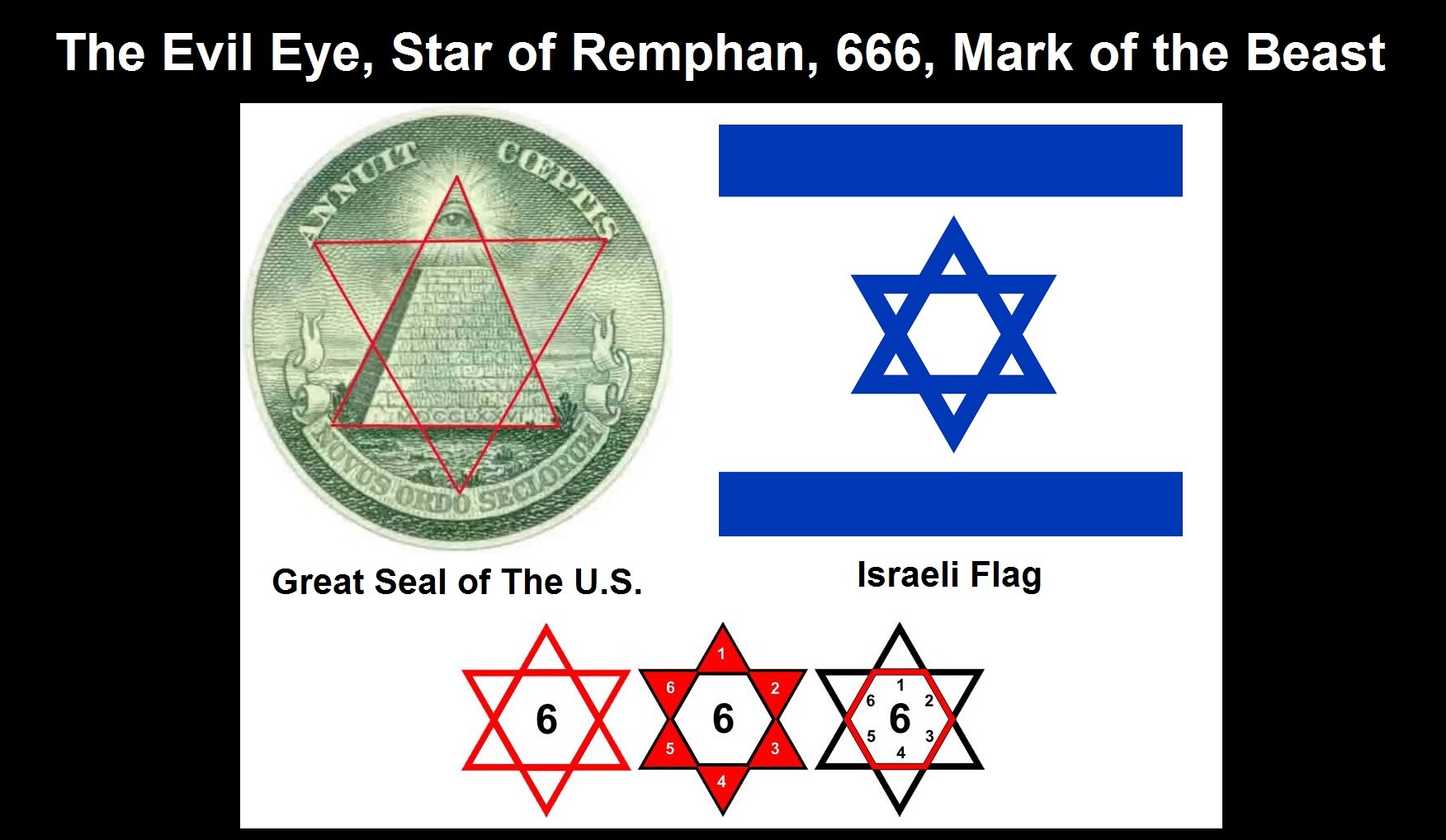
The Bewitching of America with the Evil Eye and the Mark of the Beast
Jesus Christ’s Opposition to the Jewish State: Lessons for Today

Identifying the Luciferian Globalists Implementing the New World Order – Who are the “Jews”?

The Brain Myth: Your Intellect and Thoughts Originate in Your Heart, Not Your Brain

What is the Condition of Your Heart? The Superiority of the Human Heart over the Human Brain

The Seal and Mark of God is Far More Important than the “Mark of the Beast” – Are You Prepared for What’s Coming?
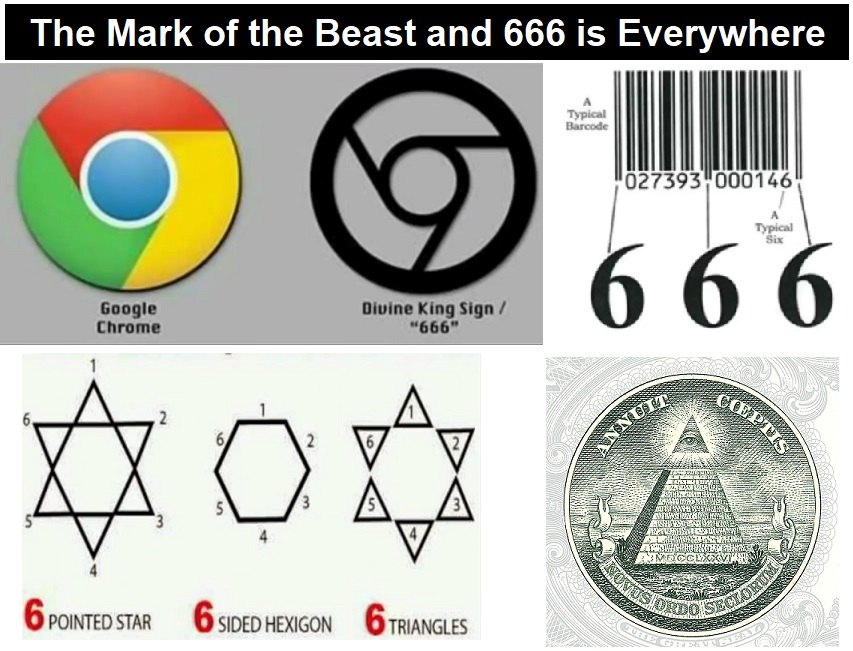
The Satanic Roots to Modern Medicine – The Image of the Beast?

Medicine: Idolatry in the Twenty First Century – 10-Year-Old Article More Relevant Today than the Day it was Written

Having problems receiving our emails? See:

How to Beat Internet Censorship and Create Your Own Newsfeed
We Are Now on Telegram. Video channels at Bitchute, and Odysee.
If our website is seized and shut down, find us on Telegram, as well as Bitchute and Odysee for further instructions about where to find us.
If you use the TOR Onion browser, here are the links and corresponding URLs to use in the TOR browser to find us on the Dark Web: Health Impact News, Vaccine Impact, Medical Kidnap, Created4Health, CoconutOil.com.