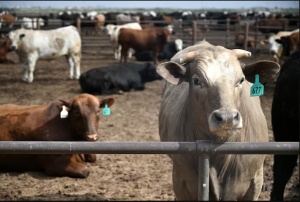
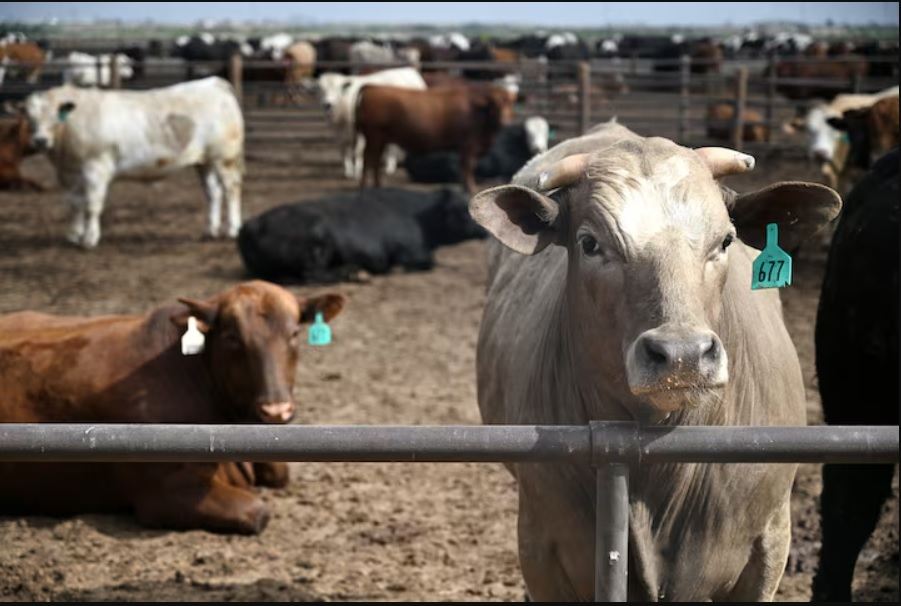
Image source [1].
by Brian Shilhavy
Health Impact News
There has been widespread fear and panic communicated by some media sources in recent weeks warning American consumers about a “flesh-eating screwworm” that is supposedly devastating cattle herds and driving up beef prices.
So let’s throw some truth on this narrative and look at some actual facts.
Fortunately, there have also been some good investigative reports on this subject that present what some of these actual facts are, but you usually have to search for them.
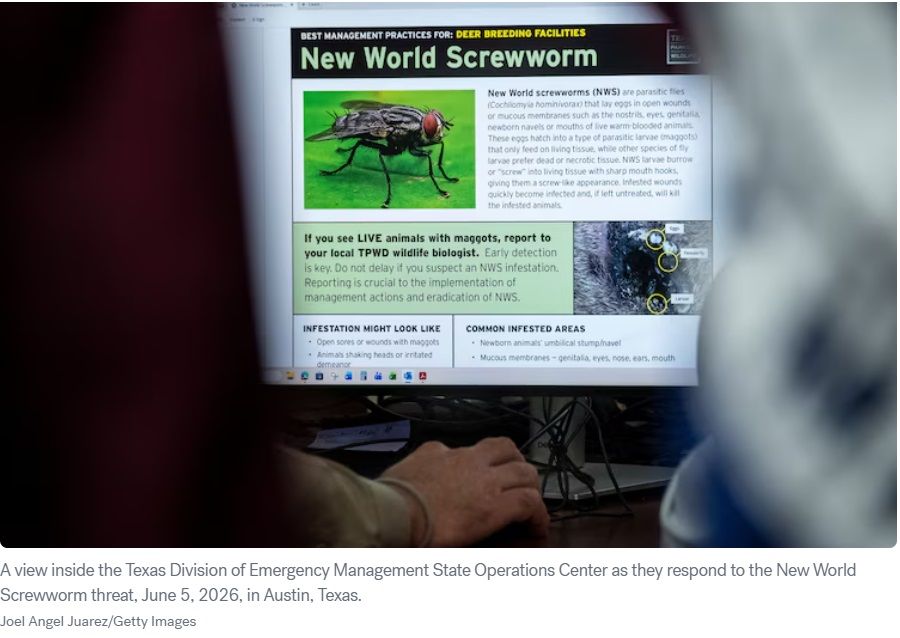
First, as of this month, June of 2026, there have allegedly been a total of six cases of New World screwworm (NWS) found in the U.S.
Yes, you read that correctly: 6 TOTAL CASES IN THE ENTIRE U.S.
From ABC News [2] reported on June 11, 2026:
There have been a total of six cases of New World screwworm (NWS) detected among animals in the U.S. since the beginning of the month — in four cattle, one goat and a dog, according to the latest update from the U.S. Department of Agriculture.
The goat was newly confirmed as the latest case to be infested with New World screwworm, Secretary of Agriculture Brooke Rollins said in a press conference Monday.
From these very few cases of screwworm infection in the U.S., the government is doing what it usually does when there is some kind of “deadly disease breakout,” by putting into place a plan of action that will cost hundreds of millions of dollars which will then go into the U.S. economy to stop this “breakout.”
That means some people are going to suffer economic hardship (usually the American consumer first and foremost), while others will become rich from fighting the “breakout” and all the money the U.S. Government is going to spend.
Investigative reporters Tom Polansek and Cassandra Garrison wrote an excellent report for Reuters [1] earlier this month (June, 2026) about how this “outbreak” is affecting the beef industry, and who some of the “winners” and “losers” are.
Screwworm border closure fuels beef boom in Mexico, gloom in Texas
Closing the border to Mexican cattle threatens the survival of a 70-year-old Texas feedlot, and pushes profits back to Mexico
Excerpts:
Lubbock Feeders has been fattening cattle in West Texas since Dwight Eisenhower was U.S. president. Now, row upon row of pens sit empty.
The 70-year-old feedlot in Lubbock, Texas, is on the brink of closure after a halt to U.S. imports of Mexican livestock last year dried up the supply that formerly accounted for most of the cattle it raised, according to one of its owners.
The U.S. government closed the border to Mexican livestock a year ago, hoping to keep out New World screwworm, a flesh-eating pest that Mexican authorities have struggled to control.
This week, the first case of screwworm in 60 years was confirmed on a Texas cattle ranch, representing a fresh challenge to the U.S. beef industry, already hampered by scarce supplies, President Donald Trump’s trade policies and a pernicious drought.
It’s a brighter story in Mexico’s northern border state of Coahuila, where farmers who used to send live cattle north are now exporting beef to the United States.
Rancher Enrique García’s pens were recently full of black cattle eagerly awaiting an afternoon feeding. He has doubled his workforce, including to fatten cattle and process beef, with aspirations to sell his product to U.S. consumers.
In Texas, the nation’s biggest cattle-producing state, closing the border has forced the $100 billion U.S. beef industry to contract.
But in Mexico – where screwworm has infested nearly 28,000 animals – the beef industry has capitalized on the setback to build up its own feedlots to keep cows longer and prepare them for slaughter, as well as expand processing facilities.
Moving up the supply chain like this can be profitable.
In the first four months of 2026, Mexican beef exports to the U.S. soared.
“If they end up feeding and processing them in Mexico, how are we winning?”
said Kyle Williams, manager and part owner of Lubbock Feeders.
“We’re giving this to them on a silver platter, the feeding industry. That’s work, that’s labor, that’s people that are not getting to do it here in the U.S.”
So that’s one of the first facts to know in understanding the rising costs of beef in the U.S. When the Trump Administration closed the border to BOTH immigrants who provide the labor to run these massive cattle operations, and also closed the border to Mexican cows coming over, it hurt the U.S. beef supply, causing prices to increase.
The immigrant workers in the cattle industry were stuck in Mexico, so they made the best of it and just processed the cows themselves and then imported it into the U.S. as steaks and hamburgers!
But Mexico was not the only country that profited from Trump’s policies. From the Reuters report [1]:
The rising cost of beef has become an affordability issue among consumers ahead of U.S. midterm elections as they also grapple with increased fuel costs.
President Donald Trump has tried to address it by urging cattle producers to lower prices, ordering the Department of Justice to investigate meatpackers, and allowing low-tariff imports from Argentina. But what would help drive down prices more is a larger U.S. cattle herd.
U.S. meatpackers are waiting for American cattle producers to expand their herds to boost beef output, a process that can take two years.
Producers said Trump’s push for larger low-tariff beef imports from Argentina made it harder to convince them to rebuild herds.
The move upset ranchers but has failed to bring down costs for consumers.
U.S. Government Spending About $1 Billion to Combat the Screwworm “Outbreak”
As I wrote above, the U.S. Government never hesitates to create a new business model whenever the health “authorities” declare that there is an “outbreak” or “pandemic.” We all saw this firsthand during COVID.
For the 6 total cases of screwworm in the current “outbreak”, a $billion dollar industry [3] is being created to combat the “outbreak.” The funding for combating screwworms already started last year, in 2025. It involves breeding sterile flies.
Reuters’ Tom Polansek and Leah Douglas reported that “the U.S. Department of Agriculture will spend up to $750 million to build a facility in Texas that produces sterile flies to fight the flesh-eating livestock pest New World screwworm, Secretary Brooke Rollins said on Friday.”
“The plan signals increasing worries about the risk of screwworm, a parasitic fly that eats livestock and wildlife alive, to infest U.S. cattle after the pest moved north in Mexico toward the U.S. border,” Polansek and Douglas reported.
“An outbreak could further elevate record-high U.S. beef prices by reducing the U.S. cattle supply. ‘It could truly crush the cattle industry,’ Texas Governor Greg Abbott said at a news conference with Rollins.”
More details are in the video above from last year. Apparently there was not enough fear among the public and politicians to keep the funding going, and it suffered from alleged cuts in funding for fighting screwworm made by Musk with DOGE last year [4], so apparently they needed some more fear-mongering to keep the money rolling, and to keep beef prices higher.
Understanding the Beef Industry
There are three primary ways that beef is produced in the U.S.
Confined Animal Feeding Operations (CAFOs)
Confined Animal Feeding Operations (CAFOs), as is described in the Reuters’ report by Tom Polansek and Cassandra Garrison above, eat an almost entirely grain feed diet as they are kept in closed-in facilities.
These are main grain crops in the U.S., which includes corn and soybeans, most of which are from GMO seeds and sprayed with the cancer-causing herbicide glyphosate. About 70% of the U.S. grain crop goes into animal feeds. (Source [5].)
This would also include dairy cattle, usually Holsteins and Jersey cattle. For these breeds where their primary value is to produce milk, and where most herds are kept in CAFOs, when the females are past their prime milk-producing years (usually 2-4 years), they are slaughtered and put into the U.S. beef supply chain.
In 2019, about 21% of the beef produced the United States came from the dairy sector. (Source [6].)
This is the largest sector of the beef industry, and the one most prone to diseases due to their confinement practices.
Grass-fed Beef – Finished in Feedlots
The second primary method of producing beef is grazing them on grass for most of their lives, and then finishing them off in feed lots to fatten them up and create a standard beef product that goes into the U.S. food chain. They are fed the same grains as those cattle that live most of their lives in feedlots, such as parts of Texas and other states that do not have much grass.
Most beef cattle raised in the West, in states like Montana, the Dakotas, Colorado, Idaho, etc., will graze their cattle on grass until about the last 60-90 days before they are finished out in feedlots to prepare them to go into the commodity food chain.
For these ranchers, it is still cheaper to raise them on pastures of grass as much as possible before confining them in feedlots their whole lives, which is why the “American Cowboy” is still a real thing and still exists in the U.S.
They are unreplaceable, even by AI. 🙂
Grass-fed and Grass-finished Beef
At much smaller scales, there are cattle ranchers that never put their cattle in feedlots, and raise them on pasture their whole lives, finishing them on pastures as well, usually in the Fall just before the first snow fall when the grass is still green.
Most people who have followed me over the decades know that I have kept a herd of Galloway Beef Cattle for Healthy Traditions [7] produced by Amish in Wisconsin for many years now.
So this is the part of the cattle industry I have been a part of for almost 2 decades.
Galloway cattle [7] are a rare breed, comprising only about 20,000 worldwide. They have not been cross-bred to grow large in feedlots, such as the Angus beef cattle have. They finish off nicely on grass, and our herd in Wisconsin is now a “closed herd”, which means the farmer does not have to go out and buy new Galloway breeder stock each year anymore.
Our herd this year is larger than last year’s herd, and our processing dates at the end of the year are already set, with more head of cattle scheduled than last year.
In the coming months as we get closer to the processing dates, we will offer consumers the opportunity to buy up to a half cow, custom butchered.
It is a great way to stock up on premium beef at a reduced cost. We started this program at the end of last year (2025), and it was a great success.
And the number of grass-fed and grass-finished cattle ranchers is growing each year here in the U.S., as consumers wake up to the problems in the commodity beef industry, and look for a better product with healthier beef.
I probably know about 80% to 90% of these small-scale operations, and I am working on creating an online network that will be announced soon that will allow small-scale operations around the country, and not just for beef, to increase their market reach.
We will have more news to share about this new network we are building soon, as we adapt to the times and push forward into the future with even more consumer options outside of the commodity food system, just as we have been doing for over 24 years now.
This transition period to develop this new system has required a lot of my time, which is why I am writing fewer articles these days.
But rest assured I am still watching world events and market trends in my daily news feeds just as much as always, and I will not stop writing anytime soon, as long as my heavenly Father continues to bless me and give me the strength and wisdom I need each day to press forward, even against much opposition from my enemies.
This article was written by Human Superior Intelligence (HSI) [8]
[8]
 [9]
[9]
 [10]
[10]
See Also:
Understand the Times We are Currently Living Through
The Brain Myth: Your Intellect and Thoughts Originate in Your Heart, Not Your Brain [11]
 [11]
[11]
Is God’s Patience About to Run Out on the United States? [12]
 [12]
[12]
Second Edition of eBook Released: The Concept of the American Christian Family is a Myth and is NOT Found Anywhere in the Bible – by Brian Shilhavy [13]
 [13]
[13]
FREE eBook! Restoring the Foundation of New Testament Faith in Jesus Christ – by Brian Shilhavy [14]
 [14]
[14]
KABBALAH: The Anti-Christ Religion of Satan that Controls the World Today [15]
 [15]
[15]
Exposing the Christian Zionism Cult [16]
 [16]
[16]
The Bewitching of America with the Evil Eye and the Mark of the Beast [17]
 [17]
[17]
Jesus Christ’s Opposition to the Jewish State: Lessons for Today [18]
 [18]
[18]
Identifying the Luciferian Globalists Implementing the New World Order – Who are the “Jews”? [19]
 [19]
[19]
The Seal and Mark of God is Far More Important than the “Mark of the Beast” – Are You Prepared for What’s Coming? [20]
 [20]
[20]
The Satanic Roots to Modern Medicine – The Image of the Beast? [21]
 [21]
[21]
Medicine: Idolatry in the Twenty First Century – 10-Year-Old Article More Relevant Today than the Day it was Written [22]
 [22]
[22]
 [23]
[23]
Having problems receiving our emails? See:
 [24]
[24]
How to Beat Internet Censorship and Create Your Own Newsfeed [24]
We Are Now on Telegram [25]. Video channels at Bitchute [26], and Odysee [27].
If our website is seized and shut down, find us on Telegram [25], as well as Bitchute [26] and Odysee [27] for further instructions about where to find us.
If you use the TOR Onion browser [28], here are the links and corresponding URLs to use in the TOR browser [28] to find us on the Dark Web: Health Impact News [29], Vaccine Impact [30], Medical Kidnap [31], Created4Health [32], CoconutOil.com [33].