by Brian Shilhavy
Health Impact News
One of the most common myths in American cuisine is that while olive oil has tremendous health benefits, particularly extra virgin olive oil, it should not be used in cooking and deep frying, because it allegedly has a low smoke point, and applying heat will damage or cause the oil to become toxic.
However, this is a myth, probably propagated by the seed oil business in the United States which began extracting “vegetable” oils from corn and soybeans just after World War II. These are not healthy oils, and they were not in the food chain prior to WW II. But because these crops are heavily subsidized by the U.S. Government, they are the cheapest oils to use for food mass production.
The truth is that olive oil has been used for cooking and deep frying for thousands of years starting with the Egyptians [1], to the Greeks, to the Romans [2], and today in most Mediterranean countries in Europe such as Spain [3] and Italy [4], and the Middle East in countries like Israel [5] and Turkey [6].
The main reason why olive oil has not been used in the mass food market in the United States is simply one of cost. Olive oil is not subsidized, and therefore it cannot compete with the cheaper seed oils that are.
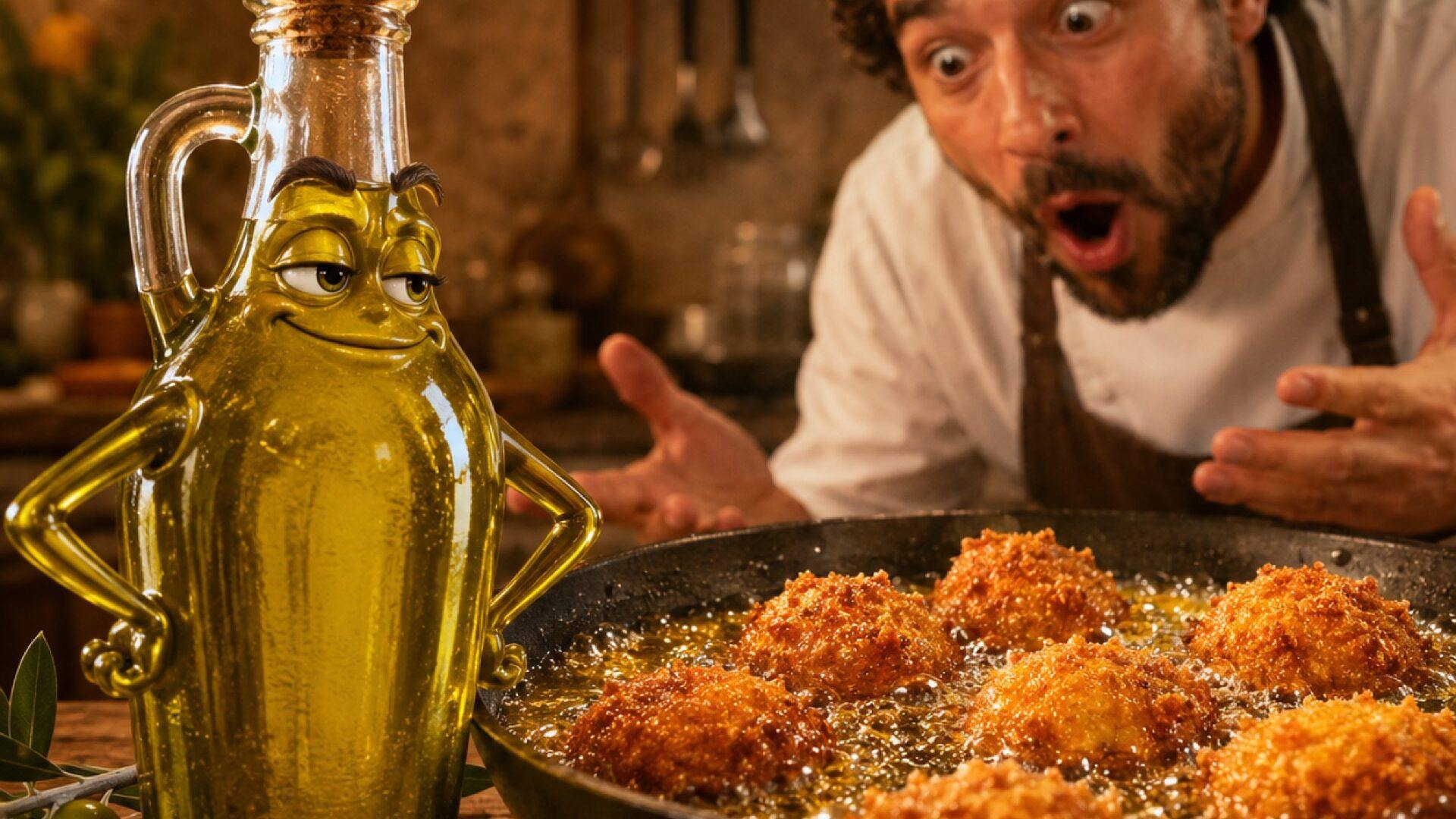
Image Source [4].
From Actually Italian [4]:
Olive oil is perfect for frying. The smoke point myth, debunked.
Excerpts:
The claim that olive oil should not be used for frying — because its smoke point is too low, because it becomes toxic, because it imparts a strong flavour — has been repeated so many times by food writers, nutritionists, and cooking shows that it has achieved the status of received wisdom.
It is not correct.
Italians have been frying in olive oil for two thousand years and the food has been excellent throughout.
The argument against olive oil for frying is economic, not scientific.
From HomeCookingTech.com [7]:
The Surprising History of Deep Frying: What You Didn’t Know
Excerpts:
Deep frying, the process of cooking food by submerging it in hot oil, has a long and rich history that dates back to ancient times.
The origins of deep frying can be traced back to the ancient civilizations of Egypt, Greece, and Rome, where they used a primitive form of deep frying to cook their food.
In these early civilizations, deep frying was primarily done in olive oil, which was readily available and had a high smoke point, making it ideal for frying. The Greeks and Romans would often deep fry their food in large, shallow pans called “paella,” which were filled with hot oil and placed over an open flame.
From Foods and Wines from Spain [3]:
Frying in virgin olive oil
Crispy croquettes, crackly fried anchovies, golden-brown fried potatoes. Fried foods are some of the very best of Spanish cooking. The technique is dead-simple -just immerse foods in bubbling hot olive oil.
In Spain, where olive oil is an essential ingredient for home cooks, absolutely everything gets fried -croquettes, fish, potatoes, but also many traditional sweets such as doughnuts (rosquillas) or torrijas.
Fried foods historically play a part in Spanish cuisine.
The olive tree was first planted in Spain by the Greeks and the Phoenicians. Besides its use in cooking, the oil was valued for light, for medicinal purposes, and for beauty treatments too. When Spain became part of the Roman Empire, the olive plantations were extended in a wide swath across what is now Andalusia.
During the centuries of Moorish rule, both the Islamic and Sephardic Jewish communities, neither of which used pig fat, cooked with olive oil. Some Jewish holidays, such as Hannukah, enshrined fried foods such as buñuelos, deep-fried pastry puffs, which are still made in many Spanish villages and cities.
The “Smoke Point” Myth
The myth that olive oil, and specifically extra virgin olive oil, is easily damaged by heating it above its smoke point, has been thoroughly discredited.
From U.S. News [8]:
Why You Should Stop Worrying About Olive Oil’s Smoke Points
Learn more about the smoke point of olive oil and why you shouldn’t worry about it.
Excerpts:
Whether you drizzle it on your salad or use it to sauté your veggies, olive oil is a staple in kitchens. And for good reason: Extra-virgin olive oil is a key ingredient in the Mediterranean diet, which expert panelists voted No. 1 on U.S. News’ 2023 Best Diets list. That’s the Mediterranean diet’s sixth consecutive win.
But in recent years, alarms have repeatedly sounded over fears of olive oil’s “smoke point” and how heating olive oil to this temperature could release harmful compounds. Cautious consumers worried that heating olive oil during cooking would, at best, take away from olive oil’s health benefits and, at worst, be dangerous.
However, 2018 research published in Acta Scientific Nutritional Health shows that not only is extra-virgin olive oil safe when cooked at extremely high heat, it is more chemically stable at those temperatures than other common cooking oils.
Newer research continues to debunk the “smoke point” myth of olive oil.
One study was published in November of 2025 [9] in the Journal Foods. As it turns out, there actually are no standardized tests that can conclusively determine the smoke point of various olive oils.
Deciphering the Complexity of Smoke Point in Virgin Olive Oils to Develop Simple Predictive Models
Abstract
The smoke point marks the onset of thermal degradation in edible oils. Although in this work we validated and improved its determination, it still relies on a subjective visual assessment and remains incompletely understood in relation to oil composition.
This limitation reduces its reliability as a criterion for selecting frying oils in both industrial and culinary contexts.
This study provides a systematic evaluation of how key chemical attributes of virgin olive oils influence their smoke point and proposes predictive models that could overcome the limitations of direct measurement. Forty-eight virgin olive oils were characterized, and multivariate modeling was applied to identify the most influential predictors.
Free fatty acid content was the main determinant of the smoke point, exhibiting a strong inverse relationship, while saturated fatty acids and oxidative stability were shown to increase the smoke point by limiting the formation of volatile lipid oxidation products.
Partial least squares models enabled accurate predictions using only routine quality parameters, such as free fatty acid content and saturated fatty acid content. Gaussian process regression further improved predictive performance and achieved high accuracy using free fatty acid content alone or, alternatively, other analytical parameters that are easily and routinely determined in olive oil.
These findings offer a potential practical framework for estimating the smoke point without direct testing, with relevant implications for virgin olive oil quality control and the selection of oils for high-temperature applications.
Full study. [9]
One of the main deciding factors of how olive oils are going to react to high heat, is their antioxidant levels, measured in percentages of phenols.
Extra virgin olive oil has the highest levels of antioxidants among olive oils, making it more resistant to damage by heat.
Here is a study that was just published [10] earlier this year (2026).
Deep Frying in Extra-Virgin Olive Oil: Evaluating the Influence of the Type of Food and Breading on the Degradation of Phenolic Compounds
Excerpts:
Deep-frying in vegetable oils is a widespread practice around the world. The use of extra virgin olive oil (EVOO) for frying is supported by the presence of bioactive compounds such as phenols, which contribute to oxidative stability and are partially transferred to the fried food.
We monitored by LC–MS/MS, the degradation of phenols in Picual and Arbequina EVOOs during consecutive frying cycles of different types of foods.
Currently, numerous studies suggest that VOO is the best oil for deep-frying due to its lipidic composition, enriched with monounsaturated fatty acids, and the phenolic presence with a protective effect during cooking.
Full study [10].
The Health Benefits: Why You Should be Cooking and Frying in Extra Virgin Olive Oil!
If you search the database of The National Library of Medicine’s PubMed for “health benefits of extra virgin olive oil“, you will find hundreds of studies [11].
In all fairness, some of these studies, primarily ones conducted by U.S. researchers, try to debunk known olive oil health benefits, particularly those that threaten the multi-billion dollar cancer treatment industry in the U.S.
Studies conducted by the olive oil producing countries are much more positive, pointing out the health benefits for cancer and cardiovascular diseases, and also women’s health.
Here is a Spanish study from 2024:
Association between olive oil consumption and all-cause, cardiovascular and cancer mortality in adult subjects: a systematic review and meta-analysis
Food Function [12]. 2024 Nov 25
Abstract
Background: The Mediterranean diet is characterized by the preferential use of olive oil (OO) and has been associated with health benefits possibly mediated by its bioactive compounds.
Objectives: We aimed to analyze the association between OO consumption and changes in all-cause mortality, cardiovascular mortality and cancer mortality in the adult population.
Methods: A systematic review was conducted using the Pubmed, Scopus, Web of Science and Cochrane Library databases up to October 2024. DerSimonian and Laird’s random effects method was used to calculate pooled estimates of hazard ratios (HRs) and their 95% confidence intervals (95% CIs) to determine the association between OO use and changes in all-cause mortality, cardiovascular mortality, and cancer mortality.
Results: Fourteen studies were included in the systematic review and seven in the meta-analysis. Our results showed an association between OO consumption and reduction in all-cause mortality (HR: 0.85; 95% CI: 0.80-0.91), cardiovascular mortality (HR: 0.84; 95% CI: 0.76-0.93) and cancer mortality (HR: 0.89; 95% CI: 0.86-0.93).
Conclusions: Consumption of OO particularly reduces cardiovascular mortality (16%), followed by all-cause mortality (15%) and cancer mortality (11%) in the adult population.
There is also evidence that olive oil has a positive effect on women’s health and those going through menopause.
Diet to Reduce the Metabolic Syndrome Associated with Menopause. The Logic for Olive Oil
Nutrients [13]. 2020 Oct 18
Abstract
The rates of metabolic syndrome are increasing in parallel with the increasing prevalence of obesity, primarily due to its concomitant insulin resistance. This is particularly concerning for women, as the years around menopause are accompanied by an increase in visceral obesity, a strong determinant of insulin resistance.
A fall in estrogens and increase in the androgen/estrogen ratio is attributed a determining role in this process, which has been confirmed in other physiological models, such as polycystic ovary syndrome. A healthy lifestyle, with special emphasis on nutrition, has been recommended as a first-line strategy in consensuses and guidelines.
A consistent body of evidence has accumulated suggesting that the Mediterranean diet, with olive oil as a vital component, has both health benefits and acceptable adherence. Herein, we provide an updated overview of current knowledge on the benefits of olive oil most relevant to menopause-associated metabolic syndrome, including an analysis of the components with the greatest health impact, their effect on basic mechanisms of disease, and the state of the art regarding their action on the main features of metabolic syndrome.
Protective Effects and Benefits of Olive Oil and Its Extracts on Women’s Health
Nutrients [14]. 2021 Nov 27
Abstract
Women and men share similar diseases; however, women have unique issues, including gynecologic diseases and diseases related to menstruation, menopause, and post menopause.
In recent decades, scientists paid more attention to natural products and their derivatives because of their good tolerability and effectiveness in disease prevention and treatment.
Olive oil is an essential component in the Mediterranean diet, a diet well known for its protective impact on human well-being.
Investigation of the active components in olive oil, such as oleuropein and hydroxytyrosol, showed positive effects in various diseases. Their effects have been clarified in many suggested mechanisms and have shown promising results in animal and human studies, especially in breast cancer, ovarian cancer, postmenopausal osteoporosis, and other disorders.
This review summarizes the current evidence of the role of olives and olive polyphenols in women’s health issues and their potential implications in the treatment and prevention of health problems in women.
New GMO-Tested Heirloom Mexican Corn Chips Fried in Extra Virgin Olive Oil!
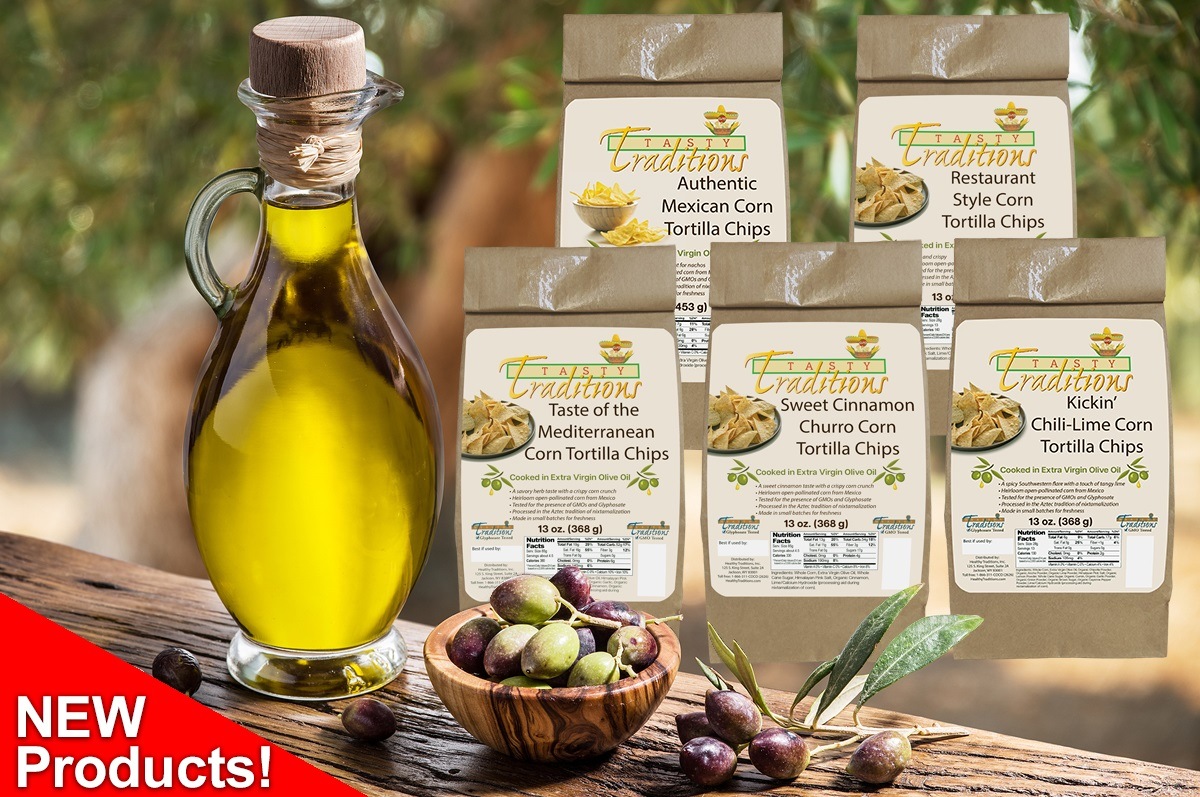 [15]
Healthy Traditions, my online store [16], is now offering our famous Mexican corn tortilla chips made from GMO-Tested and Glyphosate-Tested heirloom corn we import from Mexico, fried in Extra Virgin Olive Oil, in addition to the corn tortilla chips we fry in coconut oil!
These corn tortilla chips, which may be some of the only corn chips on the market in the U.S. that are not contaminated with GMO DNA and the herbicide glyphosate, were already the finest corn chips in the U.S., and now you can order them also fried in Extra Virgin Olive Oil (EVOO).
We test our EVOO for glyphosate, and we only use EVOO that has a high antioxidant level of at least 300 milligrams per liter of polyphenols.
We have thoroughly tested these fried EVOO corn tortilla chips, and so far everyone who has tasted them has told us that they are addictive, and can hardly stop eating them.
Find out for yourself by ordering some here [15]!
 [17]
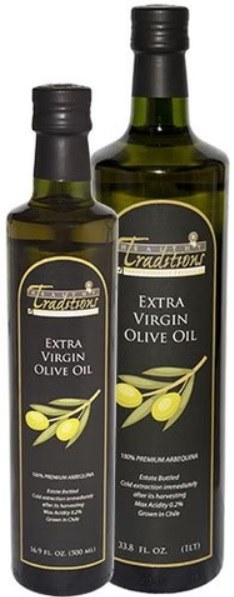
If you want to cook or fry your own food with EVOO, try our famous Extra Virgin Olive Oil from Chile [15], which has an antioxidant level over 400!
This article was written by Human Superior Intelligence (HSI) [18]
 [19]
 [20]
See Also:
Understand the Times We are Currently Living Through
Who Are “the Jews”, According to the Bible? [21]
 [21]
The Brain Myth: Your Intellect and Thoughts Originate in Your Heart, Not Your Brain [22]
 [22]
Second Edition of eBook Released: The Concept of the American Christian Family is a Myth and is NOT Found Anywhere in the Bible – by Brian Shilhavy [23]
 [23]
FREE eBook! Restoring the Foundation of New Testament Faith in Jesus Christ – by Brian Shilhavy [24]
 [24]
KABBALAH: The Anti-Christ Religion of Satan that Controls the World Today [25]
 [25]
Exposing the Christian Zionism Cult [26]
 [26]
The Bewitching of America with the Evil Eye and the Mark of the Beast [27]
 [27]
Jesus Christ’s Opposition to the Jewish State: Lessons for Today [28]
 [28]
Identifying the Luciferian Globalists Implementing the New World Order – Who are the “Jews”? [29]
 [29]
The Seal and Mark of God is Far More Important than the “Mark of the Beast” – Are You Prepared for What’s Coming? [30]
 [30]
The Satanic Roots to Modern Medicine – The Image of the Beast? [31]
 [31]
Medicine: Idolatry in the Twenty First Century – 10-Year-Old Article More Relevant Today than the Day it was Written [32]
 [32]
 [33]
Having problems receiving our emails? See:
 [34]
How to Beat Internet Censorship and Create Your Own Newsfeed [34]
We Are Now on Telegram [35]. Video channels at Bitchute [36], and Odysee [37].
If our website is seized and shut down, find us on Telegram [35], as well as Bitchute [36] and Odysee [37] for further instructions about where to find us.
If you use the TOR Onion browser [38], here are the links and corresponding URLs to use in the TOR browser [38] to find us on the Dark Web: Health Impact News [39], Vaccine Impact [40], Medical Kidnap [41], Created4Health [42], CoconutOil.com [43].