
Comments by Brian Shilhavy
Health Impact News
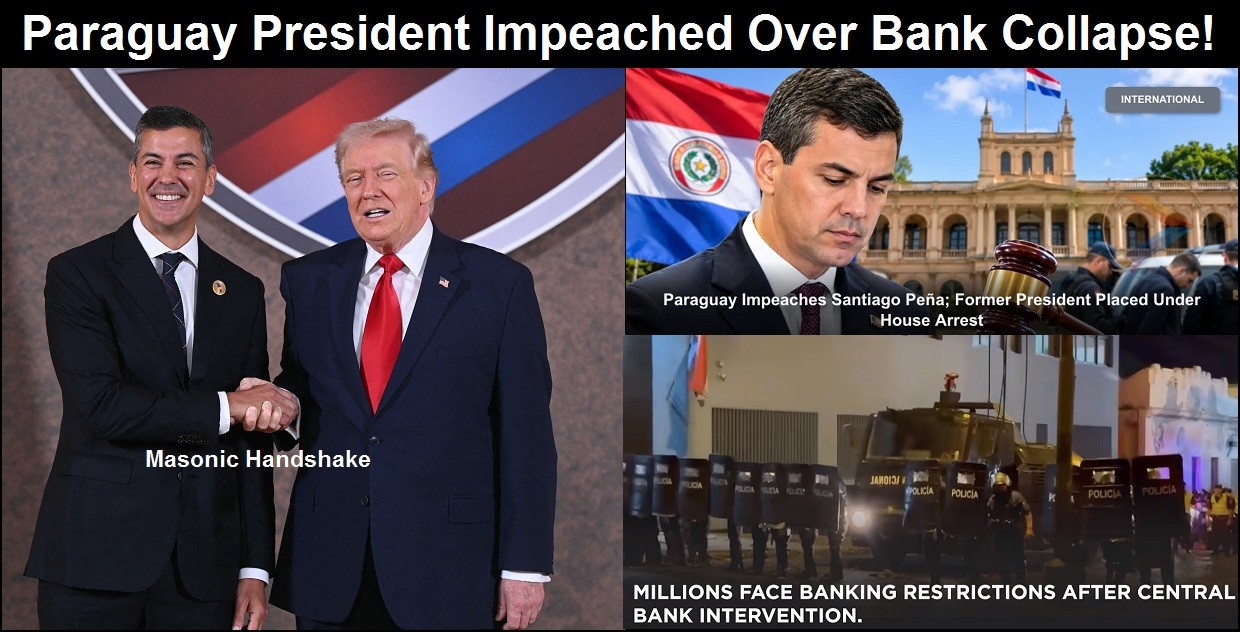
While the U.S. elections dominated the media headlines this week, the biggest story of the week may actually be what happened in Paraguay, where a banking collapse led to mass protests on the streets due to people not being able to withdraw their funds on deposit from Ueno Bank, the largest bank in the country.
The Conservative President of Paraguay, Santiago Peña, a close ally of President Trump and Israel, was arrested as a result. He immediately tried to resign from office, which by the laws in Paraguay would have given him legal immunity from criminal prosecution for the rest of his life.
But the Paraguay national government moved swiftly to prevent his resignation, and instead impeached him by a unanimous vote, with his own party even turning against him. He remains under arrest today.
Is This the Start of the Backlash Against Conservatives and Big Tech that will Bring Down the Global Financial System?
Image source [1].
Ueno Bank is a new bank that just opened its doors to the public in Paraguay a couple of years ago. It started out as a FinTech company dealing in digital currencies, and grew so fast that the Central Bank in Paraguay allowed it to become a legal bank in Paraguay.
Here is a short video that is under 10 minutes long that documents how this bank grew so fast, and the corruption behind it that led to this week’s events.
Just after this video, I have another video that is less than 5 minutes long showing the reactions from people in the streets who protested after they could not withdraw funds from their bank account, that all happened this past week, but was barely mentioned in the U.S. media due to the U.S. elections, but is now getting much more press coverage this weekend.
To understand just how devastating this is to the people of Paraguay, one must understand that public funds were kept in this bank to pay for things like people’s pensions and healthcare, which are now all gone.
From ABC News [2]:
Government money poured into Ueno’s coffers under Peña. He also appointed Carlos Carvallo, president of Financiera Ueno, the predecessor to Ueno Bank, to run the central bank, the agency charged with supervising the digital lender.
As of last month, Ueno reported holding roughly $800 million in public deposits, about a quarter of its total, including money from the state pension and health fund and the operators of Paraguay’s giant hydroelectric dams.
Even as retirees’ savings and other public money piled up at Ueno, worries were escalating inside the central bank. In June, its inspectors found a pattern of risky lending to insiders, reported ABC Color, a leading Paraguayan newspaper. Ueno had extended large sums to companies tied to its owners, beyond what the law allows and without enough collateral to cover the debts if they went bad. On a single day in September 2025, nearly $39 million had gone to three such companies.
Peña repeatedly brushed off the warnings. As recently as last month, he defended Ueno and the central bank’s oversight, dismissing the concerns as a smear campaign that was spooking the public.
But on Monday, it all came crashing down. Regulators investigating Ueno’s loans to companies linked to its owners found poorly documented lending, the central bank said, as well as expenses the bank had wrongly counted as assets.
Full article [2].
Is Paraguay the Tip of the Iceberg and the First Domino to Fall?
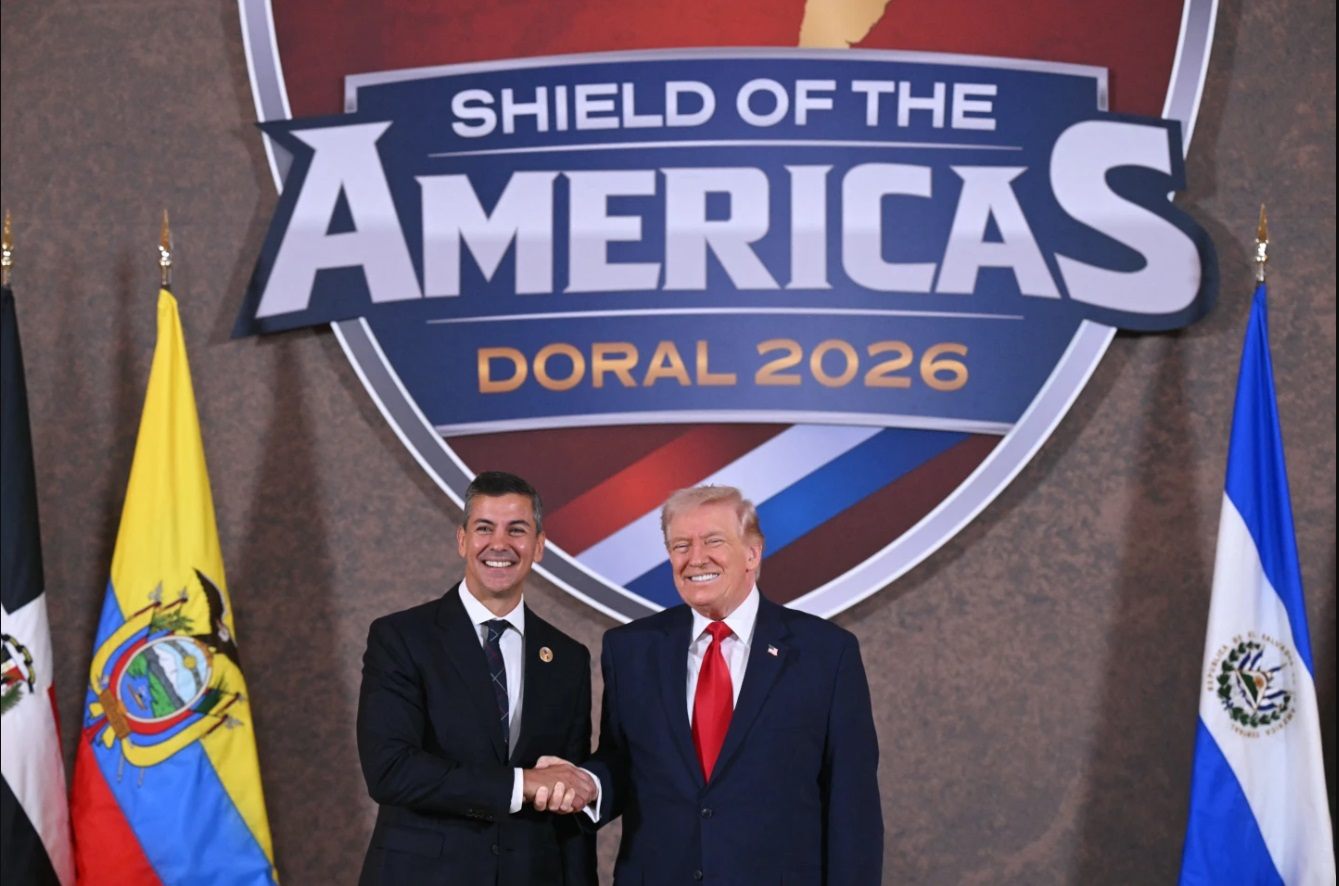
Image Source: Trump gives his peculiar handshake to Peña at the Shield of the Americas Summit: What does it mean? [3]
Tragically, what happened in Paraguay this week could now start happening in other countries in Latin America, and in the United States as well.
As I have previously reported, Latin America is the playground of the Zionists who have been running the U.S. government under Trump for the past two years.
 [4]
Leah of the Leah Files has reported on how Scott Bessent, the U.S. Treasury Secretary, has been actively working to replace the U.S. Dollar with digital dollars called “Stablecoins” for the past few months or so. See:
Treasury Secretary Scott Bessent Just Restructured The American Financial System to Destroy the U.S. Dollar [5]
So what we have observed in Paraguay this week could be just the tip of the iceberg and the first domino to fall.
As she documented in her series on “The Currency Killer”, Argentina is the other country in Latin America where digital tokens are being used to replace the financial system and transfer the country’s resources into the pockets of those who control the digital currencies.
 [6]
And the digital currency that is being used to buy up all the country assets in Argentina is Tether, the stablecoin owned by Howard Lutnik’s family, who is the current Secretary of Commerce in the Trump Administration.
Tether is not even housed in the United States, but in another Latin American country, El Salvador.
Some excerpts from The Leah Files [6]:
The Farmland
This is the part of the story that made me stop and ask what we are actually looking at.
Adecoagro is not a farm. It is a vertically integrated agro-industrial conglomerate incorporated in Luxembourg and listed on the New York Stock Exchange.
When Tether took control in April 2025, it took control of the entire chain from soil to supermarket shelf: the land itself, the crops grown on it, the mills that process them, the dairy plants, the rice processing facilities, the peanut sorting plants, the branded consumer products, the export terminals, and the port infrastructure.
In mid-2026, Adecoagro launched a Bitcoin mining pilot at its Brazilian sugar mills, using surplus electricity from sugarcane bagasse cogeneration to power approximately 1,280 mining machines. This connects directly to Tether’s stated goal of becoming the world’s largest Bitcoin miner.
And then there is the fertilizer.
Profertil
In December 2025, eight months after Tether took control of Adecoagro, the company acquired a 90 percent stake in Profertil for approximately $1.1 billion.
Profertil is Argentina’s sole producer of urea, the most widely used nitrogen fertilizer in the world. The plant in Bahia Blanca produces 1.3 million tons of granular urea per year and supplies roughly 60 percent of Argentina’s domestic fertilizer demand.
This means that a company whose co-founder was sending photos of Ukrainian women to Jeffrey Epstein and brokering introductions between Epstein and the people who now control American financial policy now also controls the fertilizer supply that South American agriculture depends on.
Every other farmer in Argentina who needs urea to grow crops is buying it from a Tether subsidiary.
The acquisition nearly doubled Adecoagro’s annual earnings, from $277 million to $467 million in EBITDA.
They also appointed Kyril Louis-Dreyfus to the Adecoagro board. His family founded the Louis Dreyfus Group, one of the four largest commodity trading houses on earth.
Now here is the part that made me consider this one the most important articles of the Currency Killer series.
This is not a hedge fund buying farmland as an inflation hedge. Tether looks to be building something specific.
Adecoagro co-founded a company called Agrotoken, which has already created three grain-backed stablecoins: SOYA, CORA, and WHEA.
Each token represents one ton of grain.
Farmers can use them as currency. Agrotoken partnered with Visa so producers can spend grain tokens with a card. They have already tokenized 230,000 tons of grain and transacted $70 million in deals. Adecoagro’s CEO said the goal was to build “tokenized land.”
Tether told CoinDesk that
“land is a crucial asset class, complementing its existing investments in bitcoin and gold.”
The company is building its own real-world asset tokenization platform designed to create digital versions of bonds, stocks, funds, and physical commodities.
Now connect the pieces.
Tether now controls the land, the crops grown on that land, the fertilizer those crops need to grow, the mills that process the harvest, and the platform that can tokenize all of it into digital currency. It already issues the largest stablecoin on earth.
This is a closed loop. Own the physical asset, process it, tokenize it, and issue the currency it trades in. They are not replacing the dollar with a digital version.
They are building an entire parallel financial system backed by food, land, and fertilizer, controlled by four people who have never disclosed who they are to the public, operating out of the British Virgin Islands.
Full article [6].
As I noted when I reported this, we can now understand why President Trump has given preferential treatment to beef ranchers in Argentina over American beef ranchers.
 [7]
And understanding how Tether is the largest digital stablecoin in the world, but housed in El Salvador far away from U.S. regulators, we can clearly understand now why Trump started sending all the immigrants that ICE was arresting down to El Salvador, and has even threatened to send U.S. citizens to El Salvador as well to be imprisoned [8].
El Salvador is run by another friend of Trump and Israel, the Zionist Palestinian President and former Communist now converted to an Evangelical Christian, Nayib Bukele.
Bukele was the first head of state to adopt Bitcoin as “legal tender” in El Salvador.
See:
 [7]
El Salvadoran President Nayib Bukele: Communist Palestinian Converted to an Evangelical Zionist Christian [7]
Tether is Buying U.S. Debt through U.S. Treasuries – What is Happening in Latin America Could Soon Happen in the U.S.
 [4]
Image Source [4].
Just as Ueno Bank in Paraguay bought up assets in their own country which were funding people’s pension plans and healthcare plans, so too is Tether purchasing U.S. assets that also hold Americans’ pension plans and healthcare plans, by purchasing U.S. Treasuries.
Tether now owns as much of the U.S. debt as many countries around the world do:
 [5]
Image Source [5].
Tether, of course, is not a bank. It is a digital stablecoin “token” that is owned by private investors.
So who owns these stablecoin “tokens”?
Nobody really knows, because these digital assets are parked in digital “vaults” and “wallets” on the blockchain.
What we do know is that Tether controls about 50% of the stablecoin market, and the entire stablecoin market is mainly controlled by just a few owners of these stablecoins.
Howard Lutnik’s family dominates the market sitting at the top at #1 with Tether. The Trump Family’s stablecoin with World Liberty [9] is #5.
 [9]
Market snapshot
The table below covers the nine largest dollar stablecoins tracked by Crystal Foresight as of June 24, 2026. The “genuine-use share” column shows the share of each token’s transfer volume that represents real money movement such as payments, peer-to-peer transfers, and settlement which are distinct from exchange routing, automated protocol mechanics, and issuer operations. It is the closest available on-chain measure of whether a stablecoin is functioning as money.
“Top-10 held” shows the share of supply sitting in the ten largest wallets, a measure of how concentrated ownership is.
Token Issuer Market cap 90-day change Genuine-use share Top-10 held USDT Tether $186.1B +1.1% 50.2% 25% USDC Circle $74.2B -5.7% 8.6% 26% USDS Sky $10.3B -11.6% 2.8% 93% DAI Sky $4.87B +6.6% 4.6% 40% USD1 World Liberty $4.80B +8.5% 9.6% 82% USDe Ethena $4.48B -24.2% 24.8% 96% USDG Paxos / Global Dollar $2.84B +69.1% 32.6% 59% PYUSD PayPal $2.75B -30.2% 17.5% 76% RLUSD Ripple $1.60B +11.1% 35.6% 69% Source [10].
The other thing we know about stablecoins and other cryptocurrencies that are digital assets stored online in digital vaults and digital wallets is that they are increasingly being hacked by AI-powered malware.
A little over a week ago, hackers stole $6.3 billion from Binance, the largest online cryptocurrency exchange in the world.
Hackers stole $6.3 billion from Binance in the biggest crypto heist ever — will users get their money back?
Last week, hackers broke into Binance, the world’s largest crypto exchange, and strolled off with $6.3 billion in digital coins. The attack appears to be the biggest crypto heist on record, according to The New York Times.
But now that withdrawals have reopened, plenty of users are ready to say bye-bye to Binance. Since Sunday, users pulled about $4.65 billion and deposited $1.01 billion, for a net outflow of $3.64 billion, most of it in the first few hours.
Full article [11].
Is it Possible that Tether’s Reserves Fall So Low that They would Stop Withdrawals Like we are Seeing in Paraguay?
Image Source [12].
Yes, not only is is possible, it just happened about three weeks ago! It was only for a few hours (this time), so it was not exactly headline news.
Tether Freezes $1.45M in THORChain Vaults
Tether blacklisted four THORChain vault addresses on the TRON network on October 17, 2026, freezing roughly $1.45 million in USDT without telling the protocol why. The stablecoin issuer lifted the block about three hours later. The money never moved.
But the silence in between exposed a fault line that has been building across decentralized finance all year: a “permissionless” protocol can still be stopped cold by the company that prints its favorite dollar token.
Full article [13].
Now someone reading this may want to say to me: I don’t own any cryptocurrencies at all, let alone Tether, so this does not concern me.
No, I am afraid it does concern you, as it concerns everyone. Your 401K or IRA fund might hold Tether stablecoins. Or you may be invested in these short-term U.S. Treasuries that are stored in Tether’s stablecoins, or other stablecoins.
Or it could be something as simple as your bank having investments in these stablecoin assets. If they cannot collect those assets to turn them into cash for U.S. dollars, then there could potentially be nothing to withdraw from your bank account, because it is gone, just like the poor people in Paraguay this week.
Remember how quickly the corrupt FTX cryptocurrency exchange collapsed in 2022, which led a few months later to many of Silicon Valley’s top banks crashing in early 2023?
Here Are All The Funds That Are About To Lose $BILLIONS In FTX [14]
The day is probably coming, whether you believe it or not, where banks collapse and we see major social unrest, such as we saw in Paraguay this week.
Big Tech and other billionaires believe it, which is why so many of them own off-grid mansions on various islands around the world.
Their plan is to intentionally blow up the financial system, as they grab all the assets, with the intent to build back the financial system on a digital platform that they completely control.
They even warned us about it back in 2024 heading into the U.S. national elections.
Elon Musk Predicts Stock Market Crash Even if Trump Wins – What DOGE Really Means [15]
Then you will be handed over to be persecuted and put to death, and you will be hated by all nations because of me.
At that time many will turn away from the faith and will betray and hate each other, and many false prophets will appear and deceive many people.
Because of the increase of wickedness, the love of most will grow cold, but he who stands firm to the end will be saved.
(Jesus in Matthew 24:9-13)
This article was written by Human Superior Intelligence (HSI) [16]
 [17]
 [18]
See Also:
Understand the Times We are Currently Living Through
Who Are “the Jews”, According to the Bible? [19]
 [19]
The Brain Myth: Your Intellect and Thoughts Originate in Your Heart, Not Your Brain [20]
 [20]
Second Edition of eBook Released: The Concept of the American Christian Family is a Myth and is NOT Found Anywhere in the Bible – by Brian Shilhavy [21]
 [21]
FREE eBook! Restoring the Foundation of New Testament Faith in Jesus Christ – by Brian Shilhavy [22]
 [22]
KABBALAH: The Anti-Christ Religion of Satan that Controls the World Today [23]
 [23]
Exposing the Christian Zionism Cult [24]
 [24]
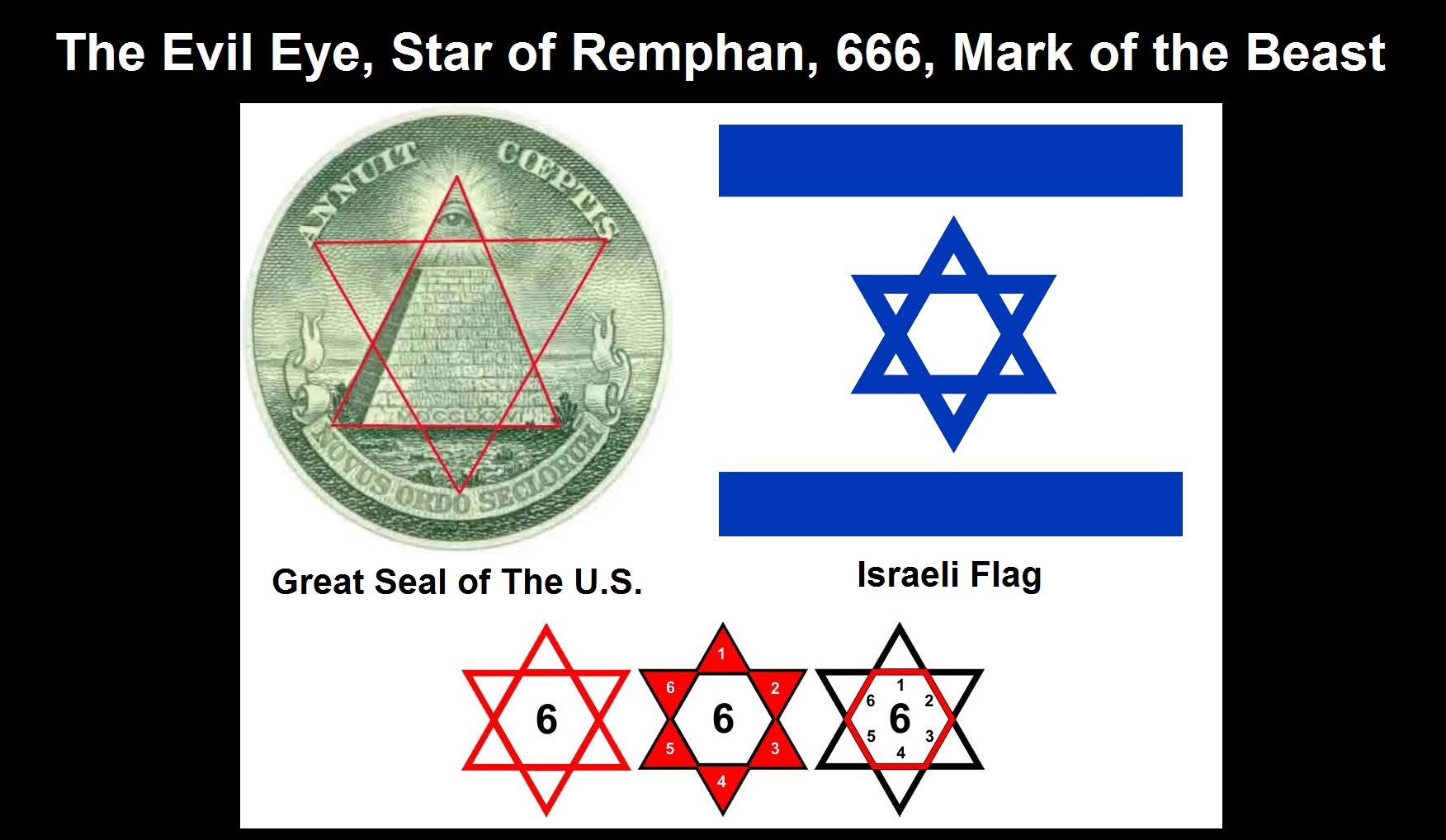
The Bewitching of America with the Evil Eye and the Mark of the Beast [25]
 [25]
Jesus Christ’s Opposition to the Jewish State: Lessons for Today [26]
 [26]
Identifying the Luciferian Globalists Implementing the New World Order – Who are the “Jews”? [27]
 [27]
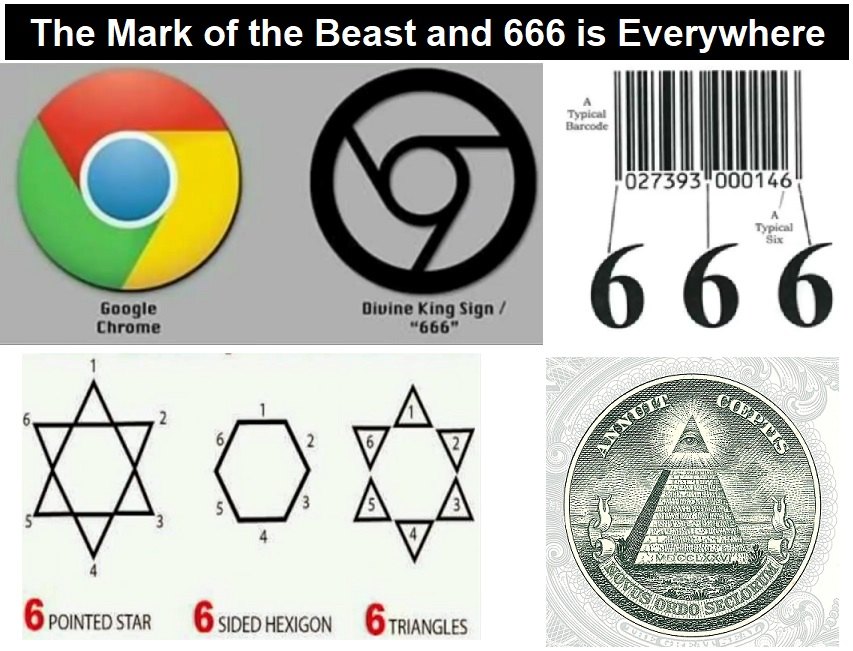
The Seal and Mark of God is Far More Important than the “Mark of the Beast” – Are You Prepared for What’s Coming? [28]
 [28]
The Satanic Roots to Modern Medicine – The Image of the Beast? [29]
 [29]
Medicine: Idolatry in the Twenty First Century – 10-Year-Old Article More Relevant Today than the Day it was Written [30]
 [30]
 [31]
Having problems receiving our emails? See:
 [32]
How to Beat Internet Censorship and Create Your Own Newsfeed [32]
We Are Now on Telegram [33]. Video channels at Bitchute [34], and Odysee [35].
If our website is seized and shut down, find us on Telegram [33], as well as Bitchute [34] and Odysee [35] for further instructions about where to find us.
If you use the TOR Onion browser [36], here are the links and corresponding URLs to use in the TOR browser [36] to find us on the Dark Web: Health Impact News [37], Vaccine Impact [38], Medical Kidnap [39], Created4Health [40], CoconutOil.com [41].