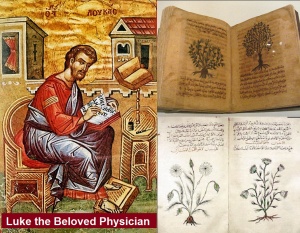
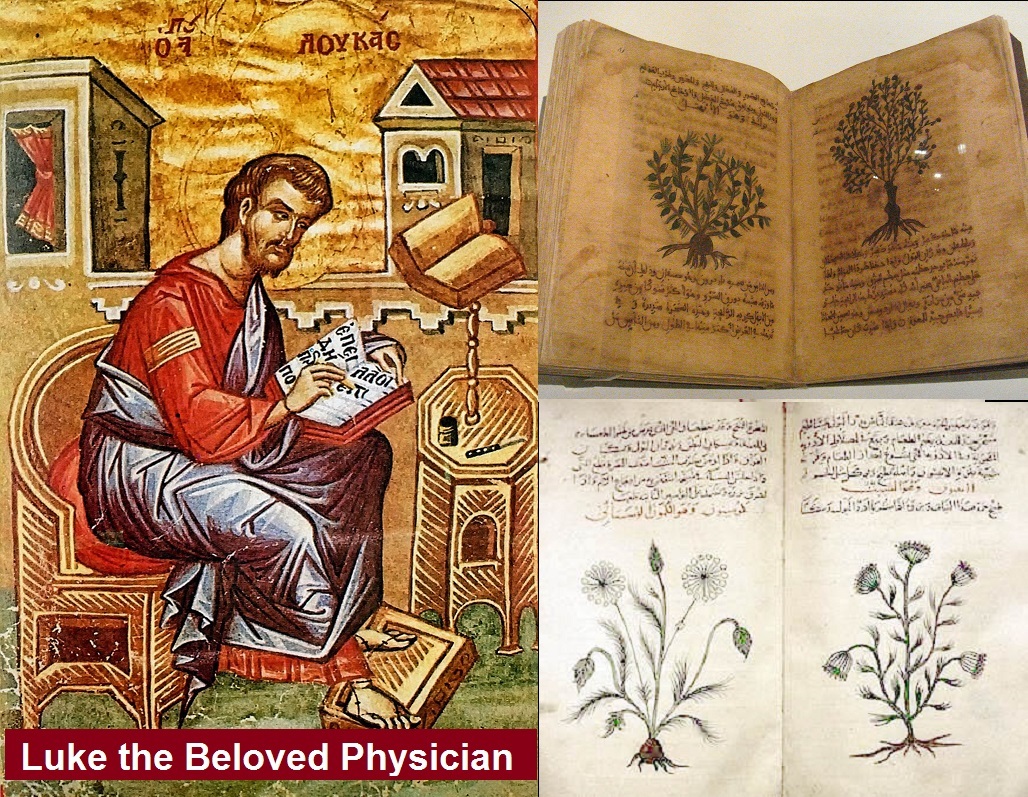
Left Image: Saint Luke the Evangelist 1450 – Source [1]. Top Right: De materia medica in Arabic 12th–13th century – Source [2]. Bottom Right: Cumin and dill from an Arabic book of simples 1334 – Source [3].


by Brian Shilhavy
The word “physician” mostly has a negative meaning in the Bible.
In the thirty-ninth year of his reign Asa was afflicted with a disease in his feet. Though his disease was severe, even in his illness he did not seek help from the LORD, but only from the physicians. (2 Chronicles 16:12)
A woman who had had a hemorrhage for twelve years, and had endured much at the hands of many physicians, and had spent all that she had and was not helped at all, but instead had become worse— after hearing about Jesus, she came up in the crowd behind Him and touched His cloak.
For she had been saying to herself,
“If I just touch His garments, I will get well.”
And immediately the flow of her blood was dried up; and she felt in her body that she was healed of her disease. (Mark 5:25-29)
However, the word “physician” is used positively in the New Testament portion of the Bible when it refers to Jesus Christ:
When the scribes of the Pharisees saw that He was eating with the sinners and tax collectors, they said to His disciples,
“Why is He eating with tax collectors and sinners?”
And hearing this, Jesus said to them,
“It is not those who are healthy who need a physician, but those who are sick; I did not come to call the righteous, but sinners.”
(Mark 2:16-17)
As I have previously written over the years, the Jewish people had their own system of healing as prescribed by the Law of Moses, and it involved the Levitical Priests. They were not supposed to rely on the “pagan doctors”, and hence the criticism of King Asa who apparently did not follow the Law of Moses, but went to pagan doctors instead during the Old Testament days.
In the New Testament, Jesus Christ established himself as the Messiah who had the authority to heal people from their diseases.
There is one exception in the New Testament, however, of one of the disciples of Jesus being referred to as “the beloved physician”, which is how the apostle Paul referred to Luke, who is believed to be the only non-Jewish author in the New Testament portion of the Bible. He wrote the Gospel of Luke, as well as the Acts of the Apostles.
He was a frequent traveling companion with Paul, who referred to him as “the beloved physician”.
Luke, the beloved physician, sends you his greetings, and Demas does also. (Colossians 4:14)
Historical evidence outside of the Bible has led some people to believe that Luke was originally from Antioch, and attended a famous medical school in Philippi, part of the Roman empire at that time.
Since Luke is not referred to as a “former physician”, it is reasonable to believe that he may have retained some of his “medical” knowledge and perhaps even continued to use it as a disciple of Jesus.
However, to understand how the English word “physician” (ἰατρός – iatros in the Greek) was used over 2000 years ago in the Greek/Roman world, we need to look at some history of Greek-Roman medicine as it was practiced back then, which is very different from how the terms “doctor” and “medicine” are used today in the 21st Century.
Ancient Healing Practices
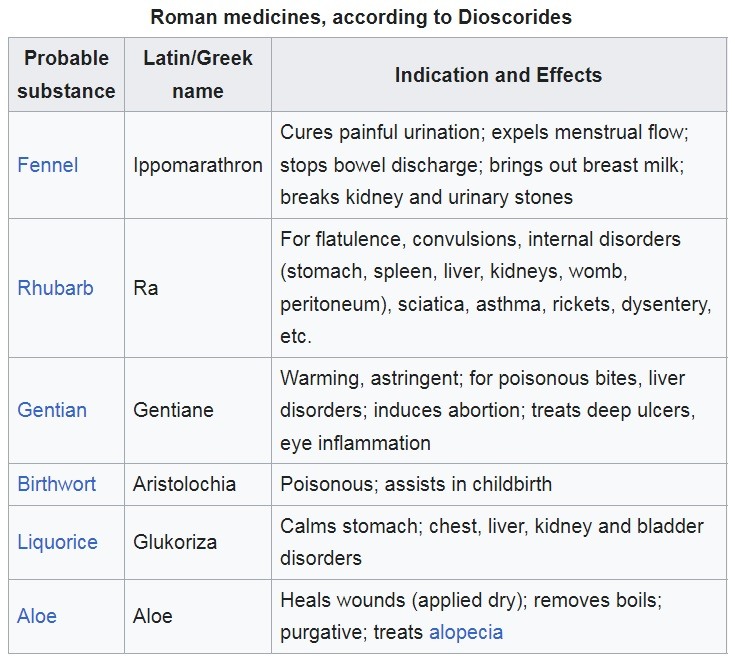
Image Source [4].
During the First Century when the authors of the New Testament portion of the Bible lived, the practice of medicine was highly influenced by ancient Greek medicine, and the Greek physician Hippocrates. Much of Hippocrates’ work was compiled into The Hippocratic Corpus [5].
During the time the New Testament was being written, the city of Tarsus, where the apostle Paul lived, had a major medical school practicing Greek medicine.
Pedanius Dioscorides – The Father of Pharmacognosy
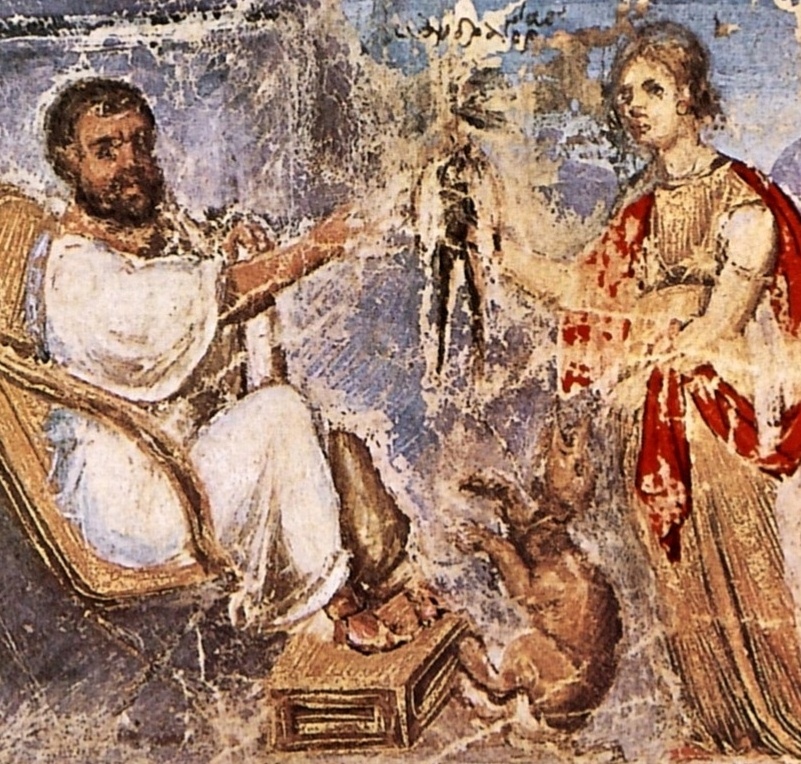
Dioscorides receives a mandrake root, an illumination from the 6th century (c. 512) Greek Juliana Anicia Codex. Source [6].
_(cropped).jpg)
One of the most famous students to study at this school was Pedanius Dioscorides, a pharmacologist, physician, botanist, and author of De materia medica (“On Medical Material”). He was a military physician in Nero’s Army
Dioscorides was known as “the father of pharmacognosy“, but all of his “medicines” were plants, not the patented chemical medicines that we think of today when we hear the term “medicines.”
Plant “medicines” were also the foundation of other non-Western sources of ancient medical systems, such as Chinese Traditional Medicine, and the Indian Ayurveda system of medicine, both of which have been around for 4000-5000 years. (Source [7].)
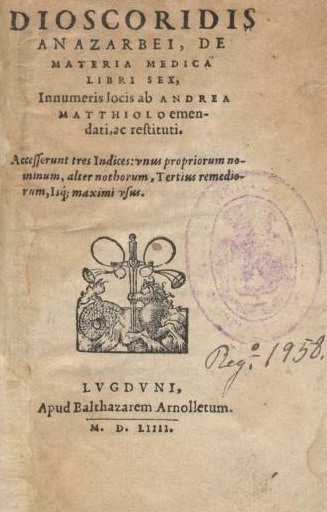
Cover of an early printed version of De materia medica, Lyon, 1554. Source [8].

Dioscorides wrote a five-volume book De materia medica (“On Medical Material”), which became the precursor to all modern pharmacopeias, (Source: Rooney, Anne 2012. The History of Medicine. The Rosen Publishing Group. p. 121), and was widely read for more than 1,500 years.
It was translated into Arabic in the 13th Century by Ibn al-Bayṭār, an Andalusian Arab physician, botanist, pharmacist and scientist.
He systematically recorded additions made by Islamic physicians in the Middle Ages, which added between 300 and 400 types of medicine to the one thousand previously known since antiquity. He was a student of Abu al-Abbas al-Nabati. (Source [9].)
Famous Roman Physicians
Here are the bios of a couple of other famous Roman physicians who were alive during the time the New Testament was being written, from Wikipedia’s entry on Medicine in ancient Rome [4].
Asclepiades of Bithynia
Asclepiades studied to be a physician in Alexandria and practiced medicine in Asia Minor as well as Greece before he moved to Rome in the 1st century BC. His knowledge of medicine allowed him to flourish as a physician. Asclepiades was a leading physician in Rome and was a close friend of Cicero.
He developed his own version of the molecular structure of the human body. Asclepiades’ atomic model contained multi-shaped atoms that passed through bodily pores.
These atoms were either round, square, or triangular. Asclepiades noted that as long as the atoms were flowing freely and continuously, then the health of the human was maintained. He believed that if the atoms were too large or the pores were too constricted, then illness would present in multiple symptoms such as fever, spasms, or in more severe cases paralysis.
Asclepiades strongly believed in hot and cold baths as a remedy for illness; his techniques purposely did not inflict severe pain upon the patient. Asclepiades used techniques with the intent to cause the least amount of discomfort while continuing to cure the patient.
His other remedies included music therapy to induce sedation, and consuming wine to cure headaches and a fever. Asclepiades is the first documented physician in Rome to use massage therapy.
Aulus Cornelius Celsus
Celsus (25 BC–AD 50) was a Roman encyclopaedist who wrote a general encyclopaedia about many subjects. His exact place of birth as well as when he lived are unknown; however, it is known he lived during the reigns of Augustus and Tiberius.
The only surviving work from his larger encyclopaedia is De Medicina. This work contains eight volumes, two of which are on surgery.
De Medicina provides some of the best accounts of Roman medicine during his time.
Its contents proved to be valuable even into the 15th century after Pope Nicolas V rediscovered it, becoming the first medical book to be published in 1478. It is still debated if he practiced medicine himself or just compiled the works of the time, much of it from Greek sources. This is important because at the time Greeks were looked down upon by the Romans and thus so was the work of doctors.
In his book he discussed the two different schools of thought at the time relating to medicine he calls “Empirics” and “Dogmatics”.
Empirics followed empirical observation while Dogmatics needed to understand the theory behind how a treatment works.
Celsus is also credited with writing on four of the five characteristics of inflammation, redness (rubor), swelling (tumour), heat (calor), and pain (dolor). Galen would write about the fifth, loss of function (functio laesa).
The Role of “Elders” in Ancient Greek-Roman Medicine
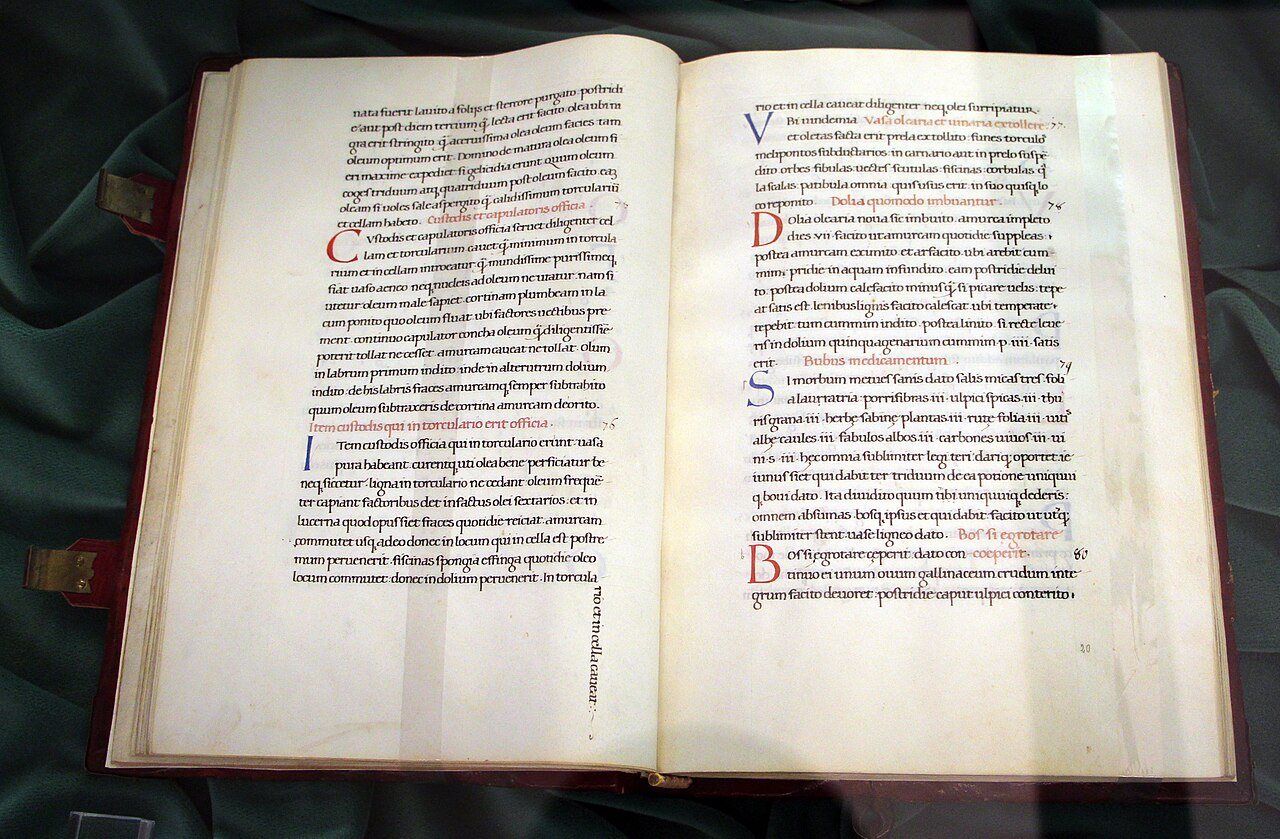
De agri cultura, also known as On Farming or On Agriculture, is a treatise on Roman agriculture by Cato the Elder. It is the oldest surviving work of Latin prose. Source [10].
Cato the Elder was a Roman soldier, senator, and historian who lived about 200 years before the New Testament was written, but his influence on Roman culture and medicine would have certainly been felt by those living in the First Century when the authors of the New Testament were living.
Cato the Elder despised every aspect of Greek society the Romans decided to mimic including sculptures, literature and medicine. He regarded the welcome given in Rome to Greek medicine and physicians as a major threat.
In Rome, before there were doctors, the pater familias (head of the family) was responsible for treating the sick. Cato the Elder himself examined those who lived near him, often prescribing cabbage as a treatment for many ailments ranging from constipation to deafness.
He would issue precise instructions on how to prepare the cabbage for patients with specific ailments. He also used cabbage in liquid form.
For example, a mixture of cabbage, water, and wine would be embedded in a deaf man’s ear to allow his hearing to be restored. Cato would treat fractured or broken appendages with two ends of a cut reed that were bandaged around the injury. (Source: “Household Medicine in Ancient Rome [11]“. The British Medical Journal. 1 2140: 39–40. 1902.)
This context may help us understand the “medical advice” given by James, the half-brother of Jesus, in the 5th chapter of his letter recorded in the New Testament:
Is any one of you sick? He should call the elders of the congregation to pray over him and anoint him with oil in the name of the Lord.
And the prayer offered in faith will make the sick person well; the Lord will raise him up. If he has sinned, he will be forgiven.
Therefore confess your sins to each other and pray for each other so that you may be healed. The prayer of a righteous man is powerful and effective. (James 5:14-16)
Medicine in the 21st Century
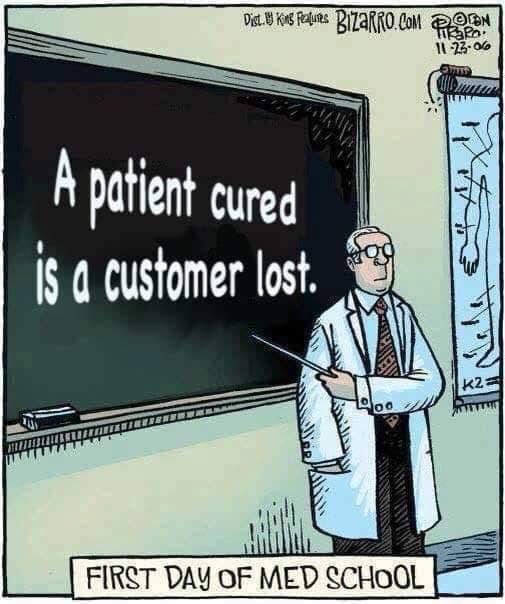
The next time you read about “Luke the beloved physician” in the Bible, hopefully you will have a better understanding now about “physicians” and “medicine” in the Roman Empire during the time the Bible was being written, which bears no resemblance to doctors and medicines today.
The Western form of “medicine” today is dependent on repeat customers, and is a disease management system, NOT a “health care” system. To actually cure patients would cause them to go out of business! See:
Investment Report Reveals Medical Cures not Profitable for Big Pharma – Sick People Needed to Sustain Drug Sales [12]
Natural remedies, which used to be called “medicine” in ancient times, cannot be patented, and are therefore a threat to the pharmaceutical industry here in the 21st Century.
I learned this firsthand myself, back in 2005 when we were selling Virgin Coconut Oil and publishing customer testimonials about the health benefits of consuming coconut oil, as well as publishing peer-reviewed literature [13] showing how the medium chain fatty acids in coconut oil can fight diseases.
The FDA came after us and threatened to shut down our business, seize our inventory, and put me in jail for selling “unapproved drugs.”
Why in the world do Americans continue to give money to campaigns to “help find a cure for cancer” as they have done for decades, when MANY cures for cancer already exist, but are banned from being used here in the U.S. forcing people to go to Mexico or Europe to find those cures?
Money given to charities to “find a cure for cancer” usually just goes into the pockets of drug companies to develop more drugs.
See:
Unapproved but Effective Cancer Cures [14]
We need more “beloved physicians” like Luke, who know the power of Jesus to bring about REAL healing, and we need “Elders” who can also tap into the power of Jesus to heal without the need of modern doctors and medicines. See:
There is Only One True Doctor [15]
Comment on this article at Created4Health.org [16].
This article was written by Human Superior Intelligence (HSI) [17]
[17]
 [18]
[18]
 [19]
[19]
See Also:
Understand the Times We are Currently Living Through
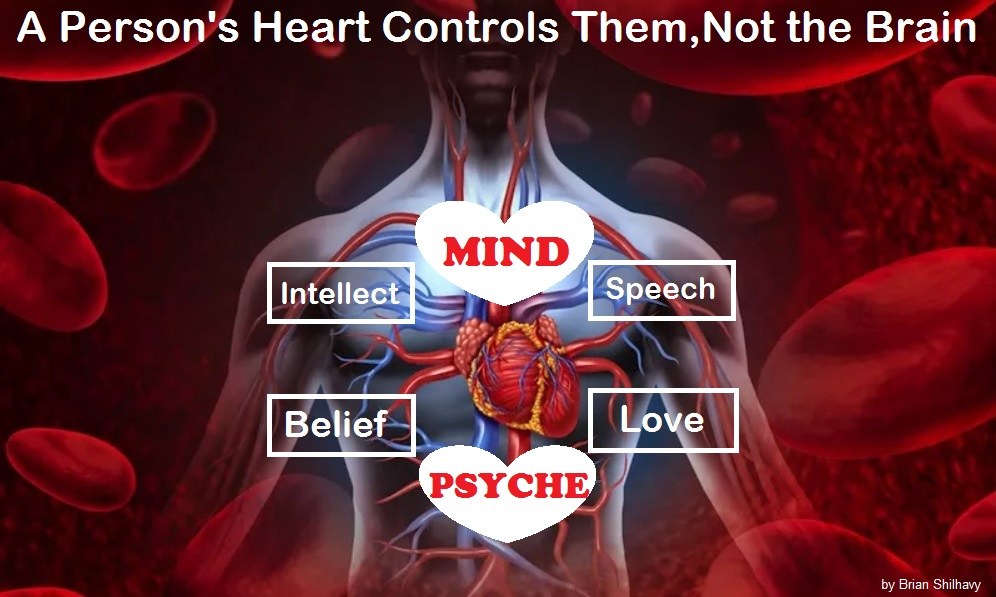
The Brain Myth: Your Intellect and Thoughts Originate in Your Heart, Not Your Brain [20]
 [20]
[20]
Is God’s Patience About to Run Out on the United States? [21]
 [21]
[21]
Second Edition of eBook Released: The Concept of the American Christian Family is a Myth and is NOT Found Anywhere in the Bible – by Brian Shilhavy [22]
 [22]
[22]
FREE eBook! Restoring the Foundation of New Testament Faith in Jesus Christ – by Brian Shilhavy [23]
 [23]
[23]
KABBALAH: The Anti-Christ Religion of Satan that Controls the World Today [24]
 [24]
[24]
Exposing the Christian Zionism Cult [25]
 [25]
[25]
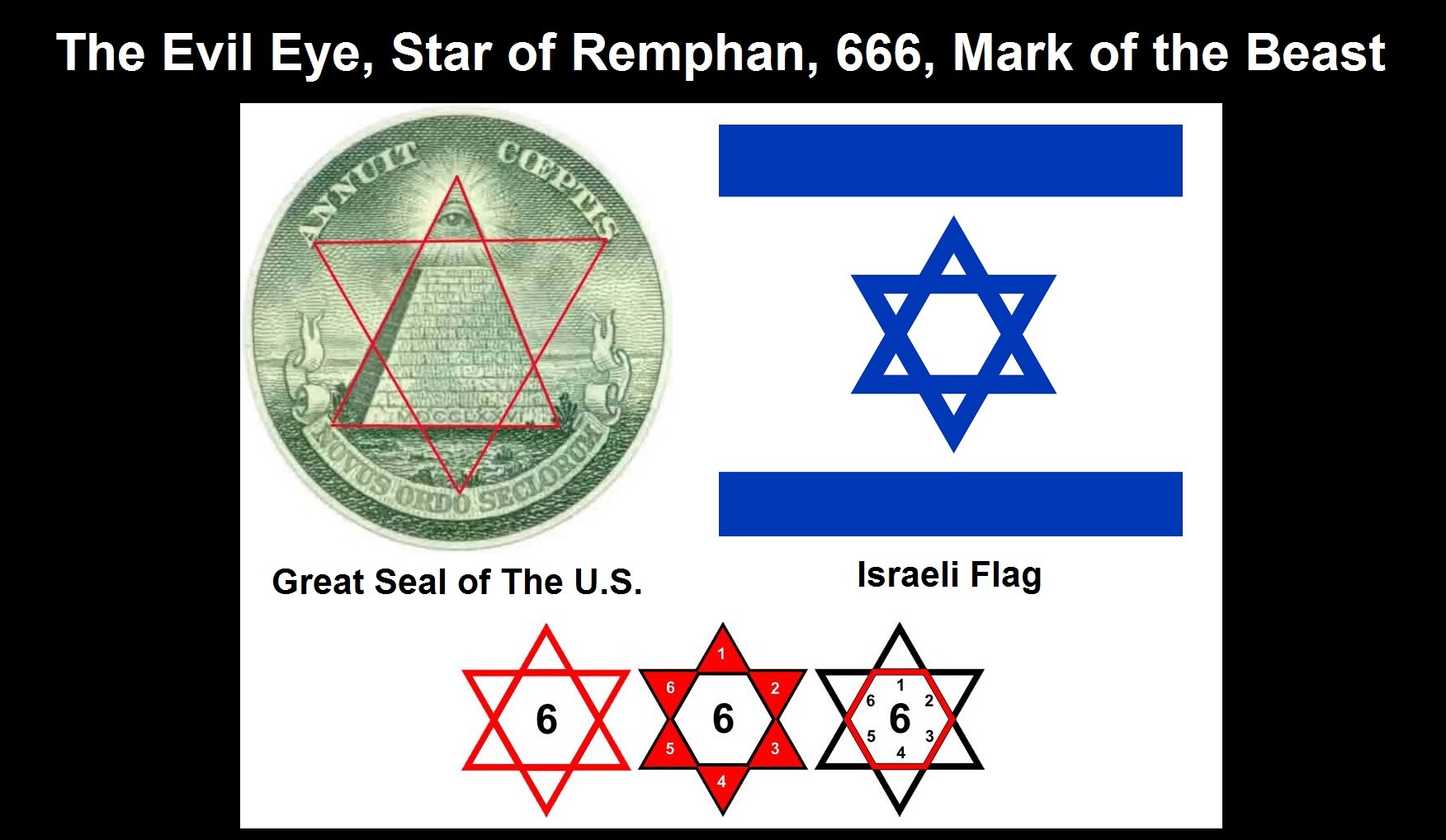
The Bewitching of America with the Evil Eye and the Mark of the Beast [26]
 [26]
[26]
Jesus Christ’s Opposition to the Jewish State: Lessons for Today [27]
 [27]
[27]
Identifying the Luciferian Globalists Implementing the New World Order – Who are the “Jews”? [28]
 [28]
[28]
The Seal and Mark of God is Far More Important than the “Mark of the Beast” – Are You Prepared for What’s Coming? [29]
 [29]
[29]
The Satanic Roots to Modern Medicine – The Image of the Beast? [30]
 [30]
[30]
Medicine: Idolatry in the Twenty First Century – 10-Year-Old Article More Relevant Today than the Day it was Written [31]
 [31]
[31]
 [32]
[32]
Having problems receiving our emails? See:
 [33]
[33]
How to Beat Internet Censorship and Create Your Own Newsfeed [33]
We Are Now on Telegram [34]. Video channels at Bitchute [35], and Odysee [36].
If our website is seized and shut down, find us on Telegram [34], as well as Bitchute [35] and Odysee [36] for further instructions about where to find us.
If you use the TOR Onion browser [37], here are the links and corresponding URLs to use in the TOR browser [37] to find us on the Dark Web: Health Impact News [38], Vaccine Impact [39], Medical Kidnap [40], Created4Health [41], CoconutOil.com [42].