by Brian Shilhavy
Health Impact News
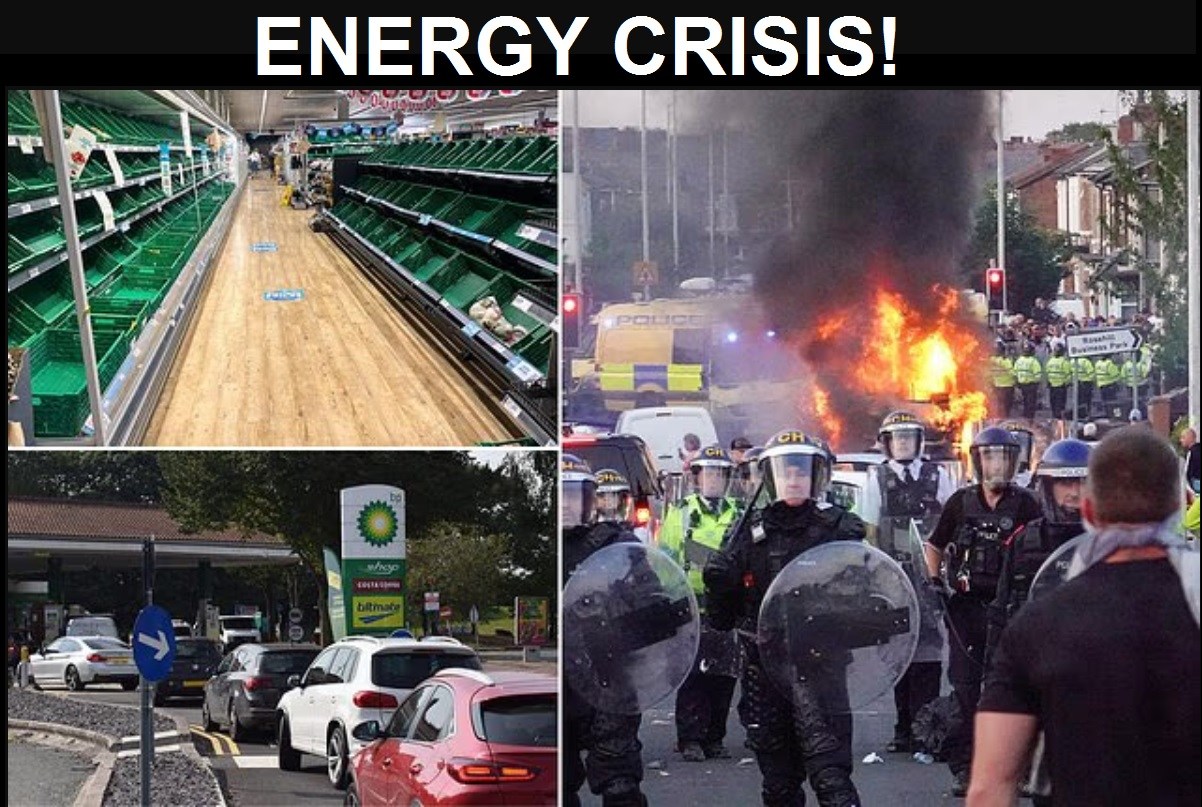
The world is now officially in the midst of an “energy crisis” due to the Iran war and the inability of the U.S. to open back up the Strait of Hormuz, as governments in many nations in Europe and Asia are now are calling for “COVID-like” measures to be put in place to keep people at home like they did during the COVID Scamdemic.
This urgency and fear has not reached most in the U.S. yet, however, as most Americans go about their daily business not fully realizing what is happening in the outside world due to the coordinated work of the U.S. media to attempt to shield this, so far.
The International Energy Agency (IEA) is calling for people to cut oil demand by working from home more, flying less and driving slower. The IEA’s members include the US, UK and Japan.
So this is officially an “energy crisis” now, and the last time this happened in the U.S. was in the 1970s under President Jimmy Carter. Most Americans alive today did not experience that, it was so long ago.
From the Financial Times [2]:
IEA calls for working from home, driving slower and flying less to tackle energy crisis
Excerpts:
The International Energy Agency is calling for people to cut oil demand by working from home more, flying less and driving slower, as the Iran war rocks global energy markets.
The agency says those measures, alongside steps such as sharing cars and switching to electric cookers, are needed to help with the “largest supply disruption in the history of the oil market”, which has pushed the price of a barrel of oil above $100.
About 20 per cent of global oil supplies are typically shipped through the Strait of Hormuz, which Iran has in effect closed with strikes on oil tankers. The gas market went into a frenzy on Thursday after Iran hit the world’s largest liquefied natural gas facility in Qatar, following an Israeli strike on an Iranian gasfield.
The IEA’s members, which include the US, UK and Japan, have agreed to release a record 400mn barrels of oil into the market to try to ease the crisis, while the US has also lifted some sanctions on Russian oil.
But the IEA said “supply-side measures alone cannot fully offset the scale of the disruption”.
It added: “Addressing demand is a critical and immediate tool to reduce pressure on consumers by improving affordability and supporting energy security.”
While it is the IEA’s role to boost energy security, such recommendations are rare. During the energy crisis of 2021-23 when Russian supplies of gas to Europe were cut, it recommended people turn down their thermostats and buy heat pumps to replace gas-fired boilers — but the latest notice is wider ranging.
The call has echoes of the 1970s, when the US and UK lowered speed limits in response to the Arab oil embargo.
More news from our Telegram channel [3]:
Food rationing, panic-buying, planes grounded and an economic hammer blow far worse than Covid: Economists explain nightmare scenario that could be just weeks away due to Iran war
From The Daily Mail [4]:
Excerpts:
Fears are mounting that the world is heading for an economic blow far worse than the Covid pandemic within weeks as the Iran conflict threatens global oil and gas supplies.
Experts warn it could trigger food shortages, grounded flights and panic-buying as countries risk running out of fuel and energy if key shipping routes remain shut.
Analysts say the crisis is no longer just about rising prices but the risk of a full-blown supply crunch, with some countries unable to secure enough energy to meet demand.
That could trigger a domino effect across the global economy, hitting everything from air travel to food production.
The Strait of Hormuz, a vital artery for global energy, remains at the centre of the crisis, with around a fifth of the world’s oil and gas passing through the narrow waterway each day.
Bank of America has warned European gas prices could surge from around €29 to as high as €500 this winter if the strait stays shut for an extended period, far exceeding levels seen after Russia’s invasion of Ukraine.
Such a spike would trigger what analysts describe as a full-blown economic emergency across Europe, the UK and large parts of Asia, with energy costs spiralling and industries forced to cut back, The Telegraph reports
The situation has deteriorated rapidly after strikes hit major energy infrastructure in Iran and Qatar, including facilities responsible for a huge share of global gas supplies, with disruption expected to last months or even years as repairs are carried out.
Kurt Barrow, vice-president of oil at S&P Global Energy, warned the world could soon face outright shortages and rationing if the disruption continues.
He said: ‘If the Strait stays closed for two months, you’ll have plants without feedstock and we’ll get real rationing. We’ll have panic buying and hoarding.’
According to analysts, millions of barrels a day have already been knocked out of the market due to damaged infrastructure and transport disruption, raising the risk that supply chains could seize up entirely if the conflict drags on.
Jeff Currie, an energy expert at the Carlyle Group, warned the knock-on effects could be severe and immediate, hitting everything from travel to food production.
He said: ‘We may need to ground planes, shut chemical plants and accept lower crop yields.’
He added that oil and gas underpin large parts of the global economy, meaning shortages would not just push up prices but could quickly disrupt transport networks, manufacturing and agriculture.
There are also growing fears the crisis could worsen further if the conflict spreads to other key shipping routes, particularly in the Red Sea where vital energy supplies also pass through.
‘We continue to watch for any signs that the Houthis may enter the conflict and imperil the Red Sea,’ said Helima Croft, a former CIA analyst now at RBC Capital.
She warned even limited escalation could send prices surging again and deepen the crisis.
She said: ‘Even just a few missiles or drones fired into the Bab el-Mandeb Strait would push oil prices several legs higher.’
If you support the Iran war, stop whining about gasoline prices
Interesting commentary written by Brett Arends of MarketWatch [5].
Excerpts:
Kudos to Republican senatorial candidate Michele Tafoya. The former sports reporter, now running for retiring Democrat Tina Smith’s U.S. Senate seat in Minnesota, said this week that if you support Donald Trump, and you support the war in Iran, you should stop whining about gasoline prices and suck it up.
“I think right now at least just kind of keeping a stiff upper lip,” she advised. “Maybe you take one less trip to Starbucks, and so that gas goes a little further.”
Tafoya might want to work on how she expresses opinions, especially controversial ones. These comments will probably come back to haunt her in the election campaign. But on the substance she is absolutely right.
Sue me.
During World War I and World War II, Americans on the home front made huge sacrifices to support the war effort. They drove less, shopped way less, “made do and mended,” and accepted food rationing. They ate a lot of turnips.
And the millions who went and fought usually made far greater sacrifices, sometimes the ultimate one. You can see the sea of American crosses in Normandy.
Going without a morning coffee run, or a trip to Arby’s? Seriously? Phooey.
It’s an open question whether this war is a price worth paying ….
But about 40% of the U.S. public does support it.
And it is preposterous for anyone to support the war and refuse to accept the consequences. That would include, for example, the Teamsters, now facing a stunning 40% rise in the cost of diesel in a month. They overwhelmingly voted for this administration.
The consequences Americans are bearing on the home front, say in gasoline or diesel prices, are absolutely trivial compared with the consequences borne by others. Thousands in the Middle East have already died. That includes the schoolgirls killed by a missile at the start.
A new ‘work from home’ age? Governments across Asia order employees to stay home due to concerns over the Iran war
From TechRadar [6]:
Excerpts:
Governments across Asia have issued new directives for public sector employees to work from home as US-Israel attacks in Iran disrupt oil supplies and cause fuel shortages.
In Pakistan, Vietnam, Thailand, and the Philippines, governments have imposed measures aimed at reducing energy consumption and conserving limited fuel resources.
They rely on their previous experience during the COVID-19 pandemic to implement remote work at scale.
Aussies urged to work from home to save precious fuel
From The Examiner [7]:
Excerpts:
Australians should work from home where possible and drive at slower speeds to limit oil demand during the Middle East conflict, the world’s top energy agency says.
The recommendations come as Australia’s energy minister flags further potential releases from stockpiles after dozens of service stations ran out of fuel.
The International Energy Agency released a series of steps on Friday that would ease the burden of the global oil price spike.
Recognising 45 per cent of the world’s oil demand comes from road transport, the agency urged workers to stay at home where possible and consider public transport if they need to travel.
A reduction of 10km/h for highway speed limits would also cut fuel use, the agency said.
Beyond roads, reducing air travel and shifting away from the use of liquefied natural gas in cooking appliances would help protect vulnerable households.
Figures from NSW showed of the state’s roughly 2500 service stations, 42 had no petrol and the number without diesel had risen from 80 to 107.
Aussie truckers warn of empty supermarket shelves due to fuel crisis
From The Noticer [8]:
Excerpts:
Australia’s trucking industry has warned rising fuel prices are set to force heavy vehicle fleets off the road, resulting in grocery price spikes and empty supermarket shelves by mid-April.
Road freight operator representative body the National Road Transport Association (NatRoad) warned the war in the Middle East has already caused a 70% rise in fuel costs since early March, which would be passed on to supermarket shoppers.
‘Sorry — we’re sold out’
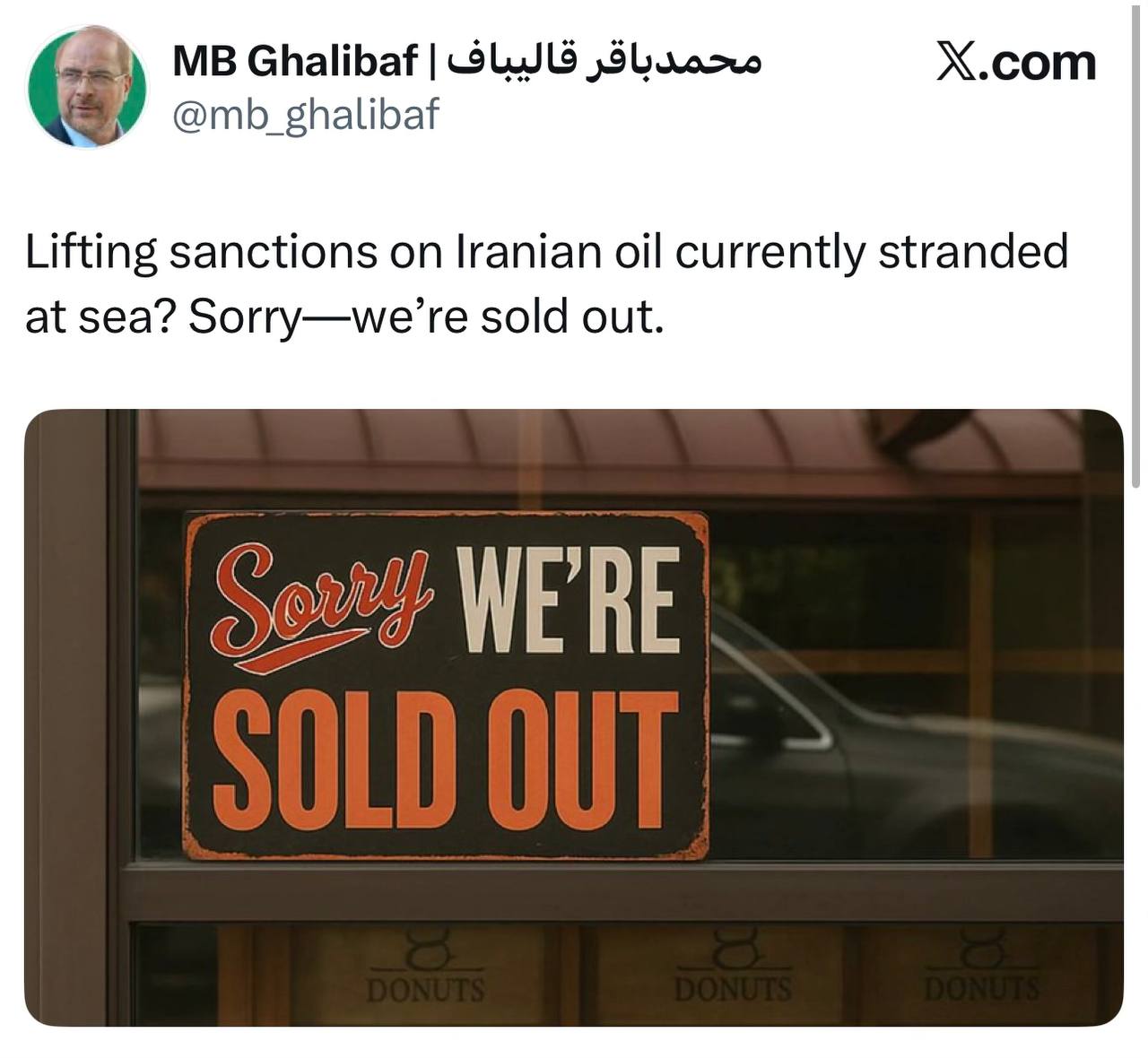
Iran’s Parliament Speaker Mohammad Bagher Ghalibaf mocks US plans to lift sanctions on Iranian oil to calm the energy market.
Americans are about to get a crash course in the global economy: Higher prices are coming for pineapples, plastic, chocolate and berries
From MarketWatch [9]:
It’s not just about oil — vital supply chains are at a near-standstill
Excerpts:
Americans are about to get a crash course in the global economy — and it’s not just about oil supply. Rising costs for fertilizer, feed, packaging and shipping are going to seep into the prices that people see on grocery shelves, experts say.
The price of oil is catching a lot of attention from investors and everyday drivers. Indeed, a gallon of gas costs $1 per gallon more than it did last month. On Friday, Brent crude oil for May delivery traded at over $110 a barrel.
Yet fertilizer is the “deeper story,” as around one-third of globally traded fertilizer typically moves through the Strait of Hormuz, said Jake Hanley, chief growth officer and director of investments at Teucrium.
The Persian Gulf “isn’t just an oil region,” he said. “It’s the nitrogen supply chain.”
Nitrogen is essential for plant growth. Middle East urea, a widely used nitrogen fertilizer, has climbed over 50% in value since the start of the year, according to Josh Linville, vice president of fertilizer at financial-services company StoneX.
Major fertilizer producers and exports are currently blocked behind the Strait of Hormuz, said Linville. That includes three of the world’s 10 largest urea exporters: Iran, Qatar and Saudi Arabia.
The U.S. and Israel’s strikes on Iran have happened to coincide with the start of the planting season in America. Timing matters for American farmers because fertilizer purchasing, field preparation and early-season fertilizer applications are already underway, wrote Faith Parum, economist at the American Farm Bureau Federation, in a report earlier this month.
That means farmers have limited ability to adjust if input prices spike suddenly.
Why the Global Oil System Cannot Replace Hormuz Flows
From OilPrice.com [10]:
Excerpts:
As the world braces for a potential “Battle of Hormuz” to reopen the world’s most important energy chokepoint, governments and energy markets are scrambling to answer a daunting question: What happens if the Strait of Hormuz stays closed for weeks or even months?
The narrow waterway between Iran and Oman is the most critical chokepoint in the global energy system. Roughly one-fifth of the world’s oil supply moves through it every day, along with enormous volumes of natural gas and petrochemical feedstocks.
In practical terms, that means that each day about 20 million barrels of oil and another 2 million barrels of oil equivalent in liquefied natural gas normally transit the Strait.
The stark reality is that it can’t—at least not in the short term. The only realistic strategy is to plug as many holes as possible, add whatever incremental supply can be found, and buy time while efforts to reopen the Strait unfold.
Even under optimistic assumptions, the numbers are daunting. Of the roughly 22 million barrels of oil and oil-equivalent energy that normally pass through the Strait each day, coordinated releases from global strategic reserves might temporarily add around 6 to 7 million barrels per day. Alternative pipeline routes from the Persian Gulf could potentially add another 3 to 4 million barrels per day.
Even if every available lever is pulled simultaneously, the world could still face a supply gap of more than 10 million barrels per day.
That gap represents the scale of the challenge now confronting global energy markets.
Trust in the LORD with all your heart and lean not on your own understanding; in all your ways acknowledge him, and he will make your paths straight. (Proverbs 3:5-6)
This article was written by Human Superior Intelligence (HSI) [11]
[11]
 [12]
[12]
 [13]
[13]
See Also:
Understand the Times We are Currently Living Through
New FREE eBook! Restoring the Foundation of New Testament Faith in Jesus Christ – by Brian Shilhavy [14]
 [14]
[14]
What Kind of Person did Jesus Say was True with no Injustice in Them? [15]
 [15]
[15]
KABBALAH: The Anti-Christ Religion of Satan that Controls the World Today [16]
 [16]
[16]
Christian Teaching on Sex and Marriage vs. The Actual Biblical Teaching [17]
 [17]
[17]
Exposing the Christian Zionism Cult [18]
 [18]
[18]
The Bewitching of America with the Evil Eye and the Mark of the Beast [19]
 [19]
[19]
Jesus Christ’s Opposition to the Jewish State: Lessons for Today [20]
 [20]
[20]
Identifying the Luciferian Globalists Implementing the New World Order – Who are the “Jews”? [21]
 [21]
[21]
The Brain Myth: Your Intellect and Thoughts Originate in Your Heart, Not Your Brain [22]
 [22]
[22]
What is the Condition of Your Heart? The Superiority of the Human Heart over the Human Brain [23]
 [23]
[23]
The Seal and Mark of God is Far More Important than the “Mark of the Beast” – Are You Prepared for What’s Coming? [24]
 [24]
[24]
The Satanic Roots to Modern Medicine – The Image of the Beast? [25]
 [25]
[25]
Medicine: Idolatry in the Twenty First Century – 10-Year-Old Article More Relevant Today than the Day it was Written [26]
 [26]
[26]
 [27]
[27]
Having problems receiving our emails? See:
 [28]
[28]
How to Beat Internet Censorship and Create Your Own Newsfeed [28]
We Are Now on Telegram [3]. Video channels at Bitchute [29], and Odysee [30].
If our website is seized and shut down, find us on Telegram [3], as well as Bitchute [29] and Odysee [30] for further instructions about where to find us.
If you use the TOR Onion browser [31], here are the links and corresponding URLs to use in the TOR browser [31] to find us on the Dark Web: Health Impact News [32], Vaccine Impact [33], Medical Kidnap [34], Created4Health [35], CoconutOil.com [36].